
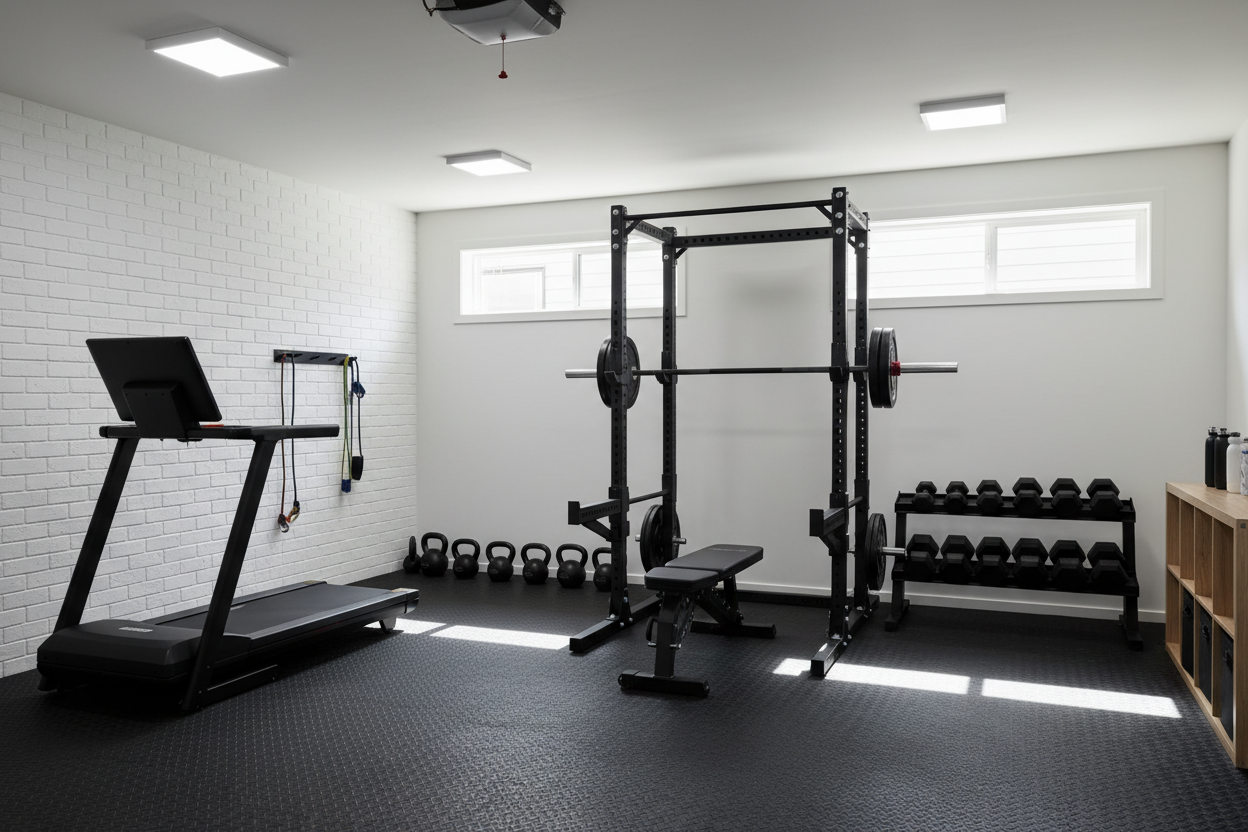
I have spent the last decade turning a cramped, oil-stained garage into a sanctuary of iron. I have also spent thousands of dollars on equipment that ended up serving as expensive laundry racks. We have all been there—scrolling through home gym fitness setups on social media at 2:00 AM, convinced that a neon sign and a specialized glute-drive machine are the missing links to our PRs.
The reality of a fitness home gym is much grittier. It is about maximizing a footprint that is likely shared with a lawnmower or a water heater. If you want a space that actually builds muscle instead of just looking good for the 'gram, you need to follow three uncompromising rules. I learned these the hard way so you do not have to.
Quick Takeaways
- Prioritize multi-functional gear over single-use isolation machines.
- Invest in 'Buy Once, Cry Once' quality for your barbell and rack.
- Floor space is your most valuable asset; if it doesn't move, it better be essential.
- Avoid 'infomercial' plastic gear that cannot handle heavy eccentric loading.
The Social Media Trap That's Ruining Your Workouts
Social media has lied to you about what a productive training space looks like. You see influencers with 4,000-square-foot 'home' setups featuring ten different chest press variations. That is not a home gym; that is a commercial facility with a residential zip code. When you try to mimic that aesthetic in a standard two-car garage, you end up with a cluttered mess that kills your training flow.
Function must beat form every single time. I once bought a dedicated leg extension machine because it looked 'pro.' It took up 12 square feet, cost $800, and I used it maybe once a week. Meanwhile, I was tripping over my dumbbells every time I tried to clean and press. If a piece of gear does not allow for at least three different compound movements, it needs to earn its keep or get off the floor.
Rule 1: Accept That You Aren't a Commercial Club
The biggest mistake I see is trying to replicate LA Fitness in a spare bedroom. Commercial gyms have the luxury of space to house machines that only do one thing. You do not. Every square inch of your home gym fitness area needs to be earned. If you fill your room with a pec deck, a seated calf raise, and a dedicated bicep curl station, you have just spent $3,000 to lose the ability to actually move.
Focus on the 'Big Rocks.' A solid power rack, a high-quality barbell, and a bench will handle 90% of your gains. I transitioned from a room full of cheap machines to a single high-end rack setup and my strength floor went through the roof. You want equipment that adapts to you, not the other way around.
Rule 2: Invest in Heavy Metal, Not Infomercial Plastic
If a piece of equipment arrives in a box that feels light enough for a child to carry, send it back. Real fitness home gym progress requires load. You need a barbell with at least 190,000 PSI tensile strength and knurling that actually grips your palms without drawing blood. I have used the cheap $99 'big box' store bars, and they whip like a pool noodle once you put more than 225 pounds on them.
For those of us training solo, safety is the unspoken requirement. I am a huge advocate for a Smith machine home gym station if you want the hybrid benefit of fixed-path safety and integrated cable pulleys. It allows you to push to failure on bench or squats without needing a spotter, and the built-in cable systems usually have a 2:1 or 1:1 ratio that feels much smoother than the plastic pulleys found on budget Amazon rigs. Buy for the lifter you want to be in five years, not the one you are today.
Rule 3: Protect Your Floor Space Like It's Gold
Physical clutter leads to mental friction. If you have to move three things just to start your first set of deadlifts, you are going to skip the workout eventually. I keep my floor clear by using vertical storage for everything—wall-mounted plate racks, barbell hangers, and folding benches.
When selecting a home gym package, look for a compact footprint. A 4x4 foot area for a rack is standard, but you need at least two feet of clearance on all sides to load plates comfortably. I once set up a rack too close to a wall and had to 'thread the needle' with 45-pound plates every leg day. It was infuriating. If your equipment forces you to move like a Tetris piece, it is positioned wrong.
How to Start Upgrading Your Setup This Weekend
Stop adding and start subtracting. Take a hard look at your gear. If you haven't touched a piece of equipment in 30 days, list it on Marketplace. Use that cash to buy one high-quality item—maybe a set of adjustable dumbbells that go up to 80 pounds or a rack-mounted cable attachment.
In the next 30 days, your goal should be to clear the floor. Get your plates off the ground and get your bars on the wall. A clean, high-functioning space is the only way to stay consistent when the motivation of a 'new' gym wears off. You don't need more gear; you need better gear that stays out of your way.
FAQ
Do I really need a power rack?
Yes. It is the centerpiece of safety and versatility. Without a rack, you are limited to what you can safely clean to your shoulders or floor-press. It is the one item you should never cheap out on.
What is the best flooring for a garage?
Skip the 'fitness' foam tiles; they tear and compress. Go to a farm supply store and buy 3/4-inch thick rubber horse stall mats. They are indestructible, dampen noise, and protect your concrete from heavy drops.
How much space do I actually need?
You can get a world-class workout in an 8x8 foot space if you are smart. The key is using a folding rack and adjustable dumbbells to keep the center of the room open for movement.
Share:
How to Hide Heavy-Duty Compact Exercise Equipment in a Tiny Condo
Why Your Smith Machine Front Squat Form Feels So Awkward