
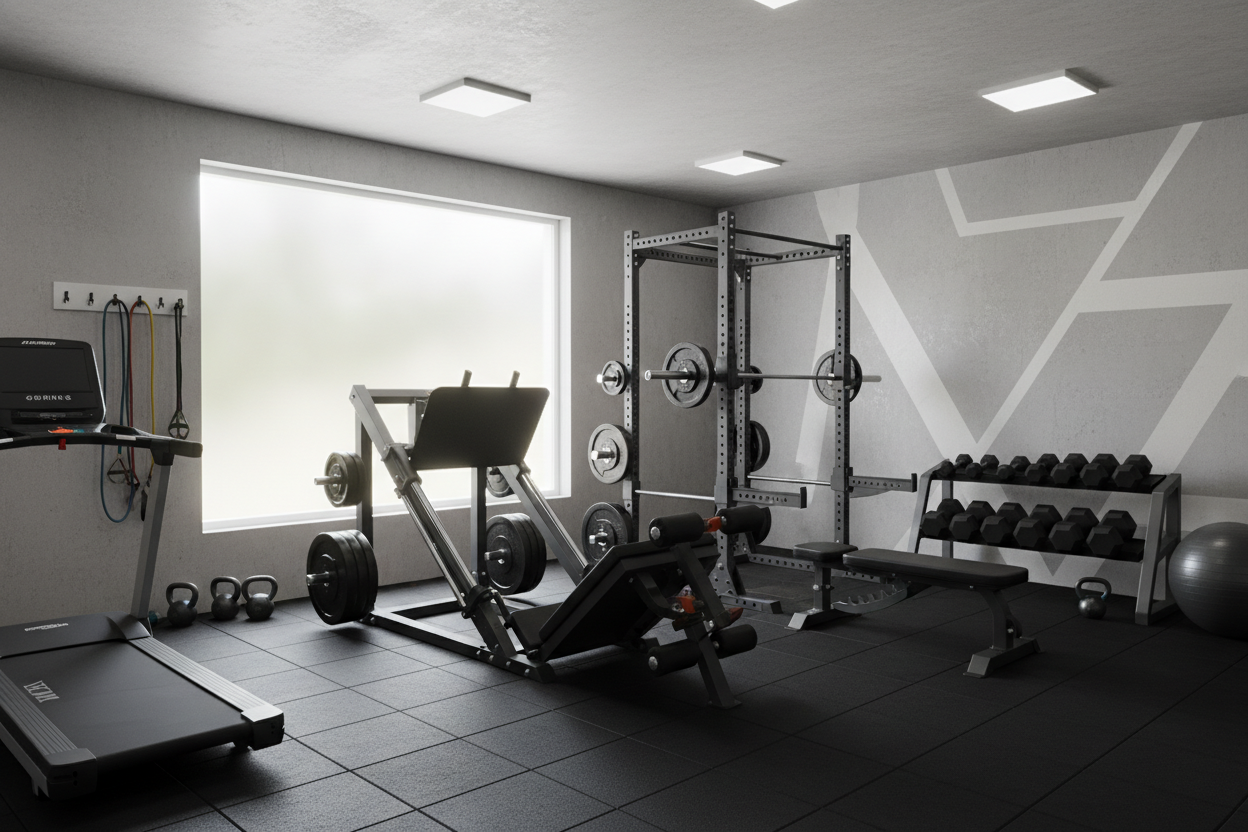
I remember the day I realized my commercial gym membership was a scam. I was waiting twenty minutes for a hack squat machine while some teenager scrolled TikTok on the seat. I went home, cleared the lawnmower out of the garage, and started hunting for home gym leg equipment. I quickly learned that buying for a garage is nothing like training at a Gold's. You don't have 5,000 square feet; you have a patch of concrete and a budget that doesn't include a $4,000 ISO-lateral leg press.
Quick Takeaways
- Prioritize multi-use machines over single-function units to save floor space.
- Focus on heavy-duty steel (11-gauge) and high weight capacities for safety.
- A leg press/hack squat combo is the most efficient use of a 4x7 foot area.
- Always check bearing quality and guide rod alignment before buying used gear.
The Brutal Reality of Garage Gym Leg Days
Transitioning from a commercial club to a garage is a wake-up call. At the big box gym, you have fifteen different ways to hit your quads. In your garage, you have to be the architect, the mechanic, and the janitor. Choosing the right pieces while outfitting your home gym is the most critical space-management decision you will ever make. If you buy the wrong leg machine for home gym use, you'll end up doing lunges in the driveway because your equipment ate all the floor space.
My first mistake was thinking I could just buy everything. I realized fast that a dedicated home gym for legs needs to be lean. You need tools that allow for maximum intensity without requiring a spotter or a forklift to move. Every square inch of your home gym leg setup has to earn its keep, or it's just an expensive place to hang your lifting belt.
Why Single-Station Machines Are a Trap
It is tempting to buy a cheap leg machine for home use just because it looks like the one you used in college. Don't do it. A dedicated leg extension or a seated calf raise machine has a massive footprint for a very limited range of motion. Unless you are a competitive bodybuilder with a three-car garage, these are space killers. Most 'budget' leg machines for home use are built with thin, 14-gauge steel and plastic bushings that start squeaking after a month of heavy sets.
When you buy a single-station leg machine at home, you're locking yourself into one movement. If that machine has a 200-lb weight stack limit, you'll outgrow it in a year of consistent training. I've seen too many lifters buy a leg machine for gym-style isolation only to realize they can't even fit their power rack in the room anymore. Keep it versatile or don't buy it at all.
The Heavy Hitter: Why Combos Rule the Garage
If you want to move real weight, you need a heavy-duty station. This is where a leg press and hack squat combo machine becomes the MVP of your training space. By stacking these two movements into one footprint, you get the absolute best home leg workout machine without sacrificing your entire floor. You can go from heavy presses to quad-dominant hack squats in about thirty seconds.
Look for a machine with a 30-degree or 45-degree angle. The 30-degree versions are often more compact, making them the best leg machine for home gym owners who are tight on space. Real leg machines for home need to handle at least 700 to 1,000 lbs. If the specs don't list a weight capacity, run the other way. You want 11-gauge steel and oversized footplates so you can adjust your stance for different muscle emphasis.
The Smith Machine Argument for Lower Body
Purists will tell you that a Smith machine is a coat rack, but they haven't tried doing Bulgarian split squats on one. A Smith machine home gym station is an incredible alternative to buying highly specific leg equipment for home use. It provides a fixed path that allows you to lean into the movement, targeting the quads or glutes with surgical precision without worrying about your balance failing before your muscles do.
I use mine for calf raises, sissy squats, and even heavy shrugs. It serves as a versatile piece of at home leg machine technology that replaces three or four smaller units. If you're building a home gym leg workout equipment list, a Smith machine or a high-quality rack with a lat pully should be near the top for the sheer variety of movements they offer.
How to Train to Failure Without a Spotter
The biggest fear of training legs alone is getting pinned. We've all seen the videos of guys getting folded like lawn chairs on a leg press. This is Why the Best At Home Gym Machine Is Built for Solo Lifters — it needs mechanical safeties that you can engage with a flick of the wrist. When you're shopping for best at home leg workout equipment, look for multiple lockout positions.
If you're pushing for hypertrophy, you have to go to failure. You can't do that safely on a cheap leg home gym equipment setup that doesn't have secondary safety stops. I personally prefer machines with long safety handles that are easy to reach even when your legs are shaking and your vision is getting blurry. It's the difference between a productive session and a trip to the ER.
Red Flags When Browsing Used Gear
You’ll often see leg equipment for sale on local marketplaces for pennies on the dollar. Be careful. I once drove two hours for a 'mint condition' leg press only to find the guide rods were pitted with rust and the bearings felt like they were filled with sand. If the carriage doesn't glide smoothly with just a finger's touch, the bearings are shot. Replacing those can cost more than the machine is worth.
Check the welds. Look for cracks in the powder coating near the joints, which indicates the frame has been stressed or bent. If the machine uses cables, look for fraying or 'bird-caging' in the steel wire. A snapped cable during a heavy set of leg curls is a nightmare you don't want to live through. If it looks like it was kept in a damp shed, leave it there.
My Biggest Equipment Mistake
I once bought a 'pro-style' leg extension/curl combo from a guy on Craigslist for $100. It looked great in the photos. Once I got it home and loaded three 45-lb plates on it, the frame actually twisted. Every time I reached the top of the rep, the whole machine tipped toward me. I spent more time trying to balance the machine than I did training my legs. I eventually sold it for scrap and invested in a proper, heavy-duty combo unit. Buy once, cry once.
FAQ
Do I really need a leg press for a home gym?
You don't 'need' it if you're a minimalist, but if you want to maximize quad growth without the spinal loading of a barbell squat, it's the most effective tool you can own. It allows you to push your legs to absolute failure safely.
What is the best leg machine for a small garage?
A 2-in-1 leg press and hack squat combo is the king of small spaces. It gives you the two most important compound machines in the footprint of one. If you have even less space, a high-quality Smith machine is the next best thing.
Is plate-loaded or stack-loaded better?
Plate-loaded is almost always better for home gyms. It's cheaper, easier to move, and you can use the plates you already own for your barbell work. Stack-loaded machines are convenient but incredibly heavy and expensive to ship.
Share:
"Does Squat Machine Work?" The Truth About Ditching Barbells
I Broke Two Weight Lifting Benches Before Learning This