
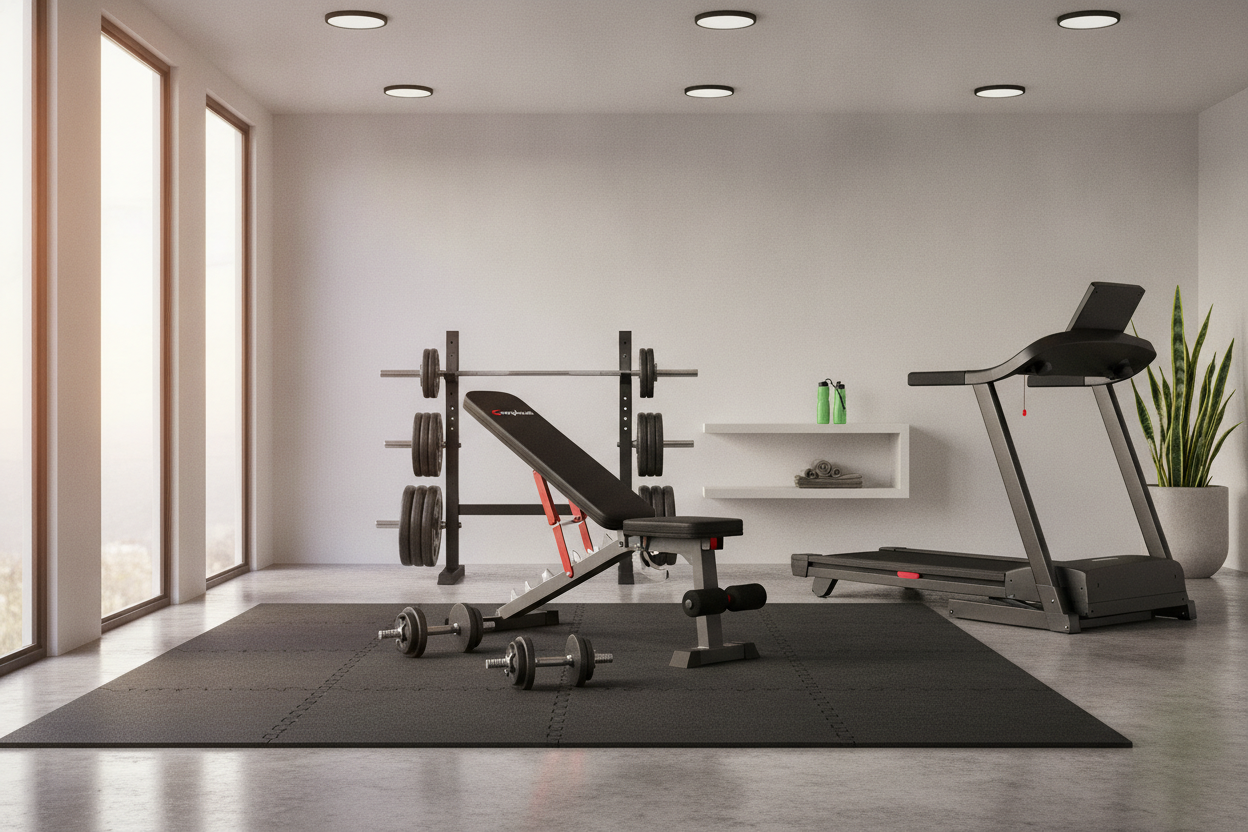
I’ve been there—scrolling through Amazon at 11 PM because your local commercial gym just jacked up their monthly rates again. You see the goplus weight bench sitting there with thousands of glowing reviews and a price tag that seems too good to be true. You start thinking, 'Why would I spend five hundred bucks on a name-brand bench when this one does the same thing for a fraction of the cost?'
The Amazon Algorithm Trap
The truth is, the Amazon algorithm is designed to show you what sells, not necessarily what survives a heavy leg day. Most of those five-star ratings come from people who use their bench as a glorified laundry rack or for light 10-lb dumbbell curls once a month. If you actually intend to move some iron, you need to know where the steel meets the road—and where this bench starts to creak. Most people leave a review the day the box arrives, but a bench doesn't show its true colors until you're six weeks into a strength program.
Before you commit, you need to realize that A Workout Bench Isn't a Real Bench for Weight Lifting if it can’t handle the lateral force of a heavy set of presses. The Goplus is marketed as a 'heavy duty' piece of kit, but that term is used loosely in the budget space. For a veteran lifter, the difference between 'heavy duty' on Amazon and actual heavy duty in a powerlifting gym is about 50 lbs of steel and a lot of peace of mind.
- Build Quality: Thin-walled 14-gauge steel that feels light in the hand.
- Stability: Fine for seated curls, questionable for heavy benching.
- Assembly: Quick but uses low-grade hardware.
- Value: High for beginners, low for serious athletes.
Unboxing and Assembling the Goplus Workout Bench
The box arrived looking like it had gone twelve rounds with a heavyweight champion. That’s standard for budget shipping, but what’s inside is what matters. Upon opening, the first thing I noticed was the weight—or lack thereof. A high-end bench feels like a tank; the goplus workout bench feels like a mountain bike frame. It’s light enough to move with one hand, which is great for small spaces, but a red flag for anyone planning to bench over 200 lbs.
The hardware is separated into a blister pack, which I appreciate, but the bolts themselves are basic Grade 5 or lower. I’d recommend using your own socket wrench instead of the flat-metal 'wrenches' they include unless you enjoy stripping bolts and losing your mind. I had the whole thing together in about 25 minutes. The steel gauge is noticeably thin—I’d estimate it at 14-gauge—which means it’s prone to flexing if you don’t tighten everything down until the metal starts to slightly indent.
One thing that surprised me was the finish. It’s a decent powder coat that doesn’t look like it will flake off the moment you touch it with a dumbbell. However, the plastic end caps feel brittle. If you’re dragging this across a concrete garage floor, don’t expect those feet to last more than a year before they crack.
The 'Wobble Test' Under Real Iron
Here is where things get dicey. I loaded up 225 lbs on the bar and sat down. Immediately, I felt a slight side-to-side sway. It’s not that the bench is going to collapse—it’s rated for a decent amount of weight—but the tolerances in the hinges just aren't tight. When you're mid-set and trying to stabilize a heavy load, the last thing you want is the foundation shifting an eighth of an inch under your shoulder blades.
The footprint is significantly smaller than a commercial-grade weight bench, which saves space but sacrifices stability. If you have a wide stance or like to use a lot of leg drive, you might find the rear stabilizer bar lifting off the ground if your weight isn't perfectly centered. The pop-pins for the incline adjustments are functional, but they don't have that satisfying 'thunk' of a precision-machined pin. I found myself triple-checking that the pin was actually through the hole every time I changed the angle.
At the flat position, the bench is okay. But once you move into a 45-degree incline, the center of gravity shifts, and that’s when the wobble becomes more pronounced. If you’re doing 50-lb dumbbell presses, you’ll probably never notice. If you’re pushing 100s, you’ll be wishing you had a wider base.
How the Pad Holds Up to Heavy Dumbbells
The padding is where budget brands always cut corners. The Goplus uses a fairly soft foam covered in a thin vinyl that feels more like a raincoat than upholstery. After just a few weeks of use, I could already see the 'memory' of my shoulder blades pressed into the foam. It doesn't have that high-density rebound that keeps you supported; you kind of just sink through it until you hit the wooden backing.
Then there’s the gap. The space between the seat and the back pad is about two inches wide. If you’re a taller lifter, your lower back is going to find that gap during incline work, and it’s not comfortable. It pinches, it shifts, and it breaks your focus. For a quick circuit, it’s fine, but for a dedicated chest day, it’s a constant annoyance.
Are the Leg and Preacher Attachments Actually Usable?
Goplus loves to add 'value' by throwing in a leg developer and a preacher curl pad. In theory, this makes it a full-body station. In reality, the biomechanics are... awkward. The leg extension pivot point is too high for anyone over 5'10", meaning the foam rollers end up pressing against your shins rather than your ankles. It’s a recipe for knee strain if you try to go heavy.
The preacher curl attachment is equally finicky. The pad is small—barely wide enough for a standard EZ-bar grip—and the height adjustment is limited. Friction is the biggest issue here. Because there are no bearings in the pivot points, the movement feels jerky. Instead of a smooth, consistent resistance, you get a 'catch-and-release' feeling as the metal sleeve rubs against the frame. It’s okay for high-rep 'pump' work with 20 lbs, but don't expect to build massive quads using this attachment.
The Final Verdict: Who Should Actually Buy This?
I’m not going to tell you this bench is trash, because it isn't. For the price of a few months of gym membership, you get a functional place to lift. If you are doing bodyweight exercises, light dumbbell work (under 40 lbs), or you're just starting out and don't know if you'll stick with it, the Goplus is a reasonable entry point. It’s better than lifting on a coffee table or the floor.
However, if you can already bench your body weight or you plan on training consistently for the next five years, you will outgrow this in three months. The lack of stability and the poor pad quality will eventually become a bottleneck for your progress. If you're serious about your home gym, I’d suggest looking at something like the Adjustable Weight Bench Owb01. It offers a much higher weight capacity, better stability, and a pad that won't feel like a pancake after a month of heavy use.
FAQ
Is the Goplus bench easy to fold and store?
Yes, that is its biggest selling point. You can pull a couple of pins and tuck it under a bed or in a closet in about sixty seconds. If you're living in a studio apartment, this is a massive plus.
What is the actual weight limit?
While the manual might claim 500 lbs or more, that usually includes the weight of the user. If you weigh 200 lbs, I wouldn't feel comfortable putting more than 200 lbs on the bar. Safety first.
Does it come with the weights?
No, this is just the bench and the attachments. You'll need to buy your own Olympic or standard plates to use the leg developer and preacher curl stations.
Share:
I Finally Figured Out Why Professional Weight Machines Feel Different
Stop Buying Transformers: You Just Need a Basic Exercise Bench