
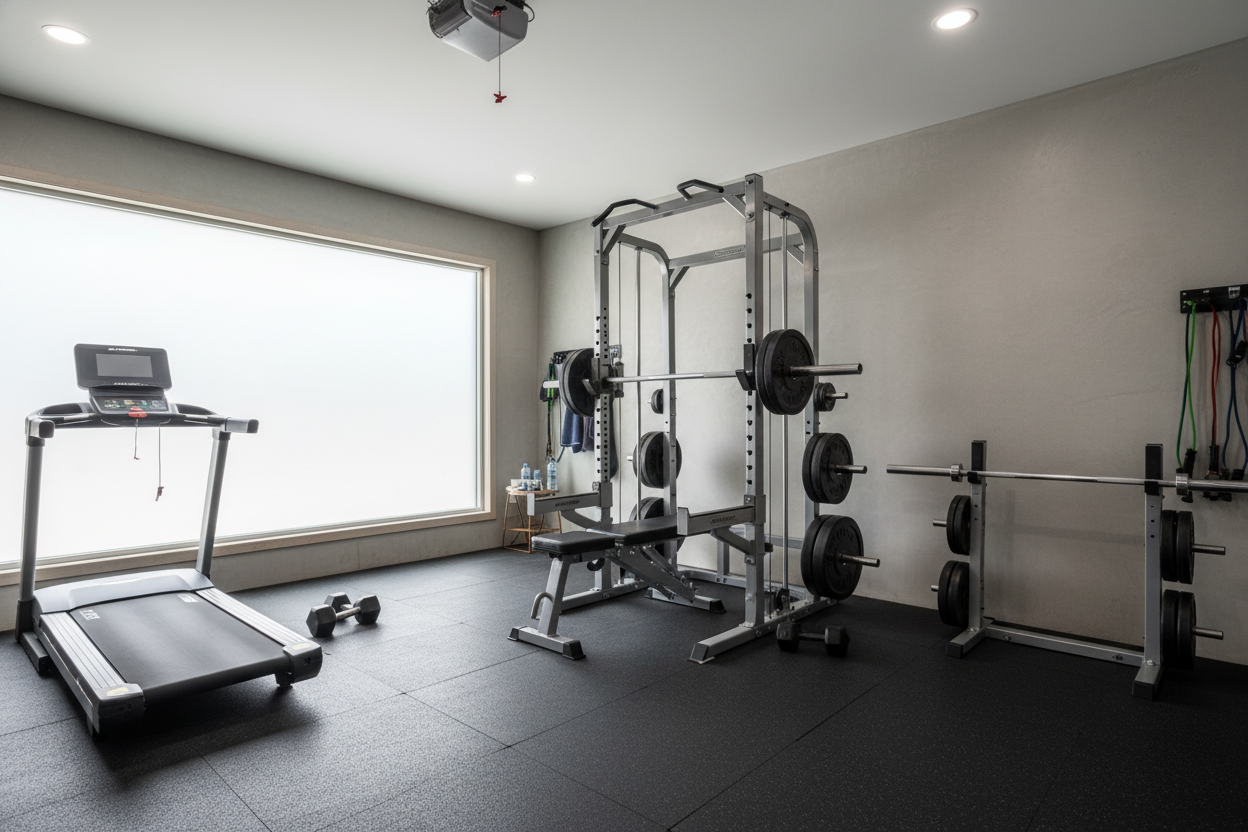
I spent my 20s as a barbell snob. If it wasn't a rusty Texas Power Bar in a chalk-stained rack, I didn't want anything to do with it. Then I hit 30, my left shoulder started clicking like a geiger counter, and I realized that what are smith machines designed for isn't 'ego lifting'—it's precision. I started seeing guys with massive quads using them for hack squats and realized I was the one missing out.
Quick Takeaways
- Fixed-path training removes the need for stabilizer muscles, allowing for more direct muscle isolation.
- Safety catches allow you to train to absolute failure without a human spotter.
- The starting weight of the bar is typically lighter than a standard 45-lb Olympic bar.
- Modern units often integrate cable systems, making them a space-efficient 'all-in-one' solution.
The Elephant in the Weight Room
The Smith machine gets a bad rap because it's 'easier' than a barbell. That’s like saying a screwdriver is 'easier' than a hammer. They do different things. What is a smith machine at its core? It is a weight-bearing bar locked between two steel rails, forcing a strictly vertical (or slightly angled) path. It doesn't wobble, it doesn't tilt, and it certainly doesn't care about your 'functional movement' philosophy.
Barbell purists hate it because it does the stabilization work for you. But for hypertrophy, that is actually a feature, not a bug. When you don't have to worry about the bar drifting forward on a squat or dumping over your head on a press, you can put 100% of your mental energy into the muscle you're trying to grow. The smith machine isn't a replacement for the barbell; it's a specialized tool for high-intensity volume.
Anatomy of the Rig: How the Hardware Works
When you look at the hardware, the magic is in the guide rods. Most high-quality units use solid steel rods and linear bearings. If those bearings are cheap, the movement feels like dragging a rake through gravel. When people ask what is a smith bar, they’re usually surprised to find it isn't a standard 45-lb bar. Because it's attached to a carriage system, the starting weight is often closer to 15 or 25 lbs.
High-end commercial units often feature a counterbalance system—using cables and weights hidden in the frame—to make the bar feel nearly weightless before you add plates. You can explore different Smith machine setups to see how bearing quality and these counterbalance systems change the experience. A smooth glide is the difference between a productive leg day and a frustrating workout that feels 'sticky' at the bottom of the rep.
Why the Fixed Bar Path Changes Everything
The fixed path is the secret sauce. In a free-weight squat, you are fighting to stay upright and balanced. On the smith machine, that balance is provided. This allows you to shift your feet forward—something impossible with a free barbell—to target the quads with almost zero lower back involvement. It turns a compound movement into something much closer to an isolation exercise.
This mechanical advantage allows you to push closer to failure. With free weights, your form usually breaks down before the muscle is truly exhausted. With the fixed bar, you can grind out those ugly, muscle-building reps at the end of a set without the bar path deviating. You are removing the 'noise' of stabilization to focus entirely on the 'signal' of muscle tension.
Who Actually Needs This Hardware?
I mostly recommend these for the solo home gym owner. If you train alone in a garage at 5 AM, the smith machine is your best friend. You just flick your wrists, and the hooks catch the bar on the nearest peg. It's built-in insurance. It’s also a godsend for bodybuilders chasing pure hypertrophy or lifters working around an injury who need to keep the weight on a predictable track. If you’re tight on room, you’ll have to decide if it’s worth the floor space in your garage, but for many, the safety alone makes it a 'yes.'
Modern Upgrades: Not Just a Squat Rack Anymore
These things aren't the clunky cages from the 1980s anymore. Modern manufacturers are building 'all-in-one' rigs where the Smith bar shares a frame with a functional trainer and a pull-up station. You get the fixed-path heavy lifting plus the versatility of dual pulleys. If I were building a home gym from scratch today with limited square footage, I’d be looking at an all-in-one Smith machine with cables to cover 90% of my training needs in one footprint.
The Final Verdict on Fixed-Path Lifting
Stop listening to the 'functional' police. The smith machine is a tool, and like any tool, it’s all about how you use it. Use it to finish off your legs after heavy free-weight squats, or use it to safely push your limits on chest day when you don't have a spotter. Understanding the hardware is the first step toward using it to actually build muscle rather than just checking a box. It’s not an enemy of the barbell; it’s the specialized backup that helps you get more volume with less risk.
My Experience: The 11 PM Fail
I once tried to max out my bench in a silent garage late at night. I misjudged the last rep, and the bar stayed on my chest. I had to do the 'roll of shame' across my ribs, and I couldn't breathe right for a week. A Smith machine would have caught that bar with a simple 15-degree rotation of my wrists. I learned my lesson: pride is heavy, but safety is heavier. Now, I use the Smith for my heavy incline work and save the free weights for when I have a buddy around.
FAQ
Does a Smith machine bar weigh 45 lbs?
Usually not. Most home and commercial units have a starting weight between 15 and 25 lbs because the bar is often hollow or counterbalanced by the carriage system.
Are Smith machine squats bad for your knees?
Only if you treat them like a free-weight squat. You need to walk your feet out slightly in front of the bar to maintain a vertical torso, which reduces shear force on the knees and hits the quads harder.
Can you build muscle with just a Smith machine?
Absolutely. Your muscles respond to tension and load. They don't know if the weight is on a rail or in the air; they only know they're being challenged to move a weight to failure.
Share:
Is Leg Press Equipment Actually Worth Giving Up Your Garage Parking?
I Swapped Dumbbells for the Lunge on Smith Machine. My Legs Blew Up.