
I remember the first time I fell for the trap. I was scrolling through a big-box retailer's website at midnight, looking for a way to get my heart rate up without spending a mortgage payment. I bought a $199 magnetic rower that looked great in the photos. Three weeks later, the 'heavy-duty' nylon strap began to fray, and the seat felt like I was sliding on gravel. Most cheap cardio equipment is designed to be sold, not used. It's built by people who think a 'serious workout' is a brisk walk to the mailbox.
Quick Takeaways
- Budget machines use plastic bushings and flimsy flywheels that feel jerky and unnatural.
- A simple dragging sled is virtually indestructible and offers infinite resistance.
- DIY sandbags provide 'odd object' conditioning that machines can't replicate.
- Strongman tools take up zero permanent floor space compared to a bulky treadmill.
The Ugly Truth About Budget Conditioning Gear
The manufacturing math on cheap cardio machines is depressing. By the time a company pays for shipping, marketing, and the retail markup on a $300 elliptical, there is maybe $40 worth of actual steel and components in that box. You end up with 1-inch thin steel tubing and 'magnetic resistance' that feels like pedaling through lukewarm soup. These machines have a weight capacity that's usually an optimistic lie, and the moment you try to sprint, the whole unit wobbles like a folding chair.
When you buy a budget bike or rower, you’re buying a ticking clock. The bearings aren't sealed, the plastic pedals will crack under any real torque, and the electronics will fry the first time you actually sweat on them. It’s a disposable approach to fitness that wastes your money and kills your motivation because the equipment is simply frustrating to use.
Why Sleds Outperform Cheap Cardio Machines Every Time
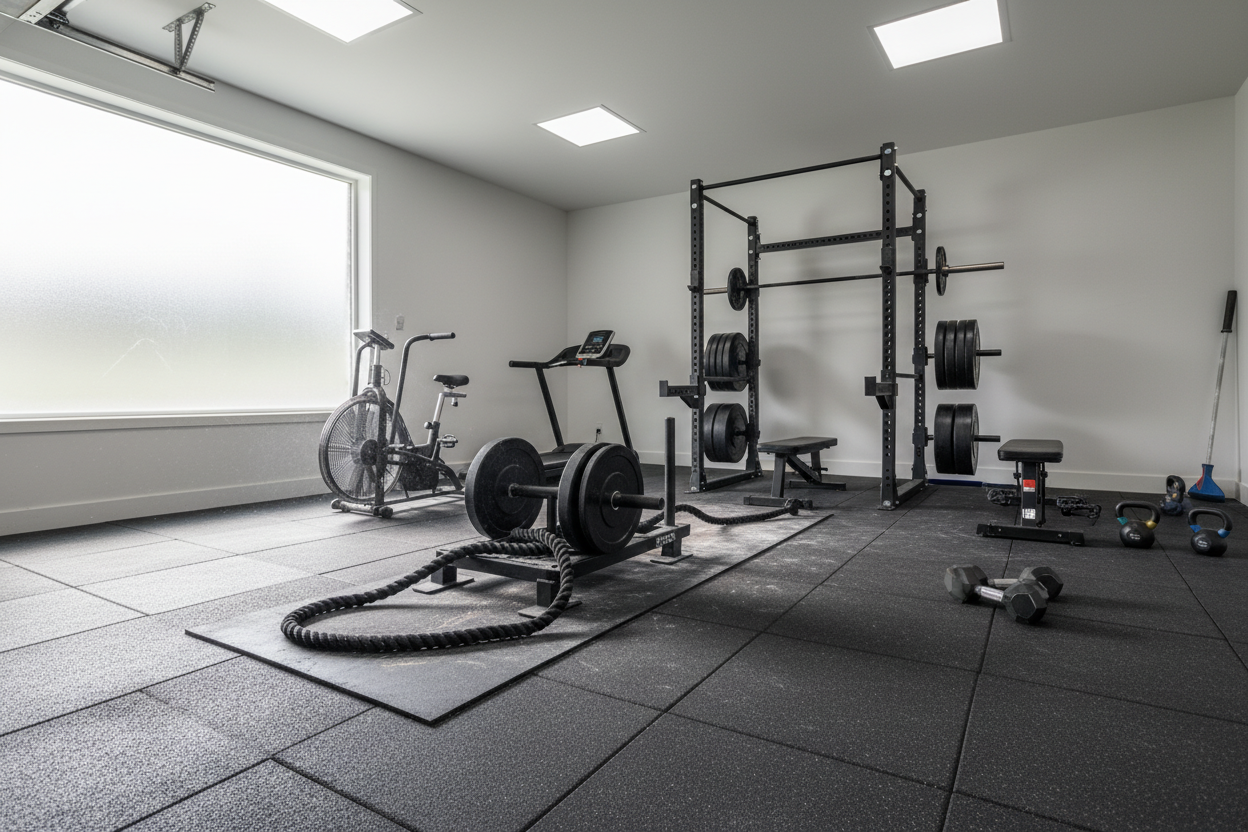
Compare that plastic junk to a steel sled. A basic dragging sled—even a soft-surface 'magic carpet' version—is just a piece of material and a strap. There are no electronics to fail, no bearings to seize, and no cheap plastic shrouds to rattle. When you want more resistance, you don't click a flimsy button; you just stack another 45-lb plate on it. Dragging 200 lbs across concrete creates a metabolic demand that makes a budget stationary bike feel like a joke.
If you are looking at the Cardio category for your home gym, you need to prioritize durability over features. Sleds offer concentric-only loading, which means you can absolutely redline your heart rate without the muscle soreness that comes from high-impact running. It’s a brutal, honest way to build a gas tank that actually transfers to moving weight in the real world.
Building a Brutal Conditioning Circuit Under $100
You don't need a four-figure budget to get elite conditioning. For less than $100, you can build a setup that will outlast any piece of cheap cardio equipment on the market. Start with a basic strap-based dragging sled ($40). Add a DIY sandbag: go to a hardware store, buy two 50-lb bags of play sand, double-bag them in heavy-duty contractor bags, and stuff them into an old military surplus duffel or a cheap canvas laundry bag wrapped in duct tape ($15).
Round it out with a 1-lb weighted jump rope ($20). Now you have a circuit: sled drags for 40 yards, 20 sandbag cleans, and 50 double-unders. This setup fits in a gym bag, costs less than a pair of lifting shoes, and provides a higher level of intensity than a $500 'smart' stepper ever could. You're training your grip, your posterior chain, and your lungs all at once.
The Unbeatable Space-Saving Benefits
The biggest killer of home gyms is 'treadmill creep.' You buy a machine, it takes up a 3x6 foot footprint, and suddenly you don't have room to deadlift. Most cheap cardio machines don't even fold properly, or if they do, the hinge is the first thing to snap. A dragging sled can be hung on a single heavy-duty hook on your wall. A sandbag can live under your lifting platform or in a corner.
In a 200-square-foot garage, every inch is a premium. Choosing strongman-style tools allows you to keep your floor open for the work that matters—heavy compound lifts. When it’s time to breathe hard, you grab your sled, head to the driveway, and get to work. When you're done, your gym is a gym again, not a graveyard for broken plastic machines.
But What If You Absolutely Need to Run Indoors?
I get it. If you live in North Dakota and it's -20 degrees outside, dragging a sled in the driveway isn't happening. But if you're in that position, do not settle for a $300 treadmill from a big-box store. It will be in a landfill by spring. You are better off saving your money until you can afford a unit with a continuous-duty motor (at least 3.0 CHP) and a frame that doesn't flex when your foot hits the deck.
If you are dead-set on an indoor unit, you need to be smart about what actually lasts. Before you pull the trigger on a whim, you should read our breakdown to Stop Buying Cheap Treadmills: The Best Cardio Machine for Home. It will save you from the headache of a motor burnout six months into your training.
Personal Experience: The Rower That Roped Me In
Years ago, I bought a budget rowing machine thinking I was being 'frugal.' The first week was fine, but by the second month, the internal bungee cord lost its tension. I ended up with a 4-inch dead zone at the start of every stroke. It felt like I was rowing a boat with a broken oar. I eventually sold it for $40 on Craigslist and bought a used tire and some tow straps. That tire sled has lasted five years and hasn't cost me a dime in maintenance. My only mistake was thinking I needed a screen and a 'program' to get tired.
FAQ
Is a sled loud on a driveway?
Steel sleds on concrete make a distinct grinding noise that your neighbors might hate at 5 AM. If noise is a concern, get a 'soft' sled or a magic carpet sled made of heavy-duty nylon. They are nearly silent and work great on turf or pavement.
Can I use a sandbag for cardio?
Absolutely. High-rep sandbag cleans or 'over-the-shoulder' tosses will spike your heart rate faster than almost any machine. It’s a total-body movement that forces your core to stabilize an unstable load.
Do sled drags build leg muscle?
Yes, especially the quads. If you walk backward while dragging the sled, you'll get a massive quad pump that also helps with knee stability. It’s a staple for a reason.
Share:
I Abused the Vibespark Adjustable Weight Bench for 30 Days
The Ugly Truth About Your Heavy Gym Equipment Online Order