
If you have ever spent a Tuesday at 2 AM scrolling through Amazon or watching late-night TV, you have seen them. Those neon-colored, spring-loaded contraptions promising a six-pack in six minutes. Most of the time, that ab machine is nothing more than a glorified coat rack waiting to happen. I have tested dozens of these 'innovative' gadgets, and most of them share one common trait: they are built to sell, not to build muscle.
- Cheap plastic rollers and spring-loaded gear often assist the movement, making it easier and less effective.
- Spot reduction is a myth; you cannot pick where you lose fat.
- Real core strength requires progressive overload, just like your squats or bench press.
- Heavy-duty steel beats 'As Seen on TV' plastic every single time.
The Late-Night TV Trap: Why Cheap Plastic Gadgets Fail
Most abs trainer equipment sold via infomercial is biomechanically illiterate. These machines often use springs to 'assist' you back to the starting position. By doing that, they take the tension off the muscles you are actually trying to work. If the movement feels easy, it is probably because the machine is doing half the work for you.
A flimsy tummy exercise machine also tends to have a fixed, unnatural range of motion. Instead of engaging the deep transverse abdominis, these gadgets often force your lumbar spine into flexion under shear force. I have seen more lower back tweaks from cheap abdominal machines at the gym than I have from heavy deadlifts. If it wobbles when you put your weight on it, get rid of it.
The Ugly Truth About Spot Reduction
Let’s kill the biggest myth in fitness: an exercise machine for stomach abs will not melt away belly fat. You could spend four hours a day on an abdominal workout machine, but if your body fat percentage is high, those muscles will stay hidden. You build the muscle in the gym, but you reveal it in the kitchen.
When you use an ab workout machine, your goal should be hypertrophy—making the muscle bellies thicker and more defined. This requires high tension and resistance. Doing 500 reps of unweighted crunches on a floor slider is just high-volume cardio for your hip flexors. It won't give you that blocky, athletic midsection you are actually after.
What Heavy-Duty Core Equipment Actually Looks Like
The best ab machine isn't a dedicated 'cruncher.' It is usually a versatile piece of heavy steel that allows for multiple angles and heavy loading. True abdominal training requires balancing the anterior core with heavy-duty core and back equipment. If you only work the front, you are just begging for posture issues and a weak spine.
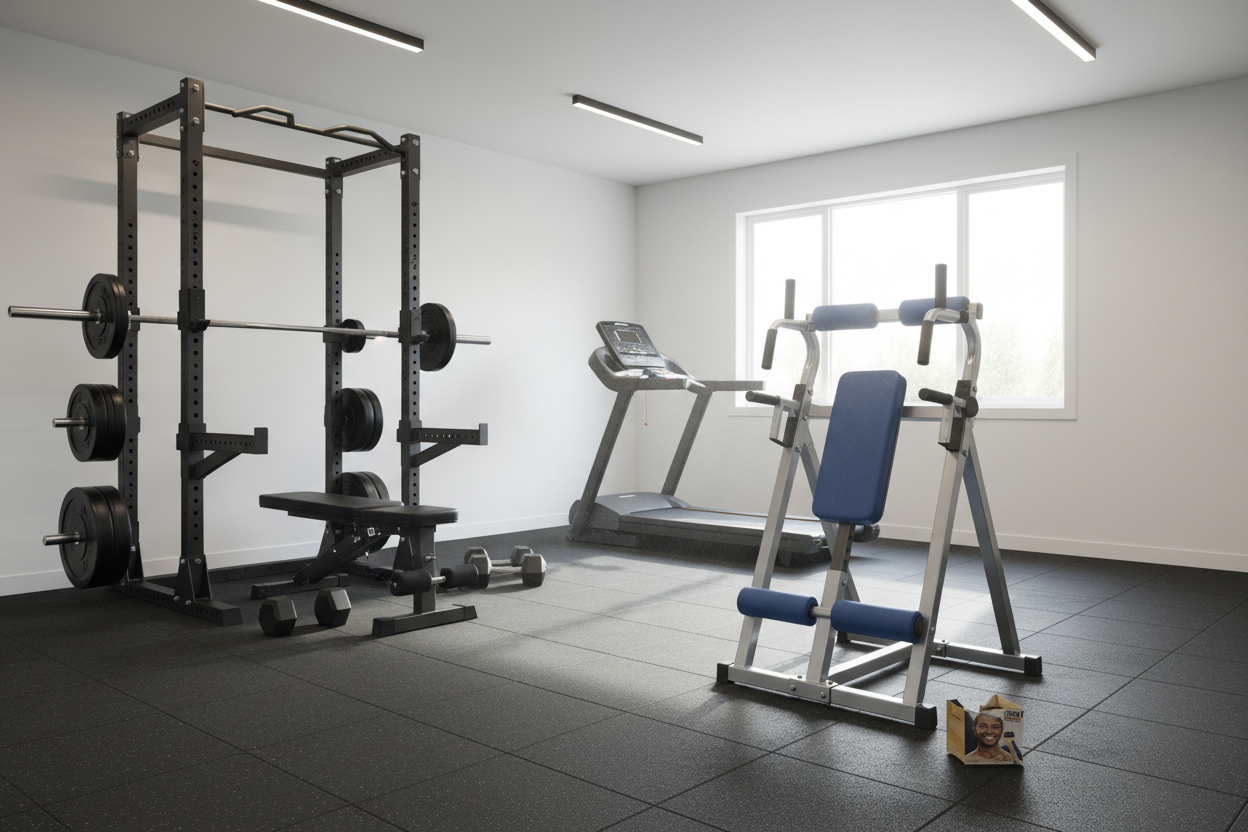
In my own garage, I ditched the plastic rollers for a 3-in-1 core trainer. It is a beast that handles decline sit-ups, back extensions, and Nordic curls. Because it is made of real steel and has a 300-lb capacity, I can hold a 45-lb plate while I train. That is how you actually build a core that can handle a heavy squat.
Ditch the Floor Crunches: How to Add Real Resistance
If you want your abs to pop, you have to treat them like any other muscle group. You wouldn't bench press an empty bar for 100 reps and expect a massive chest. So why do we do it with our abs? The best weight machine for abs is often a cable stack or a plate-loaded station where you can actually track your progress.
I am a huge fan of repurposing big gear for core work. For example, a weighted Smith machine ab workout allows you to perform stabilized crunches with massive amounts of resistance. It is far more effective than any 'ab rocker' ever could be. You want a machine that challenges you to stay stable under a load, not one that holds your hand through the movement.
The Verdict: What Deserves Floor Space in Your Gym?
Space is the most valuable currency in a home gym. Don't waste it on a single-use plastic ab trainer machine. Look for versatility. A Smith machine home gym station or a high-quality cable crossover will give you a thousand more core variations than a dedicated 'abs machine' ever will.
Stick to heavy steel, adjustable angles, and the ability to add external weight. If a piece of equipment doesn't allow for progressive overload, it is just a toy. Buy tools, not toys, and your back—and your six-pack—will thank you.
Personal Experience: The $60 Bruise
Years ago, I fell for a 'revolutionary' ab roller with an internal carbon steel spring. On my second week of using it, the internal coil snapped at the bottom of a rep. The handle jerked, I face-planted into my rubber flooring, and I had a bruise on my ribs for a month. That was the day I realized that if it is made of thin plastic and promises miracles, it belongs in the trash. Now, I only use gear that can support my full body weight without groaning.
FAQ
What is the most effective ab machine at the gym?
The cable tower is king. It allows you to do standing cable crunches, woodchoppers, and pallof presses with measurable, adjustable resistance. It beats any seated crunch machine by a mile.
Are ab machines better than floor exercises?
Only if they allow you to add weight. Floor exercises are great for beginners, but once you can do 20 perfect reps, you need resistance to keep growing. A quality machine or bench provides that load.
Do ab rollers actually work?
Yes, but only if you have the baseline strength to keep your lower back from arching. They are an advanced tool. Skip the 'assisted' versions and get a simple, heavy-duty wheel with a steel axle.
Share:
I Wasted $2K on Upper Body Workout Machines for Home (Buy This Instead)
I Fit a Heavy-Duty Compact At Home Gym Into 50 Square Feet