
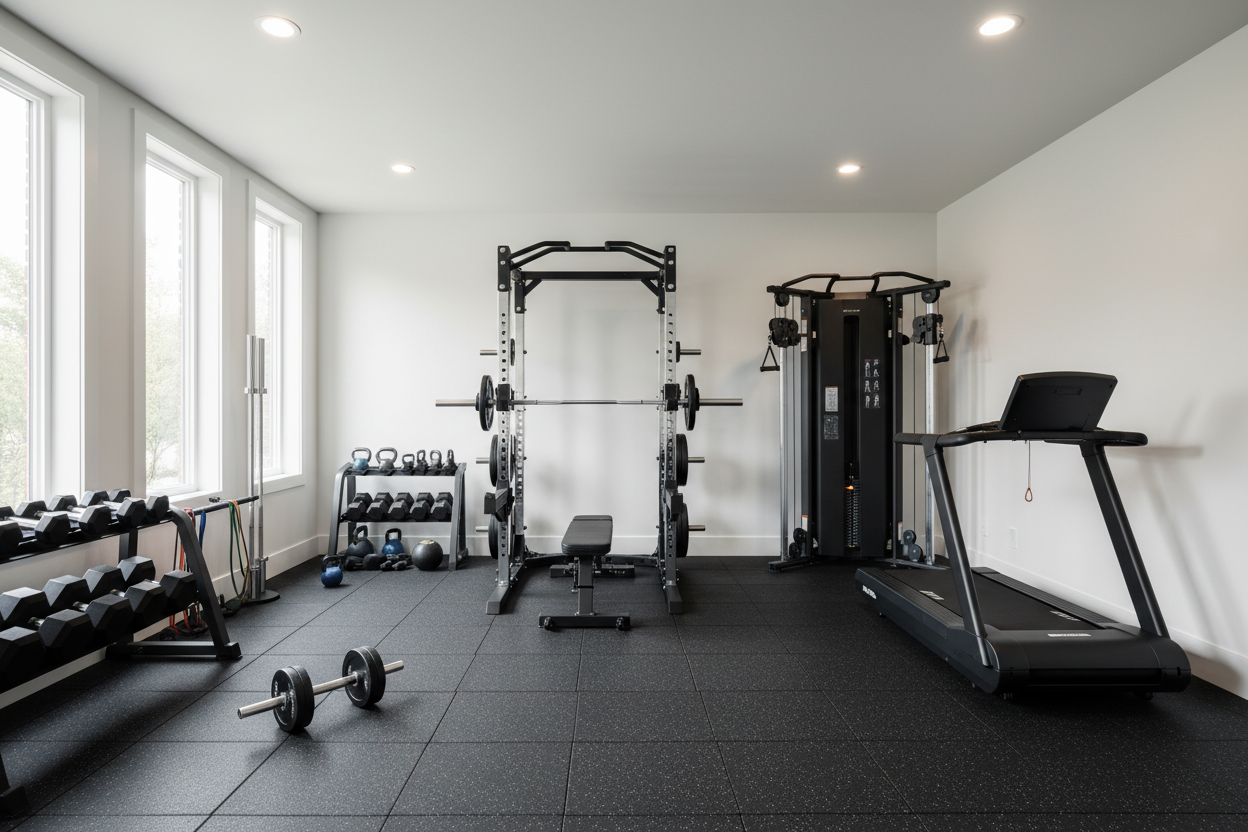
For years, I was that guy. The one who looked at a leg press and saw a glorified recliner. If it wasn't a barbell or a heavy set of dumbbells, I didn't want it in my garage. I thought the best workout gym machines were strictly for commercial clubs and people who didn't want to stabilize their own weight. Then I hit a wall. My elbows started screaming during heavy bench sets, and my progress stalled because I was too afraid to push to failure without a spotter nearby.
Quick Takeaways
- Machines provide the stability needed to reach true muscular failure without the risk of being pinned.
- Space-efficient designs like Smith machines or independent-arm benches are the most viable for garage setups.
- Unilateral movement is the secret to fixing the strength imbalances that barbells often hide.
- Look for 11-gauge steel and high-quality bearings to ensure the machine feels like a commercial unit.
Confessions of a Former Free-Weight Snob
I used to preach that the only things you needed for a world-class physique were a rack, a bar, and some iron plates. I called machines 'cheating.' But here is the reality: the human body doesn't care if the resistance comes from a piece of cast iron or a cable stack. It only cares about tension. When you are five reps into a heavy set of squats, your core and lower back often give out before your quads do. That is where machines shine.
By removing the need to balance the weight, I can finally focus 100% of my mental energy on the muscle I am actually trying to grow. This shift has been the single biggest factor in my recent hypertrophy gains. I can push my legs until they literally won't move anymore, knowing I won't end up on a 'gym fail' compilation. If you are training alone in a garage, a machine is the most reliable spotter you will ever have.
Replicating the Best Workout Machine at Gym Chains
The challenge with home gyms is that we don't have 10,000 square feet to work with. You have to be ruthless about what stays and what goes. When I started looking for the best workout machine at gym franchises to bring home, I realized most commercial units are built for 24/7 abuse, which makes them massive. For a garage, you need that same smooth feeling but with a footprint that doesn't force you to park your truck in the driveway.
I spent weeks researching what actually makes the best workout gym machines worth buying before pulling the trigger. It comes down to the resistance curve. A cheap machine feels 'sticky' or has a dead spot at the top of the movement. A high-quality unit uses precision bearings and pulleys that make 50 lbs feel like 50 lbs through the entire range of motion. If the machine uses plastic bushings instead of ball bearings, walk away. You'll regret the purchase the first time you try to do a slow eccentric rep.
The Best Exercise Equipment for Arms and Legs (That Actually Fits)
Isolation is the name of the game for aesthetics. Barbells are great for moving heavy loads, but they are notorious for letting your dominant side take over. My right pec has always been slightly larger than my left because it 'helps' during heavy benching. To fix this, I started looking for the best exercise equipment for arms and legs that allowed for unilateral movement.
One of the smartest additions to my space was the Weight Bench Chest Press Machine Independent Arms Z1 Pro. Because the arms move independently, my left side can't hide. It forces a level of symmetry that you just can't get with a standard bar. For legs, I opted for a plate-loaded leg extension and curl combo. It fits in a 3x3 foot corner but provides a quad pump that a back squat simply can't replicate. When you can isolate the muscle without your lower back screaming for mercy, your growth potential changes completely.
Can One Heavy-Duty Station Actually Do It All?
If you are tight on space, the 'one machine, one purpose' philosophy will kill your gym layout. You need versatility. This is where the modern Smith machine has evolved. While old-school lifters hate on them, a high-end Smith Machine Home Gym Station is a Swiss Army knife. I use mine for everything from steep incline presses to calf raises and even inverted rows.
The key is the engineering. You want a 7-degree slant on the rails to mimic the natural path of a bar, and you want a counter-balance system if possible. My current setup integrates a cable crossover and a pull-up station into the frame. Instead of four separate machines taking up the entire garage, I have one heavy-duty hub that handles 80% of my accessory work. It’s about being smart with your square footage without sacrificing the quality of the lift.
How to Stop Overcomplicating Your Garage Layout
My biggest mistake when I started adding machines was trying to buy everything at once. I ended up with a cluttered mess where I couldn't even walk between stations. Now, I follow a simple rule: if a machine doesn't replace a movement I struggle to do safely with free weights, I don't buy it. You don't need a machine for every body part; you need machines for the body parts that need the most help.
Start with a solid foundation. Get your power rack and your plates first, then look at a comprehensive Home Gym collection to see which machines fill the gaps in your training. Maybe it's a functional trainer for cable flyes, or a dedicated leg press to save your knees. Balance is key. Keep the floor clear enough to move, and keep the equipment high-quality enough that you actually look forward to using it. Training at home should feel like an upgrade, not a compromise.
FAQ
Do I really need machines if I have a barbell?
You don't 'need' them, but they make hypertrophy much easier. Machines allow you to isolate specific muscles and train to failure safely, which is hard to do with a barbell when you're training solo.
Are plate-loaded machines better than selectorized ones?
Plate-loaded machines are usually better for home gyms because they are cheaper to ship and easier to move. Selectorized (pin-loaded) stacks are more convenient for fast weight changes but are much heavier and more expensive.
How much floor space do I need for a functional trainer?
Most units require at least a 5x5 foot footprint, but you need to account for 'working space.' Plan for at least 8x8 feet of clear floor to ensure you can extend the cables fully in every direction.
Share:
How to Pick Equipment for a Gym Without Wasting Thousands
Why I Stopped Putting Clips on Smith Machine Bars