
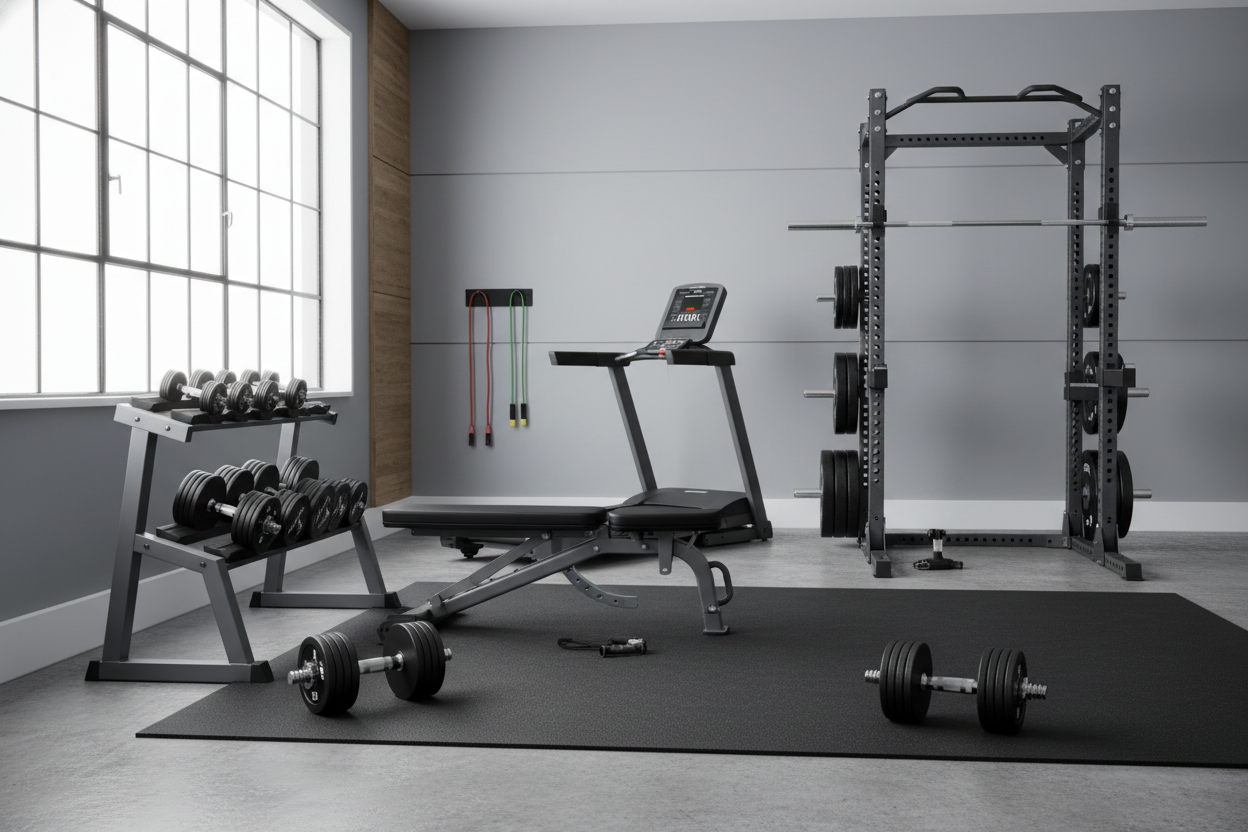
I’ve spent the last decade turning my garage into a sanctuary of iron, and if there’s one thing I’ve learned, it’s that 'cheap' usually ends up being the most expensive way to buy gear. I spent years scrolling through Amazon at midnight, trying to convince myself that a $300 set of imported weights was just as good as the premium stuff. I was wrong. After my third pair of plastic-heavy adjustables literally fell apart during a set of incline presses, I realized I was done playing games.
I finally bit the bullet and invested in made in usa adjustable dumbbells because I was tired of my equipment feeling like a child's toy. When you’re moving heavy weight over your face, you don't want to hear plastic clicking or feel plates shifting. You want the confidence that only domestic steel provides.
Quick Takeaways
- Durability: No plastic dials or fragile internal gears to shatter if you set them down a little too hard.
- Feel: Authentic barbell-style knurling that actually stays in your hand when things get sweaty.
- Resale Value: These things hold their value like a vintage truck; you won't find them in a landfill in three years.
- Precision: Machined tolerances mean the weights don't rattle, providing a much more stable lift.
The Frustrating Cycle of Cheap Imported Iron
We’ve all been there. You see a flashy ad for a 'revolutionary' adjustable set that costs less than a month’s worth of protein powder. It looks great in the photos, but the moment it arrives, the reality sets in. The handles are made of a weird, slick chrome that turns into a slip-and-slide the second your palms start to sweat. The selector mechanism feels like it was pulled off a budget toaster. It’s frustrating because you’re trying to build a serious body with unserious tools.
The biggest issue with mass-produced overseas adjustables isn't just the aesthetic; it’s the inevitable failure point. Most of these units rely on plastic internal gears or thin nylon locking pins. Over time, those components wear down. One day you’re doing a set of rows, and suddenly a 10-pound plate just slides off because the plastic teeth finally rounded out. That isn't just annoying; it’s a trip to the ER waiting to happen. I’ve seen guys try to duct tape their selector dials shut, which is about as safe as it sounds. If you're training for longevity, you can't be using gear that has an expiration date.
When you buy cheap, you’re essentially renting your equipment. You use it for a year, it breaks, and you buy another pair. By the time you’re on your third set of imports, you’ve already spent what it would have cost to buy one bulletproof American set. Breaking that cycle requires a shift in mindset: stop looking at dumbbells as a 'purchase' and start looking at them as a piece of infrastructure for your life.
What Does American-Made Actually Mean for Gym Gear?
In a market flooded with 'designed in the USA' labels (which usually means 'we drew it here and outsourced the rest'), finding authentic adjustable dumbbells made in usa is a different beast entirely. True domestic manufacturing means the steel is sourced from local mills, the machining is done on CNC lathes by people who get paid a living wage, and the quality control is tight enough to catch a deviation of a thousandth of an inch. It’s the difference between a tool that works and a tool that lasts.
Domestic brands tend to prioritize heavy-duty materials like solid steel and aircraft-grade aluminum over the cheap cast iron and plastic used in mass-market sets. When you compare these to a standard fixed rack of dumbbells, you start to see the engineering challenge. A fixed dumbbell is simple; an adjustable one is a machine. If you’re going to buy a machine, you want it built in a shop that understands the rigors of a garage gym environment—extreme temperature swings, humidity, and the occasional rough landing.
Authentic American manufacturing also means you have a real human to talk to if something goes wrong. Most of these companies are run by lifters themselves. They aren't faceless corporations trying to shave five cents off the production cost of a bolt. They’re building gear they actually want to use in their own gyms. That pride of craftsmanship is visible in every weld and every pass of the milling machine. It’s about buying a product that doesn't just meet the minimum safety standard but exceeds it because the person who made it knows exactly what’s at stake.
The 3 Features That Separate Domestic Steel from the Rest
The first thing you’ll notice when you unbox a premium domestic set is the weight—not just the poundage, but the density. There’s no 'dead space.' The materials feel substantial because they are. While imports use hollow tubes and plastic spacers to bulk up the size, American sets are usually dense, compact blocks of steel. This makes a massive difference in the balance of the dumbbell; it feels like a single unit rather than a collection of parts.
Then there’s the knurling. This is my biggest gripe with cheap gear. Most adjustable sets have handles that are either smooth plastic or have a 'knurling' pattern that’s about as aggressive as a piece of silk. While testing the Adjustable Dumbbells Ab01, I was reminded of why handle texture matters. A proper, sharp knurl bites into the skin just enough to give you a locked-in grip without tearing you apart. It allows you to focus on the contraction of the muscle instead of worrying if the weight is going to rotate out of your hand during a heavy set of RDLs.
Finally, there is the total lack of plastic in the load-bearing path. In a premium set, the parts that actually hold the weight are made of metal. Whether it's a threaded steel rod or a heavy-duty aluminum locking plate, these components are designed to handle the shear forces of a 100-pound load. You can feel the 'thunk' when the weight locks in—it’s a mechanical sound, not a plastic 'click.' That sound is the sound of safety.
Machined Tolerances vs. Slop
If you’ve ever used a cheap adjustable set, you know the 'slop.' It’s that annoying rattle where the plates jingle every time you move. It might seem like a minor annoyance, but when you’re pushing for a PR, that shifting weight creates micro-instability. Your stabilizers have to work twice as hard just to keep the dumbbell from wobbling. This leads to the very real question: Are Adjustable 100 lbs Dumbbells Actually Safe for Heavy Presses?
With high-end domestic sets, the tolerances are incredibly tight. The plates fit together like a puzzle, leaving almost no room for movement. When you press them, they feel like a solid piece of iron. This stability allows you to move more weight because your brain isn't subconsciously trying to balance a rattling mess. It’s the difference between driving a sports car with tight suspension and a 20-year-old van with a loose steering wheel. One inspires confidence; the other makes you want to go slow.
So, Should You Actually Spend the Money?
Look, I’m not going to tell you that everyone needs to drop a grand on dumbbells. If you’re just looking to stay active and do some light toning while you watch Netflix, the cheap stuff is probably fine. But we need to be honest about who these are for. If you consider yourself a 'lifter,' if you follow a program like 5/3/1 or PPL, and if you plan on training for the next twenty years, the math changes.
Think about the cost over time. A $1,000 set of American-made adjustables that lasts 30 years costs you $33 a year. A $300 set that breaks every two years costs you $150 a year. It’s the 'Vimes' Shoes' theory of socioeconomic unfairness applied to the garage gym. Investing in quality upfront is the cheapest way to own equipment in the long run. Plus, the resale value on brands like Ironmaster or PowerBlock (the higher-end models) is insane. You can usually sell them for 80-90% of what you paid because people know they don't wear out.
If you are a powerlifter or a heavy-duty trainee, you need gear that can handle the abuse. You need something you can set down firmly between sets of heavy rows without wondering if the internal mechanism just cracked. If you value your time and your safety, and you hate the idea of contributing to a landfill, pay the 'USA tax.' It’s worth every penny for the peace of mind alone.
Building Your Setup Around One Bulletproof Pair
One of the best things about a high-quality adjustable set is how much gear it replaces. You can effectively replace a 20-foot long rack of dumbbells with a single 2-foot footprint. This allows you to spend your remaining budget on a few other 'buy-it-for-life' pieces. I always recommend investing in the Adjustable Weight Bench Owb01 as the first companion. If your weights are indestructible, your bench should be too. A solid bench and a heavy set of adjustables allow you to perform 90% of the exercises you’d find in a commercial gym.
To maximize your setup, focus on big, compound movements. Use your adjustables for goblet squats, Bulgarian split squats, and heavy presses. Because these sets often go up to 75, 90, or even 120 pounds per handle, you won't outgrow them anytime soon. You can run an entire hypertrophy program out of a corner of your bedroom as long as the gear is reliable. Don't overcomplicate it with dozens of attachments. Get one pair of dumbbells that will outlive you, a solid bench, and get to work.
My Personal Experience
I learned this lesson the hard way. I was doing a heavy set of dumbbell floor presses with a pair of 'budget-friendly' adjustables. On the last rep, I didn't even drop them—I just set them down a bit quickly. I heard a 'crack' that sounded like a dry branch snapping. The plastic housing on the right dumbbell had shattered, and the plates spilled across my floor. If that had happened mid-rep? I’d be looking at a broken nose or a crushed chest. I sold the remaining 'good' one for parts on Marketplace the next day and ordered a steel set. I haven't looked back once.
Frequently Asked Questions
Can you drop made in USA adjustable dumbbells?
While most manufacturers advise against dropping any adjustable dumbbell, American steel sets like Ironmasters are famous for being able to handle it. They use a manual locking screw rather than a fragile dial, making them significantly more drop-resistant than their plastic counterparts.
Do they require maintenance?
Very little. A quick wipe down with some 3-in-1 oil once every few months will keep the steel from oxidizing, especially if your gym is in a humid garage. Unlike imports, you don't have to worry about lubricating delicate plastic gears.
Are they too bulky for small movements?
Domestic sets are often more compact than imports because they use denser steel instead of bulky plastic casings. This actually makes them better for movements like lateral raises or bicep curls where a massive, oversized dumbbell would get in the way of your range of motion.
Share:
I Hunted for a Play It Again Sports Weight Bench (Here's What I Found)
Is That Popular Inspire Dumbbell Set Actually Enough Weight?