
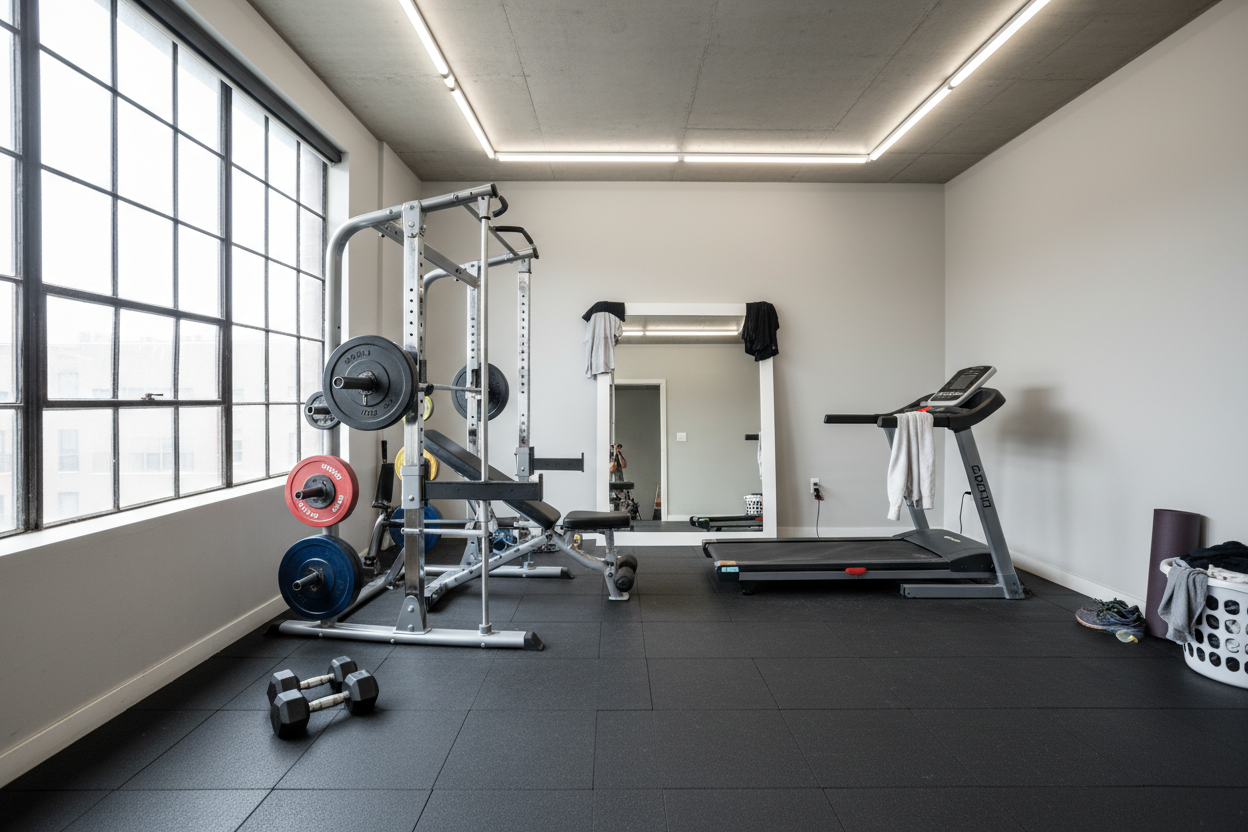
I remember staring at my first 'all-in-one' unit. It looked great in the catalog, but the first time I tried to bench 225 on it, the whole frame wobbled like a folding chair. Most home fitness gyms aren't built for actual training; they're built for people who like the idea of training until the reality of friction-heavy cables and cramped leg extensions sets in.
If you're tired of your local commercial gym raising prices or just want to stop waiting 20 minutes for a squat rack, you're likely looking for a fitness machine for home use. But before you drop two grand on something that looks like a spaceship, let's talk about what actually lasts.
- Steel Gauge Matters: Don't buy anything thinner than 14-gauge; 11-gauge is the gold standard for stability.
- Pulley Ratios: Understand the difference between 1:1 and 2:1 ratios before you wonder why 100 lbs feels like 50.
- Footprint vs. Function: A machine that does 50 things poorly is worse than a machine that does 5 things perfectly.
- Height Clearance: Always measure your ceiling twice — especially if you plan on doing pull-ups or overhead presses.
The Infomercial Trap: Why We Buy Junk
We’ve all seen the late-night ads for the latest fitness machine home 'innovation.' They promise a full-body transformation using a single, flimsy house fitness equipment setup that folds under your bed. In reality, these machines usually suffer from terrible biomechanics. The pivot points are in the wrong place, the cables feel like they're dragging through sand, and the seat padding is thinner than a cheap yoga mat.
I’ve tested dozens of these. The 'all purpose exercise machine' usually fails because it tries to be a jack-of-all-trades and ends up being a master of none. When the resistance doesn't feel smooth, you stop using it. It’s that simple. If the movement feels jerky, your joints will let you know, and that expensive machine for fitness will eventually just become a place where you hang your laundry to dry.
Free Weights vs. Machines: What Actually Makes Sense?
The biggest mistake I see is people trying to recreate a 10,000-square-foot commercial facility in a 200-square-foot garage. Buying individual machines for working out — like a dedicated leg press, a standalone chest press, and a separate lat pulldown — is a mathematical impossibility for most of us. You'll run out of floor space before you even get to your cardio equipment.
For most lifters, the debate isn't about which is better, but which is more efficient. Power Rack or Smith Machine for Home Gym? I Tried Both. In my experience, a hybrid approach is the only way to survive a year of heavy lifting without getting bored or injured. You need the stability of a machine for isolation work, but the versatility of a barbell for the big compound movements.
The 3 Specs That Separate Real Equipment from Toys
When you're shopping for an indoor gym machine, stop looking at the shiny paint and start looking at the specs. First, check the steel. If the product description doesn't mention the gauge, it's probably thin, 16-gauge junk. You want 11 or 12-gauge steel for the uprights. Anything less feels like a toy when you're racking a heavy bar.
Second, look at the cables and pulleys. Cheap home exercises machine units use plastic pulleys that degrade and skip. Look for aluminum pulleys with sealed bearings. Third, check the weight capacity. An at home exercise machine should be rated for at least 600 lbs if it’s a rack, even if you only lift 200. That 'headroom' is what keeps the frame from twisting under load.
Building a Setup That Doesn't Suck
Instead of buying five different machines at home, focus on a central hub. You want a system that allows for multi-planar movements. This means you aren't just moving a weight up and down on a fixed track; you have the freedom to adjust the height and angle of your pull. This is how you build a functional Home Gym that actually stays relevant as you get stronger.
I learned this the hard way after buying a cheap gym at home machine that only let me do seated rows. Within three months, I was bored out of my mind. Now, I advocate for setups that combine a rack with a cable system. It saves space and gives you the variety of a commercial club without the monthly dues.
The Case for the Functional Trainer Combo
If you have the budget and the space, the absolute king of residential exercise equipment is the functional trainer/Smith machine combo. It gives you the safety of a guided barbell for solo sessions and the versatility of dual cable stacks. When I'm training alone at 6 AM, I don't want to worry about getting pinned under a bench press.
A high-quality All In One Smith Machine With Cable Crossover S1 V4 is a prime example of this. It integrates a squat rack, a Smith bar, and a cable crossover into one footprint. You get the 2:1 pulley ratio which is perfect for functional movements and enough weight stack to actually grow. It’s the difference between a 'workout machine home' setup and a professional-grade training center.
Stop Planning for 'Someday' Workouts
The biggest piece of advice I can give is to buy fitness machines for home use based on what you do *right now*. Don't buy a complex, automatic exercise machines setup because you think it will suddenly make you love Bulgarian split squats. If you hate them at the gym, you'll hate them in your garage too.
Focus on the movements you enjoy and the equipment that facilitates them. An indoor fitness machines setup should remove friction from your life, not add to it with complicated pin settings and awkward transitions. Buy heavy, buy once, and make sure it’s something you’ll actually look forward to sweating on.
FAQ
Is a 2:1 pulley ratio better than 1:1?
It depends on the goal. A 2:1 ratio means 100 lbs feels like 50 lbs, but you get more cable travel. This is better for functional movements and shadow boxing. A 1:1 ratio is better for heavy lat pulldowns where you want the full weight of the stack.
How much floor space do I need for a home gym?
At a minimum, you need an 8x8 foot area for a standard power rack and barbell. If you're adding a cable machine or functional trainer, aim for at least 10x12 feet to allow for arm extension and bench movement.
Can I put a heavy gym machine on a second-floor apartment?
You need to check your floor load capacity. A full Smith machine with weight stacks can easily exceed 800 lbs in a very small footprint. Always use thick rubber stall mats to distribute the weight and dampen the noise for your neighbors.
Share:
Are Adjustable Dumbbells Steel Sets Worth the Clunky Plates?
I Ignore Most Top-Rated Home Gym Equipment (Here Is What I Buy)