
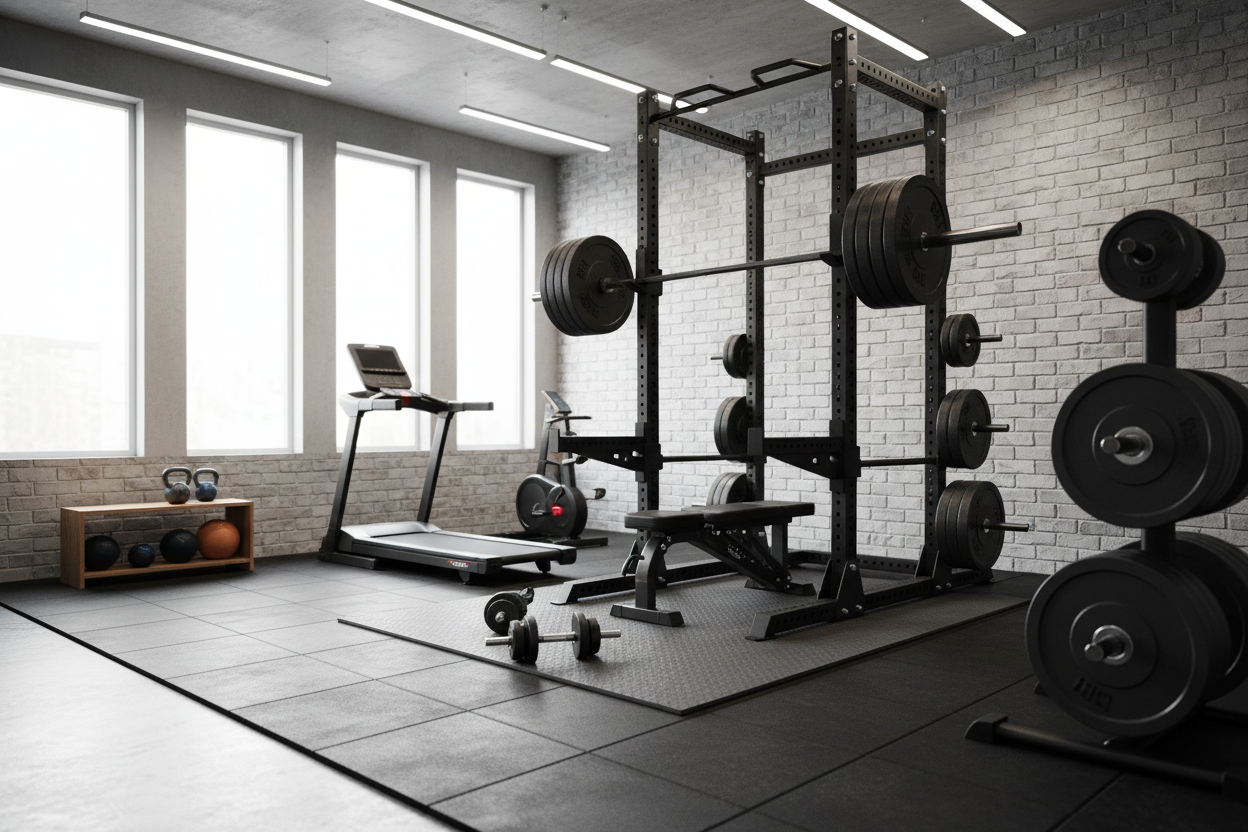
I remember unboxing my first 'budget' barbell. It was chrome-plated, looked slick, and the box boasted a massive 1,000-lb capacity. I felt like I’d cheated the system until I loaded a heavy barbell weight for a set of deadlifts. After a single session of pulling 405, that bar had a permanent 'smile.' It stayed bent, turning my gym sessions into a balancing act I didn't sign up for.
The truth is, most of those ratings are marketing fluff designed to trick people who haven't spent much time under a rack. You see a big number and assume the bar is indestructible. It isn't. There is a massive difference between a bar that can hold weight in a factory and a bar that can survive a real workout.
Quick Takeaways
- Static load ratings don't account for the 'shock' of dropping or moving weight.
- Look for PSI (Tensile Strength) instead of poundage ratings—aim for 190,000+.
- Yield strength is the point where your bar stays bent forever.
- Bar diameter (28mm vs 29mm) drastically changes how stiff the bar feels.
The Difference Between Static Ratings and Dynamic Lifting
Here is the dirty secret of the fitness industry: static load ratings are practically useless. When a manufacturer says a bar is rated for 1,000 pounds, they usually mean they placed a heavy bar weight onto the sleeves very gently using a hydraulic press or a crane in a controlled environment. The bar didn't snap, so they slapped the '1,000-lb capacity' sticker on it.
But you don't lift in a vacuum. You drop deadlifts. You bang the bar against the J-cups. You might even have to bail on a squat and let the bar hit the safety pins. This is dynamic loading. The force generated when a 315-pound bar drops just a few inches is significantly higher than 315 pounds of static pressure. Cheap steel can't handle that sudden spike in energy. It flexes past its limit and stays there.
If you're training with any kind of intensity, a static rating is a fairy tale. You need to know how the steel reacts when it's actually in motion. A bar that bends at 315 during a 'dynamic' event like a missed lift is a safety hazard, regardless of what the box says about its 1,000-lb limit.
Tensile vs. Yield Strength (Minus the Engineering Jargon)
If you want to know if a bar is actually high-quality, stop looking at the max weight and start looking at the Tensile Strength, measured in PSI (pounds per square inch). This is the gold standard for barbell durability. A budget bar might sit around 130,000 to 150,000 PSI. That’s the stuff that bends and stays bent. For a serious home gym, you want a minimum of 190,000 PSI.
Then there is Yield Strength. This is the specific point where the steel goes from 'springing back' to 'permanently deformed.' High-quality American or European steel has a high yield point. It can whip and bend during a heavy clean or a max squat and then return to being perfectly straight the second the weight is stripped. Cheap steel has a low yield point. Once you push it, it’s toast.
I’ve seen guys brag about their 'bargain' bars, only to realize the knurling is shallow and the steel is soft. If the manufacturer doesn't list the PSI, it’s usually because the number is embarrassingly low. Stick to bars that proudly display their 190k or 210k PSI ratings. It’s the only way to ensure your investment doesn't turn into a piece of scrap metal after your first heavy session.
Why Bar Thickness Dictates How Heavy Actually Feels
Thickness isn't just about grip; it’s about physics. Most 'hybrid' or Olympic lifting bars are 28mm or 28.5mm. They are designed to have 'whip,' which helps in the clean and jerk. However, if you load a heavy bar weight for a slow lift like a squat, that whip becomes a nightmare. The bar will start oscillating on your back, making 400 pounds feel like a vibrating mess.
This is why power bars are almost always 29mm. That extra half-millimeter of steel adds a massive amount of stiffness. When you unrack a heavy load, you want the bar to feel like a solid piece of granite, not a wet noodle. I’ve noticed that when people transition from a real Matrix bench press bar weight to a thinner, cheaper bar, their stability plummets.
If your focus is the 'Big Three' (squat, bench, deadlift), get a 29mm bar. The increased rigidity will give you more confidence when the weights get heavy. A thinner bar might be easier to grip for deadlifts, but the instability it creates during a heavy squat can be genuinely terrifying.
Is the Rest of Your Setup Ready for the Load?
Buying a world-class barbell is a great first step, but it’s only half the battle. I’ve seen people put a $600 competition-grade bar on a rack that wobbles when the wind blows. You have to look at your gym as a system. If you are moving serious weight, your bar needs a stable home.
This applies especially to your bench. You might have a bar that can handle 500 pounds, but if you're lying on a flimsy, bolt-together bench from a big-box store, you’re asking for an injury. You need to pair that steel with a heavy-duty weight bench that features a welded frame and a high weight capacity. There is nothing more distracting than feeling the bench shift under your shoulder blades while you're trying to set a PR.
Safety isn't just about the bar not snapping; it's about the entire structure holding that bar. Check your J-cups, check your safeties, and make sure your bench is rated for your body weight plus whatever you plan on pressing. Don't be the person with a Ferrari engine in a lawnmower frame.
The Real Cost of Replacing Bent Steel
I learned the hard way that 'cheap' equipment is actually the most expensive. I spent $120 on my first bar, $150 on my second, and finally $300 on a high-quality power bar that I still use today, six years later. If I had just bought the good bar first, I would have saved $270 and a lot of frustration.
When a bar bends, it’s not just an aesthetic issue. It changes the center of gravity of the lift. A bent bar will try to rotate in your hands during a bench press to put the 'heavy' side down. This wreaks havoc on your wrists and elbows. Spending the money upfront for a bar with high tensile strength is an investment in your joints and your progress.
FAQ
Why did my 1,000-lb rated bar bend with 300 lbs?
Because that rating is static. The moment you dropped it or racked it hard, the force exceeded the yield strength of the low-quality steel. It’s a marketing trick, not a performance spec.
What is the best bar diameter for general training?
A 28.5mm bar is the 'Goldilocks' size. It’s stiff enough for most squats but has enough flex for Olympic movements. However, if you only care about powerlifting, go with 29mm.
Does the finish (chrome, zinc, cerakote) affect strength?
The finish affects corrosion resistance and grip feel, but not the strength of the steel. However, some cheap chrome finishes can hide cracks in the steel, so be wary of low-end shiny bars.
How can I tell if my bar is bent?
Empty the bar and roll it across a flat floor or the safety pins of your rack. If it wobbles or 'hops,' the shaft is bent. A straight bar will roll smoothly without any vertical movement.
Share:
Stop Overpaying: The Real Gym Equipment Rate Nobody Tells You
Is Anytime Fitness Equipment Good Enough for Heavy Lifters?