
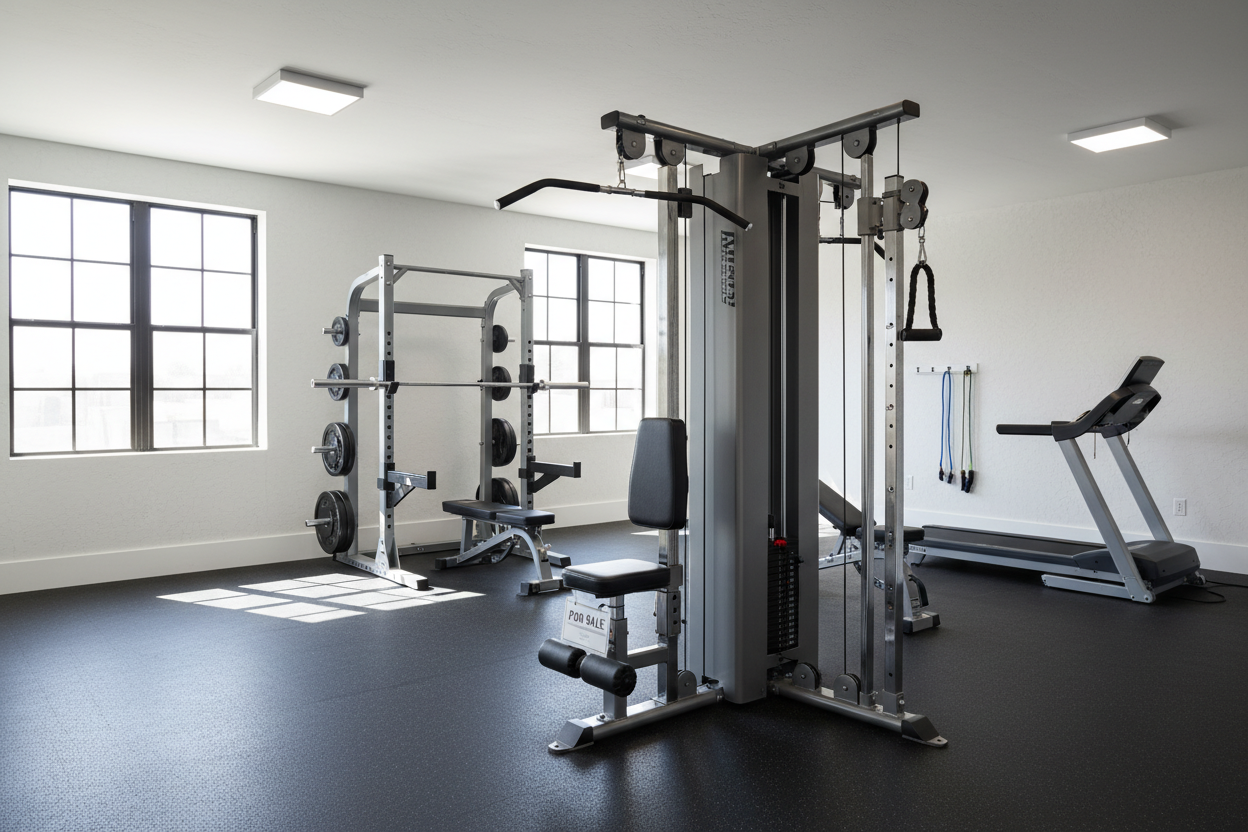
We have all been there. It is 11:30 PM, you are scrolling through your feed, and an ad pops up for a massive, chrome-plated weights machine for sale that promises to replace an entire commercial gym for the price of a weekend getaway. It looks like a spaceship, boasts 50 different exercises, and fits in the corner of your spare bedroom. Your finger hovers over the 'buy' button because, honestly, the local gym just hiked their membership rates again and the squat rack wait times are getting ridiculous.
- Budget machines often use thin 14-gauge steel that wobbles under heavy loads.
- Cheap nylon pulleys create friction that makes 100 lbs feel like 150 lbs of 'sticky' resistance.
- Multi-stations usually compromise on range of motion to fit more features into a small footprint.
- A high-quality bench and lever system almost always outlasts a budget cable rig.
The Illusion of the 'Does-It-All' Discount
The marketing for a budget weights machine is always the same: a smiling model doing a lat pulldown on a machine that looks incredibly versatile. But here is the reality of the manufacturing floor. To hit that low price point, brands have to cut corners where you can't see them—until the box arrives at your door. They use thin-walled 14-gauge steel instead of the 11-gauge stuff you find in real racks. This leads to a frame that flexes when you are mid-set, which is the last thing you want when you are pushing for a PR.
These companies also love to brag about the number of exercises available. They will claim '60+ movements' by counting every possible variation of a bicep curl. In practice, the geometry is usually off. If the seat doesn't adjust properly or the pivot points are fixed for someone exactly 5'9", you are going to find yourself in awkward, injury-prone positions. It is vital to spot junk when browsing a universal weight machine for sale before you drop five hundred bucks on a giant clothes rack. Look at the footprint; if it weighs less than you do, it is not going to stay stable during a heavy row.
Why Budget Pulleys Feel Like Dragging Sand
If you have ever used a high-end functional trainer, the weight feels like it is floating on air. That is because of high-quality aluminum pulleys and lubricated, sealed bearings. When you look at cheap weights machines for sale, you are usually getting plastic nylon pulleys with unsealed bushings. After three months of sweat and dust, that smooth pull turns into a gritty, jerky mess. It ruins the resistance curve—you are fighting the machine more than the weight stack.
You also need to look at the cable quality. Cheap machines use thin aircraft cable that stretches over time. I have seen budget cables literally fray and snap during tricep extensions because the housing was too thin. When you read specs on a weight lifting machine for sale, look for a 2,000-lb test rating on the cables and at least a 3-inch pulley diameter. Smaller pulleys force the cable to bend at sharper angles, which leads to faster wear and more friction. If the spec sheet doesn't mention the bearing type, assume it's the cheap stuff.
Lever Arms: The Secret to Commercial Feel at Home
If you want that locked-in, heavy-duty feel without spending five figures, stop looking at budget cables and start looking at leverage. Lever arms use simple physics—pivot points and steel—to provide resistance. There are no cables to snap and no pulleys to grease. Because the path of motion is fixed but the arms move independently, you get a much better chest pump than you would on a wobbly multi-station.
For example, a dedicated chest press machine with independent arms allows you to load up Olympic plates and push to failure without worrying about the machine tipping over. Independent arms are the key here; they prevent your dominant side from doing all the work, which is a common issue with the single-bar press arms found on cheap home units. You get the safety of a machine with the natural feel of free weights, and the maintenance is basically zero.
Sometimes You Just Need a Better Bench
I’ve seen plenty of people get caught up in a gym machine sale, thinking they need a 10-foot tall tower to get a good workout. Most of the time, they would be better off with a rock-solid foundation. If your current bench shakes when you sit down with 50-lb dumbbells, that is your weak link. A heavy-duty bench doesn't just feel better; it's a safety requirement once you start moving real weight.
Investing in a heavy-duty adjustable weight bench gives you a stable platform for presses, rows, and step-ups. When you pair a quality weight bench with a set of adjustable dumbbells or a power rack, you can do 90% of what that '50-in-1' machine does, but with much higher intensity and zero wobble. I always tell people: buy the best version of the basics before you buy a mediocre version of a complex machine. Your floor space (and your joints) will thank you.
My Personal Rules for Navigating a Gym Machine Sale
I once bought a budget 'all-in-one' from a big-box retailer because the price was too good to pass up. Two weeks in, the seat padding bottomed out and the leg developer felt like it was made of toothpicks. I ended up selling it for a loss on Craigslist a month later. Don't make my mistake. If you are hunting through a sale, keep these rules in mind.
First, check the shipping weight. High-quality steel is heavy. If a machine claims to handle 300 lbs of user weight but only weighs 120 lbs itself, it's a toy. Second, check the warranty. A company that believes in its welds will give you at least 5-10 years on the frame. If the warranty is only 90 days, run away. Finally, prioritize machines that use standard Olympic plates. Proprietary weight stacks are hard to upgrade and even harder to fix if a selector pin gets lost or a plate cracks. Stick to heavy steel, simple mechanics, and brands that actually list their tubing specs.
FAQ
Is a weight stack machine better than plate-loaded?
Weight stacks are faster for drop sets, but plate-loaded machines are usually more affordable and easier to move if you have a garage gym. Plate-loaded units also allow you to use the plates you already own, saving you money in the long run.
What is the best steel gauge for a home gym?
11-gauge is the gold standard for commercial and high-end home use. 12-gauge is acceptable for most lifters. Avoid 14-gauge for any primary structural components, as it tends to flex and vibrate under load.
How do I maintain the cables on my weights machine?
Keep them clean and occasionally apply a tiny bit of silicone-based lubricant to the pulley bearings. Never use WD-40, as it can actually attract more dust and gunk over time, making the friction worse.
Share:
How to Buy a Craigslist Smith Machine Without Getting Ripped Off
Why Your Hip Thrust on Smith Machine Feels Awkward (And How to Fix It)