
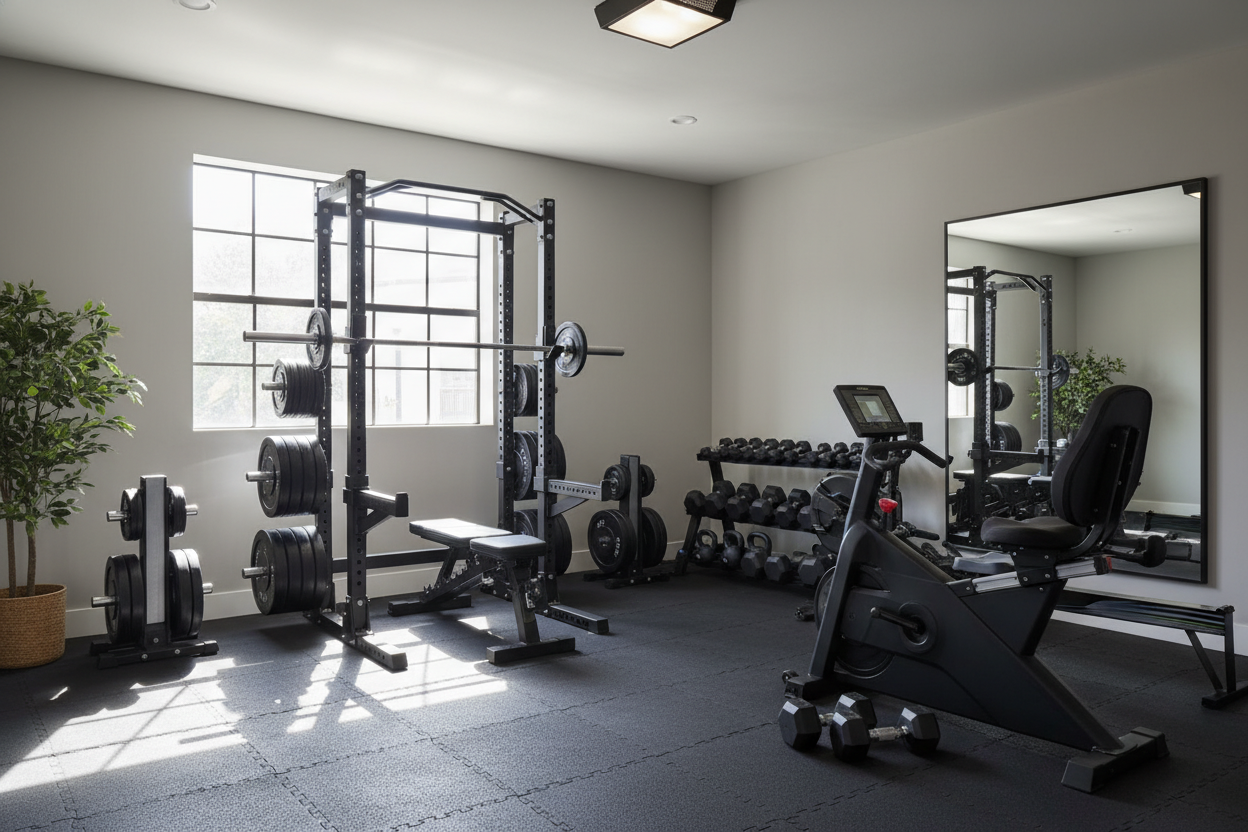
I remember the morning my left knee decided it was done with asphalt. I was three miles into a run, and every footfall felt like a hot needle. I went home, hopped on a cheap elliptical I bought off Craigslist, and felt like I was pedaling through a vat of yogurt. It was boring, flimsy, and didn't feel like training. I realized then that finding the best low impact exercise machine wasn't about finding the softest movement—it was about finding the smartest resistance.
Quick Takeaways
- Ellipticals often force awkward, non-linear paths that can aggravate hips.
- High-quality resistance gear provides better metabolic stress than 'cardio' gliders.
- Fixed-path machines allow you to train to failure without joint shearing.
- Heavy-duty steel beats plastic-heavy home equipment every single time.
My Knees Finally Had Enough of the Treadmill
For years, I treated joint pain like a badge of honor. If my ankles throbbed after a heavy squat session or my knees clicked after a five-mile run, I just bought better sleeves. But eventually, the 'grind' stopped being productive. I was spending more time icing my joints than actually lifting weights. The standard advice? 'Get an elliptical.' I tried it. Most of those machines felt like they were designed for someone who doesn't actually want to sweat.
The problem with the typical no impact exercise machine is the lack of intensity. You’re moving, sure, but you aren't building anything. I needed a way to keep my heart rate at 150 bpm and my muscles under tension without the 3G-force impact of a treadmill. I had to stop looking for 'soft' machines and start looking for heavy-duty tools that removed the instability that causes joint flare-ups.
The Trap of Flimsy Low Impact Home Exercise Equipment
Most low impact home exercise equipment you find at big-box stores is built with a 250-lb user weight limit that feels generous. If the machine wobbles when you're doing a basic movement, your joints are the ones doing the stabilizing. That’s the opposite of what we want. Cheap gliders and plastic-pulleys use bushings instead of bearings, leading to a jerky motion that creates micro-trauma in your connective tissue.
Real biomechanics matter. A machine should follow the natural arc of your limbs or provide a fixed path that eliminates the 'shake' of free weights. When I transitioned to a garage gym setup, I prioritized 11-gauge steel and commercial-grade cables. If the machine weighs 400 lbs, it isn't going to shift while you’re mid-set, which means your tendons aren't fighting to keep the machine upright.
Can a No Impact Exercise Machine Actually Build Muscle?
There is a massive myth that you need 'impact' or 'explosiveness' to grow. Muscle fibers respond to tension, not how hard your feet hit the ground. Using a no impact cardio machine or a fixed-resistance station allows you to bypass the 'stabilizer fatigue' that usually ends a set before the prime mover is actually cooked. You can actually push harder because you aren't worried about dropping a bar on your face or rolling an ankle.
When you use a Smith Machine Home Gym Station, you aren't fighting to balance a vibrating bar. You are focused entirely on the press or the squat. This fixed path removes the shearing force on the patella and the rotator cuff. I’ve found I can handle 20% more volume on a guided path than I can with a barbell when my joints are acting up, and that extra volume is what actually drives hypertrophy.
Why I Use a Rack as a Low Impact Full Body Workout Machine
I eventually ditched the idea of a single 'cardio' unit and started treating my entire rig as a low impact full body workout machine. By using a Smith-based system, I can perform squats, lunges, and overhead presses with zero impact. The key is the tempo. I use a 3-second eccentric (lowering) phase. This keeps the tension high and the impact at absolute zero.
The Full Body Multi Training Station Smith Machine Dm01 is a prime example of this. It combines a smooth Smith bar with a cable system. Cables are the ultimate no impact exercise equipment because the resistance is constant throughout the entire range of motion. There’s no 'dead spot' at the top of the movement where the weight gets light, which keeps your muscles engaged and your joints protected. If you're wondering how to structure this, I'd suggest reading Is a Smith Rig the Best Exercise Machine for Full Body Workout Plans? to see how to ditch the treadmill for good.
Targeting the Upper Body Without Shoulder Pain
Shoulder impingement is the silent killer of upper body days. Traditional dips can be brutal if your form slips even an inch. I switched to a Seated Dip Machine Upper Body Workouts Dm01 because it locks my torso into a fixed position. This allows me to hammer my triceps and lower pecs without the 'swing' of a bodyweight dip. It’s a no impact exercise machine approach to heavy strength training. By removing the need to balance my entire body weight, I can focus on the squeeze at the bottom of the rep where the growth happens.
My Top Picks for the Best Low Impact Workout Machines
If you're building a joint-friendly gym, stop looking at the infomercials. The best low impact workout machines are the ones that look like they belong in a powerhouse gym. I’d take a heavy-duty sled over a treadmill any day of the week. Sled pushes are the ultimate 'concentric-only' movement—no eccentric means almost zero muscle soreness and zero impact on the joints.
Pair a sled with a high-end Smith rig and a set of functional trainers. This combo covers your cardio, your heavy strength, and your accessory work without a single 'thud' on the floor. My own mistake was waiting too long to make the switch. I spent three years trying to 'tough out' runner's knee when I could have been getting stronger on a guided rack. Don't make that trade-off. Your 40-year-old self will thank you for the 11-gauge steel today.
FAQ
Is a Smith machine really 'low impact'?
Yes. Because the weight moves on a fixed vertical or slightly angled track, it eliminates the lateral 'micro-movements' that cause joint shearing. It’s much easier on the knees and lower back than a free-weight barbell squat.
What is the best machine for weight loss with bad knees?
An air bike or a heavy-duty sled. Both allow for high-intensity interval training (HIIT) without any pounding on the joints. If you want to build muscle simultaneously, a cable-based functional trainer is your best bet.
Can I get a full body workout without a treadmill?
Absolutely. A multi-station Smith machine allows for chest presses, rows, squats, and pull-ups. Combine these in a circuit with minimal rest, and you'll get more 'cardio' than you ever did on a jog.
Share:
My Unpopular Opinion on the Best Workout Machine at Home
The Only 4 Things You Need for a Brutal Compact Home Gym