
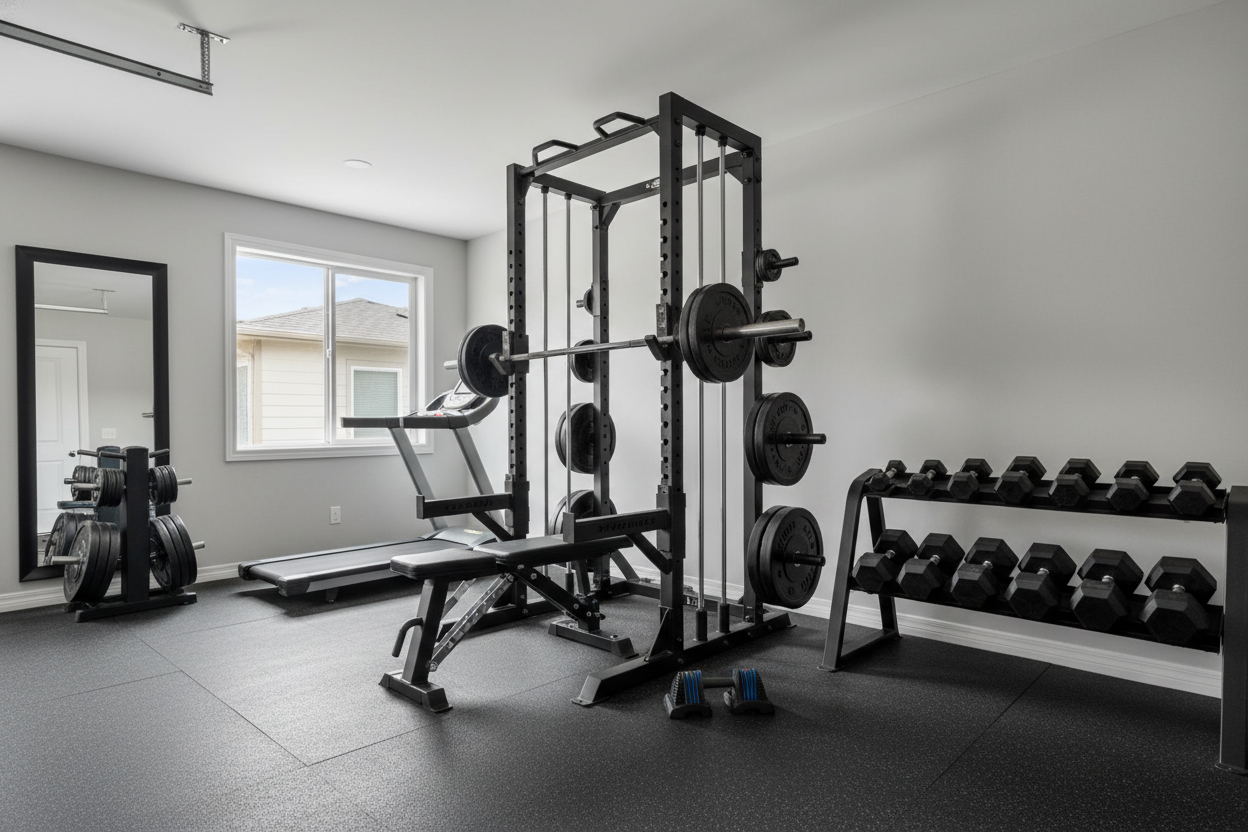
I remember the night I was feeling particularly strong in my garage gym. I’d just hit a PR on seated overhead press, leaning back into my adjustable bench like it was a recliner. I felt like a titan until a buddy challenged me to sit on the floor and do the same weight. I couldn't even unrack it. That was my introduction to the smith machine z press, and it was the most humbling three minutes of my lifting career.
- Zero leg drive means your shoulders do all the work.
- Massive core stability requirement without the bench crutch.
- Fixed path allows for safer failure than a free-weight barbell.
- Immediately exposes posture and mobility weaknesses.
The Day I Realized My Seated Press Was All Cheating
I used to think my overhead press was solid. I was moving two plates for reps on a standard seated bench. But the truth is, I was using my legs to brace against the floor and arching my lower back so much it was basically a high-incline chest press. My ego was doing the lifting, not my deltoids.
When you take the bench away and sit flat on the rubber mats, the game changes. You can't lean back without falling over. You can't drive your heels into the floor because your legs are out in front of you. It’s just you, your spine, and the weight. The first time I tried this, I had to strip the bar back to 95 pounds just to get through a set of eight.
What Actually Happens When You Sit on the Floor?
The Z press—named after strongman Zydrunas Savickas—is the ultimate overhead strength builder because it breaks the kinetic chain. In a standing press, you have your entire lower body to absorb and redirect force. Even in a seated press, that back pad is a massive crutch.
By sitting flat with your legs straight, you're forcing your core to work overtime. Your abs, obliques, and erectors have to fire just to keep you upright. If your core fails, the bar doesn't move. This creates a 'pure' press where the deltoids and triceps are isolated in a way that’s impossible to replicate while standing.
Why the Fixed Path is a Secret Weapon Here
A lot of guys will tell you that a free-weight barbell is the only way to train. I disagree when it comes to the Z press. When you're sitting on the floor, your balance is already compromised. Trying to stabilize a wandering barbell while your hamstrings are screaming is a great way to end up in a chiropractor's office.
The smith machine z press gives you a fixed track. Much like the debate over the barbell bench press versus the fixed path, the Smith machine allows you to focus 100 percent of your mental energy on the vertical drive. You don't have to worry about the bar drifting forward and pulling you onto your face. You just push.
How to Set Up the Lift Without Wrecking Your Back
Setup is everything. First, set your safety stops. On any decent home gym Smith machine, you should set those pins just below your chin level. You don't want to be struggling to unrack from a deep deficit on your first rep.
Sit directly under the bar. Your legs should be spread in a 'V' shape for a wider base of support. If your hamstrings are tight, you'll find yourself rounding your lower back. If that's the case, sit on a small 1-inch yoga block or a folded mat to tilt your pelvis forward. Keep your chest high and your chin tucked.
Dealing with an Angled Guide Rod
Most commercial and high-end home units, like some versatile multi-training stations, have a 7-degree angle on the rails. This is designed to mimic the natural arc of a press. For the Z press, I prefer facing 'out' so the bar moves slightly away from my face as I reach the top. This keeps the weight stacked over my shoulder joints rather than pulling me backward.
The 3 Mistakes That Ruin the Movement
The biggest mistake is bending your knees. As soon as you pull your feet toward your butt, you're creating a way to use leg drive. Keep them locked out. If they won't stay straight, your hamstrings need work.
Second, don't turn this into a chest move. If you lean back excessively, you're mimicking lower chest pressing angles or incline work. Stay vertical. If you can't stay upright, the weight is too heavy.
Finally, don't forget to breathe. Because your core is under so much tension, it's easy to hold your breath and get lightheaded. Take a big air at the bottom, brace, and exhale as you punch the bar to the ceiling.
FAQ
How much weight should I use?
Start with 50 percent of your normal seated press. It sounds low, but the lack of stability and leg drive makes this significantly harder. You can always add plates later.
Is this safe for the lower back?
It’s actually safer than a standing press for many because you can't cheat by hyperextending your spine. However, if you have poor hip mobility, you might round your lumbar. Sit on a small riser to fix this.
Can I do this with a back pad?
No. The whole point of the Z press is the lack of back support. If you use a pad, it’s just a seated Smith press. The floor is where the magic happens.
Share:
I Bricked My Smart Machine for Fitness (Buy Heavy Steel Instead)
Is the Weider 2980 X Home Gym System Actually Any Good?