
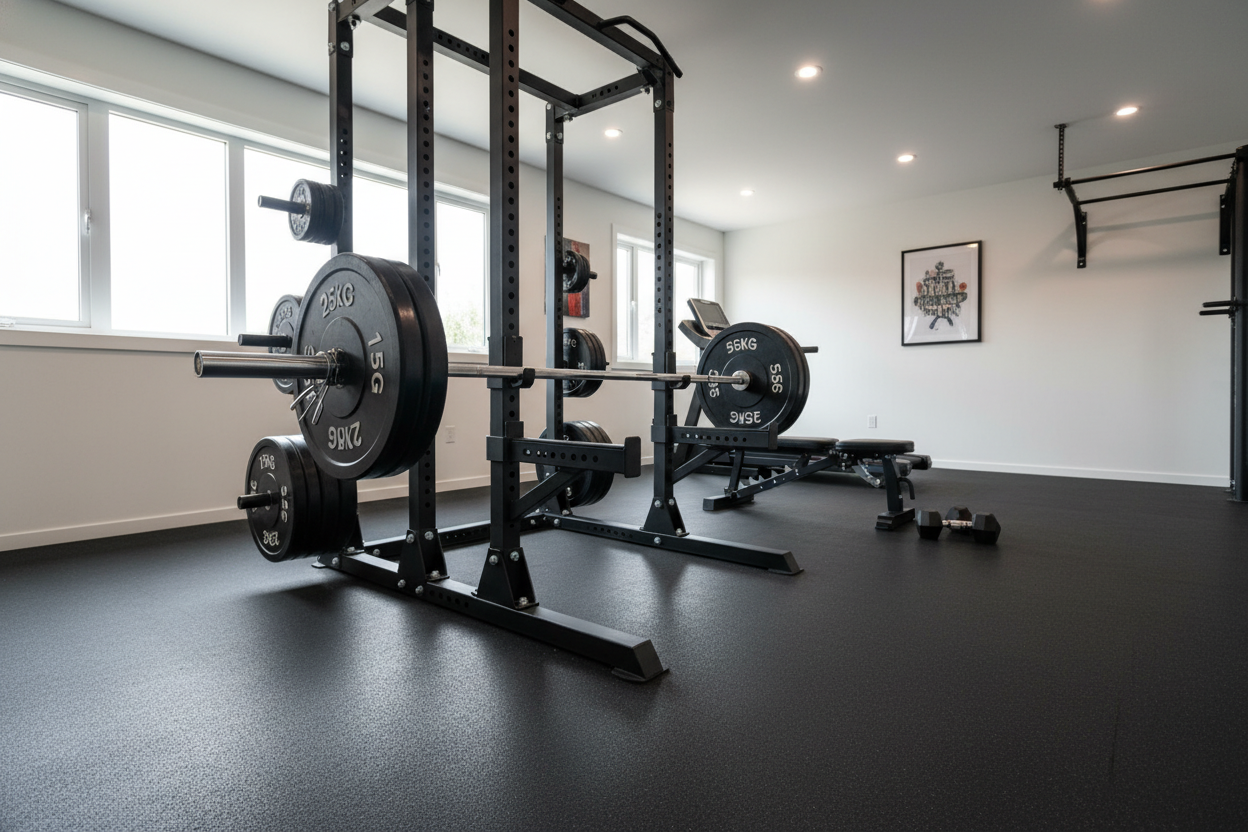
I remember the exact moment I realized my starter gym setup was a liability. I was in my garage, trying to grind out a set of squats with a skinny 1-inch 'standard' bar I’d picked up at a garage sale. As I hit 185 pounds, the bar started oscillating like a wet noodle across my back. It wasn't just uncomfortable; it was sketchy. That was the day I stopped browsing the cheap aisles and looked into a real olympic barbell with weights set.
Quick Takeaways
- Standard 1-inch bars usually cap out at 200-300 lbs and lack rotation, which kills your wrists.
- An olympic bar with weight set features 2-inch sleeves that spin, essential for saving your joints during cleans and presses.
- Olympic plates are a standardized 450mm diameter, meaning your deadlift starts at the correct height every single time.
- Upgrading requires more space—a 7-foot bar is significantly wider than the 5-foot bars found in box-store bundles.
The Moment You Realize 1-Inch Bars Are Holding You Back
Most of us start with those 1-inch iron sets because they’re cheap and they fit in the trunk of a Honda Civic. But there is a hard ceiling on that equipment. Once you start deadlifting over 225 pounds, those skinny bars begin to permanent-bend. I’ve seen guys try to load 300 pounds onto a standard bar only to have the plates slide off because the spring collars couldn't handle the vibration.
It’s not just about weight capacity, though. It’s about the 'whip' and the diameter. A standard bar is usually around 25mm and feels like holding a coat hanger when you’re trying to bench. When you move to an olympic bar with weight set, you get a 28mm to 29mm shaft that actually feels substantial in your palms. You stop worrying about the equipment failing and start focusing on the lift. If you’re planning on getting stronger than the average person at a hotel gym, you’ve already outgrown the 1-inch stuff.
What Actually Makes an Olympic Bar With Weight Set Different?
The magic is in the sleeves. On a cheap bar, the plates are fixed. When you move the bar, the weight has to rotate with it. This creates massive torque that tries to twist the bar out of your hands, usually ending in wrist pain or elbow tendonitis. An olympic bar has sleeves that spin independently of the shaft. This allows the plates to stay stationary while the bar turns, which is a massive relief for your joints during a heavy overhead press or a power clean.
Then there’s the steel itself. Most entry-level Olympic bars have a tensile strength of at least 150,000 PSI, while the high-end ones push 190,000+. This means the bar can bend and snap back to straight rather than staying warped. If you're serious about your home gym, investing in a quality olympic barbell is the single most important purchase you'll make. The knurling—that diamond pattern on the grip—is also miles better on Olympic gear, giving you a 'sticky' grip without cheese-grating your skin off.
Why the Plates Matter Just as Much as the Steel
People focus on the bar, but the plates in an olympic barbell with weights set are just as vital. Standard iron plates come in all sorts of weird diameters. If your 45-pound plate is only 12 inches tall, you’re essentially doing a deficit deadlift every time you pull from the floor. This wrecks your lumbar positioning and makes it impossible to build consistent technique.
True Olympic plates are 450mm (about 17.7 inches) in diameter. This sets the bar at the perfect height—mid-shin for most—allowing you to hinge properly. Also, watch out for the cheap 'retail' sets. I’ve seen some where the center hole is so loose the plates rattle like crazy. You need to know how to spot a total junk setup before you drop five hundred bucks. Look for plates with a snug fit and a consistent finish; if the paint is peeling in the box, the iron underneath is probably porous and prone to cracking.
Pairing Your New Iron with the Right Foundation
You can't just throw a 7-foot Olympic bar onto a narrow bench designed for a 5-foot bar. The 'inside' distance between the sleeves on an Olympic bar is roughly 52 inches. If your rack is too narrow, you’ll be constantly banging your knuckles against the uprights or, worse, the bar will be unstable. When I made the jump, I had to replace my entire bench setup because the old one was only 30 inches wide.
You want a sturdy weight bench with barbell rack that can handle the 7-foot span. This gives you the lateral stability you need when you're racking a heavy set of squats or bench presses. A wider footprint also means the rack won't tip if you accidentally bump it. Remember, an Olympic set is heavier and longer—don't try to save money by using a flimsy foundation that was never meant to hold 400 pounds of rotating steel.
Is the Investment Actually Worth It for Casual Lifters?
I get asked this a lot: 'I only lift twice a week, do I really need this?' If your goal is just to stay active and you never plan on lifting more than 150 pounds, honestly, keep your money. Standard gear is fine for light curls and rows. But if you have even a slight desire to see how much you can squat or deadlift, the 'buy once, cry once' rule applies here. You will eventually break or bend a standard bar if you're consistent.
I wasted $150 on a plastic-coated weight set when I started. Six months later, I had to spend another $500 on an Olympic set because the plastic weights were leaking sand and the bar was crooked. If you're staying in this for the long haul, the safety, the better mechanics, and the resale value of a real olympic bar with weight set make it the only logical choice for a serious garage gym.
FAQ
Will Olympic weights fit on my 1-inch bar?
No. The center hole on Olympic plates is 2 inches wide. They will slide around dangerously on a 1-inch standard bar. You need a bar that matches the plate's sleeve diameter.
How much does an Olympic bar actually weigh?
The standard weight for a male Olympic bar is 20kg (about 44-45 lbs). Female bars are usually 15kg (33 lbs) and have a slightly thinner shaft for better grip.
Do I need to buy bumper plates or iron?
If you're doing CrossFit or Olympic lifts (cleans and snatches) where you drop the bar, get bumpers. If you're doing strictly powerlifting (squat, bench, deadlift) and using a platform, iron is fine and takes up less space on the bar.
Share:
I Tested a Used SA Gear Dumbbell to See If Cheap Iron Still Holds Up
I Pushed the Budget Fitness Gear Smith Machine to Its Limit