
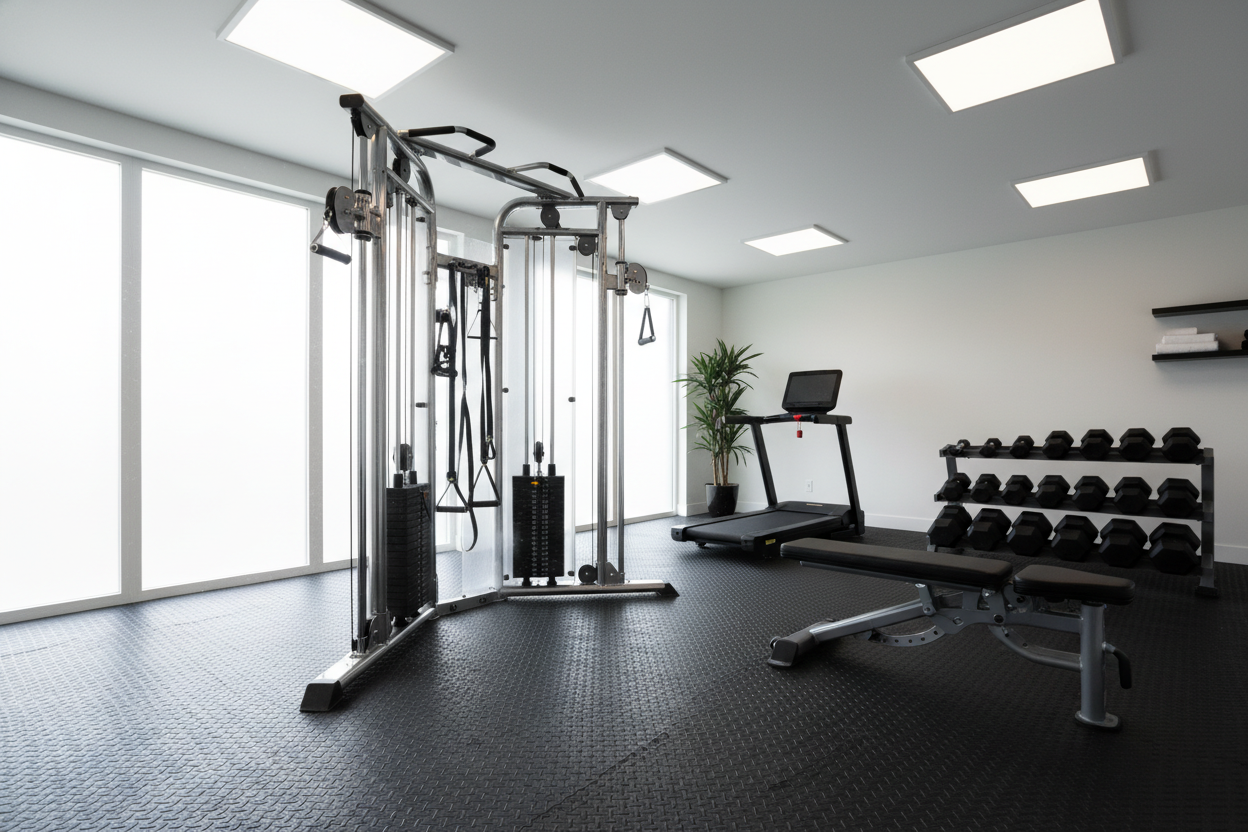
I remember the first time I walked into a commercial facility after six months of training exclusively in my garage. I was squatting three plates and feeling like a king. Then I sat down at a leg press, slid the pin to what I thought was a 'moderate' weight, and nearly got folded like a lawn chair. It was a humbling reality check that many lifters face when they start using weight machines after a long stint with nothing but a barbell and iron.
- Mechanical Advantage: Pulley ratios (2:1 or 4:1) mean the number on the stack rarely equals the actual tension on the cable.
- Variable Resistance: Modern cams are designed to make the lift harder where you are strongest, eliminating the 'dead spots' found in free weights.
- Friction Factors: Dust on guide rods or cheap plastic pulleys can add significant 'ghost' weight to a movement.
- Isolation vs. Momentum: Machines remove your ability to use body English, forcing the target muscle to do 100% of the work.
Why Your Barbell Strength Doesn't Translate to the Pin Stack
The biggest lie in the fitness industry is the number printed on a selectorized weight stack. If you've ever wondered why your lifts feel weird when switching from a bench press to a chest press machine, the answer is usually physics. Most machines use a series of pulleys that create a mechanical advantage. A 200-pound stack on a 2:1 ratio machine only requires 100 pounds of force to move. Conversely, some machines use leverage arms that actually make the weight feel heavier than the plates you've loaded.
Then there's the issue of friction. In my shop, I've seen high-end machines with linear bearings that feel like silk, and budget versions where the weight carriage hitches and stutters. That resistance isn't 'good' weight; it's mechanical drag that messes with your mind-muscle connection. When you're used to the clean, vertical path of a barbell, the internal drag of a machine can make a light weight feel like a max effort attempt.
Finally, consider the stabilization factor. When you squat, your core, back, and even your feet are fighting to keep you upright. On a hack squat machine, the frame handles the stability. While this sounds easier, it actually allows for much higher levels of localized muscle fatigue. You feel 'weak' because you can't use your whole body to cheat the weight up.
The Magic of Weight Machines That Change the Load During the Exercise
One of the coolest pieces of engineering in a gym is the cam — that kidney-shaped pulley you see at the top of high-end equipment. These are weight machines that change the load during the exercise to match your natural strength curve. Think about a bicep curl: the movement is hardest at the bottom and gets easier as you reach the top. A well-designed cam will have a larger radius at the start and a smaller one at the finish, effectively increasing the tension exactly where your muscle is strongest.
This is called accommodating resistance. In a garage gym, we usually try to mimic this by hanging heavy chains off our bars or stretching resistance bands over the rack. It works, but it’s clunky. A selectorized machine does this automatically. It’s why you might feel like you're hitting a wall halfway through a rep on a lateral raise machine, even though you can swing 30-pound dumbbells all day.
Modern engineering has taken this further with electronic resistance and magnetic braking, but for most of us, the cam-based system is the gold standard. It forces the muscle to stay under maximum tension through the entire range of motion. You aren't actually weaker; the machine is just closing the 'loopholes' where you usually take a micro-rest during a free-weight rep. It’s brutal, it’s efficient, and it’s why bodybuilders love them for hypertrophy.
Stop Guessing How Much Weight to Use on Gym Machines
The most common mistake I see is people trying to match their free-weight numbers to the machine. If you bench 225, don't walk over to the pin-loaded press and shove the pin into the 225 slot. You're asking for a shoulder tweak. When figuring out how much weight to use on gym machines, I always suggest starting at roughly 60% of what you think you can handle for a feeler set of 10 reps.
Focus on the 'stack speed.' If the weight is flying up and the plates are clanging at the top, you're too light. If you find yourself holding your breath and twisting your torso just to get the weight moving, you're ego lifting. Machines are tools for isolation, not for showing off. The goal is to find a load where you reach technical failure — where your form breaks down — before you reach absolute failure.
I keep a logbook specifically for machines because every brand is different. A 150-pound row on a Life Fitness machine feels nothing like 150 pounds on a Hammer Strength or a Rogue Rhino. Don't worry about the absolute number; worry about the intensity. If you're hitting your target rep range (usually 8-12 for growth) and the last two reps are a struggle, you've found the sweet spot.
Using Weight Machines at Gym vs. Building a Garage Setup
There is a massive divide between using weight machines at gym facilities and trying to replicate that feel at home. Commercial machines are built with massive footprints and 7-gauge steel because they have to survive 18 hours of abuse every day. They use selectorized stacks which are incredibly convenient but weigh 400 pounds and cost $4,000. For most home gym owners, that's just not realistic.
I eventually missed the weight machines at the gym so much that I started looking into plate-loaded alternatives. These use a lever-arm system where you manually add Olympic plates. They take up less space and give you a more 'raw' feel, similar to free weights but with the safety of a fixed path. You lose the convenience of the pin, but you gain a machine that actually fits in a 10x12 spare room.
The trade-off is often the 'feel.' A commercial cable crossover has high-quality aluminum pulleys and coated aircraft cables. A lot of home-grade machines use plastic pulleys that create a jerky, inconsistent resistance. If you’re building a home setup, prioritize the quality of the pivot points and the thickness of the steel over the number of 'features' the machine claims to have.
How to Replicate That Buttery Commercial Feel at Home
If you want to isolate your chest or back without spending five figures, look for a chest press machine independent arms setup. Independent arms are crucial because they prevent your dominant side from doing all the work — a common problem with fixed-bar machines. It mimics the feel of dumbbells but allows you to push to absolute failure without worrying about a weight crushing your face.
The foundation of any modular machine setup is a heavy-duty adjustable weight bench. You need something that doesn't wobble when you're pressing 100-pound handles. Look for a bench with a high weight capacity (at least 800 lbs) and minimal gap between the seat and back pad. This stability is what allows you to actually exert force instead of wasting energy balancing yourself.
To keep your home machines feeling like the ones at the pro gym, maintenance is key. I wipe down my guide rods with silicone spray once a month. It sounds like overkill, but it removes that 'sticky' feeling that makes budget machines feel cheap. If you invest in gear with high-quality bearings and keep it clean, you can get 95% of the commercial experience in your own garage.
Personal Experience: The Day the Cable Snapped
I once bought a 'deal' on a used lat pulldown machine from a local classified ad. It looked solid, but the previous owner had replaced the cable with a hardware store special. I was halfway through a heavy set of rows when the cable snapped. I ended up punching myself in the face and falling backward off the bench. It was a painful lesson in equipment quality. Now, I never buy a machine without checking the cable rating and the pulley material. If it's plastic and thin, I pass. Your safety is worth more than a $200 discount.
FAQ
Are machines better than free weights for building muscle?
Neither is 'better,' but machines are superior for isolation. They allow you to fatigue a specific muscle to failure without your grip or core giving out first. For pure hypertrophy, they are a vital tool.
Why does the same weight feel different on two different machines?
It usually comes down to the pulley ratio and the amount of friction in the system. A 2:1 ratio makes 100 lbs feel like 50 lbs, while a 1:1 ratio makes it feel like the full 100 lbs.
Do I need to grease my home gym machines?
Don't use heavy grease. Use a dry silicone spray on guide rods. Grease attracts dust and pet hair, which will eventually turn into a thick sludge that ruins the smooth movement of the weights.
Share:
Stop Guessing: How Much Is a Smith Machine Bar Adding to Your Lift?
A No-BS Translation for the Names of Weight Lifting Machines