
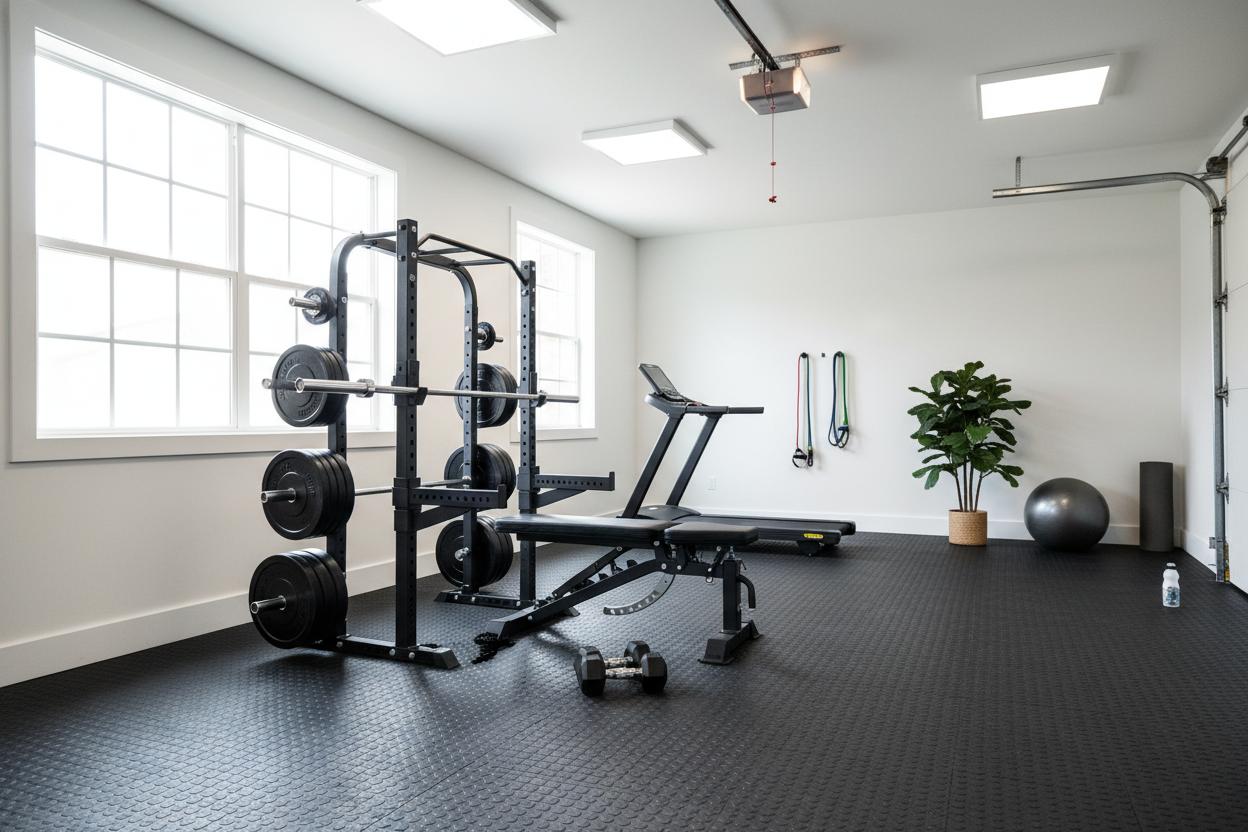
I remember the night I finally snapped. I'd spent forty minutes in 5:00 PM traffic just to find every single squat rack at the commercial gym occupied by teenagers filming content. I drove home, sat on my floor, and realized I had no idea how workout at home routines were supposed to actually work without a five-figure budget and a spare warehouse.
Most people fail at working out in home environments because they treat their living room like a waiting room. They expect the motivation to just show up. It doesn't. If you want to make it stick, you have to stop fighting your house and start engineering it for effort. It's about psychology as much as it is about iron.
- Reduce friction: If it takes ten minutes to set up, you will skip the session.
- Buy for utility, not fantasy: Skip the gimmicks and stick to foundational gear.
- Focus on big moves: Ditch the isolation curls for heavy compounds.
- Carve out space: Even a 4x6 rubber mat makes a mental difference.
The Couch is Your Biggest Enemy
Let’s be real about why is it so hard to workout at home. Your brain is a creature of habit. When you walk into your living room, your subconscious thinks 'rest, snacks, and Netflix.' Trying to pivot that space into a high-intensity zone is a massive psychological lift. That is the biggest hurdle when working out from home for beginners.
To fix this, you need a mental trigger. It could be a specific playlist, a pair of lifting shoes you never wear outside, or even just rolling out a heavy rubber mat. You have to signal to your nervous system that the 'home' part of the day is over and the 'training' part has begun. Without that boundary, you'll find yourself checking the fridge or the laundry between every set.
Stop Buying Gear for the Person You Want to Be
I’ve seen it a thousand times: someone buys a massive, computerized rower because they saw a cool ad, only for it to become a $1,200 coat rack. When looking for at home workout tips, the best advice is to start small. You need to learn how to properly workout at home with the basics before you earn the right to a full rack.
Focus on versatile tools like adjustable dumbbells or a solid kettlebell. If you start with a massive footprint, you’ll feel crowded and eventually resent the equipment. Before you drop big money, you need to pick an at home workout machine you won't hate in 6 months. Start with gear that solves a training problem, not gear that promises a new personality.
The 'Five-Minute Friction' Rule for Your Setup
Convenience is the king of consistency. If you have to slide the coffee table, move the rug, and dig your weights out from under the bed, you’re going to skip your session. People often ask, can i workout at home effectively in a tiny apartment? The answer is yes, but only if your gear is accessible.
My rule is simple: if you can't be moving weight within five minutes of deciding to train, your setup is broken. Eventually, you'll get tired of the furniture shuffle. That's usually the sign that it's time to stop 'making do' and commit to a dedicated home gym footprint. Even a corner of the garage that stays set up 24/7 will triple your success rate because the barrier to entry is gone.
Ditch the Influencer Splits (Here's What Actually Works)
You don't need a six-day 'Arm Day' split when you're training in your spare room. To learn how to workout effectively at home, you need to prioritize bang-for-your-buck movements. We're talking squats, hinges, pushes, and pulls. These are the core exercising tips at home that actually build muscle without requiring twenty different machines.
Most beginners get overwhelmed by complex routines they see on social media. Strip it back. A simple full-body routine three days a week is infinitely better than a complex split you only do once a month. If you're wondering about the foundational tools, I've found that the best workout machine at home is usually the one that lets you perform the most compound movements in the least amount of space. Keep the programming boring and the effort high.
When You're Ready to Graduate from the Living Room
There comes a point where 20-lb dumbbells and bodyweight lunges stop being enough. If you want to know how to workout properly at home for the long haul, you eventually have to embrace progressive overload. That means heavier weights, more stability, and a work out of home setup that doesn't feel like a compromise.
Once you’ve proven you can stick to a routine for three months, it’s time to look at a setup that rivals a commercial club. This usually means moving toward a multifunctional training station. These units provide the safety of a power rack with the versatility of cables, allowing you to hit those tips for training at home with the same intensity as a professional facility while keeping your footprint compact.
My Biggest Home Gym Mistake
When I first started, I bought a cheap, 'no-name' bench from a big-box store. It was rated for 300 lbs. Between my body weight and the 100-lb dumbbells I was pressing, I was right at the limit. One afternoon, the frame creaked and shifted mid-set. I nearly dumped a hundred pounds of iron on my face. I learned the hard way: never cheap out on the things that hold you or the weights above you. Buy once, cry once.
FAQ
Can I really build muscle at home?
Absolutely. Your muscles don't know if you're in a $50-a-month club or your garage. As long as you provide enough resistance and eat enough protein, you'll grow. The challenge is usually having enough heavy weight to keep things difficult as you get stronger.
What is the minimum space I need?
A 4x6 foot area—the size of a standard yoga mat or a single rubber stall mat—is enough for most dumbbell and bodyweight work. If you want a barbell, you'll need at least an 8x8 foot area to account for the 7-foot bar width and your movement.
How do I stay motivated without a gym environment?
Don't rely on motivation; rely on a schedule. Treat your home workout like a doctor's appointment. Put it on the calendar, wear your gear, and show up. The hardest part is always the first five minutes of the first set.
Share:
I Paid $300 Extra for Custom Gym Equipment Color (And Regret It)
What Are the Smith Machine Bench Press Muscles Worked, Really?