
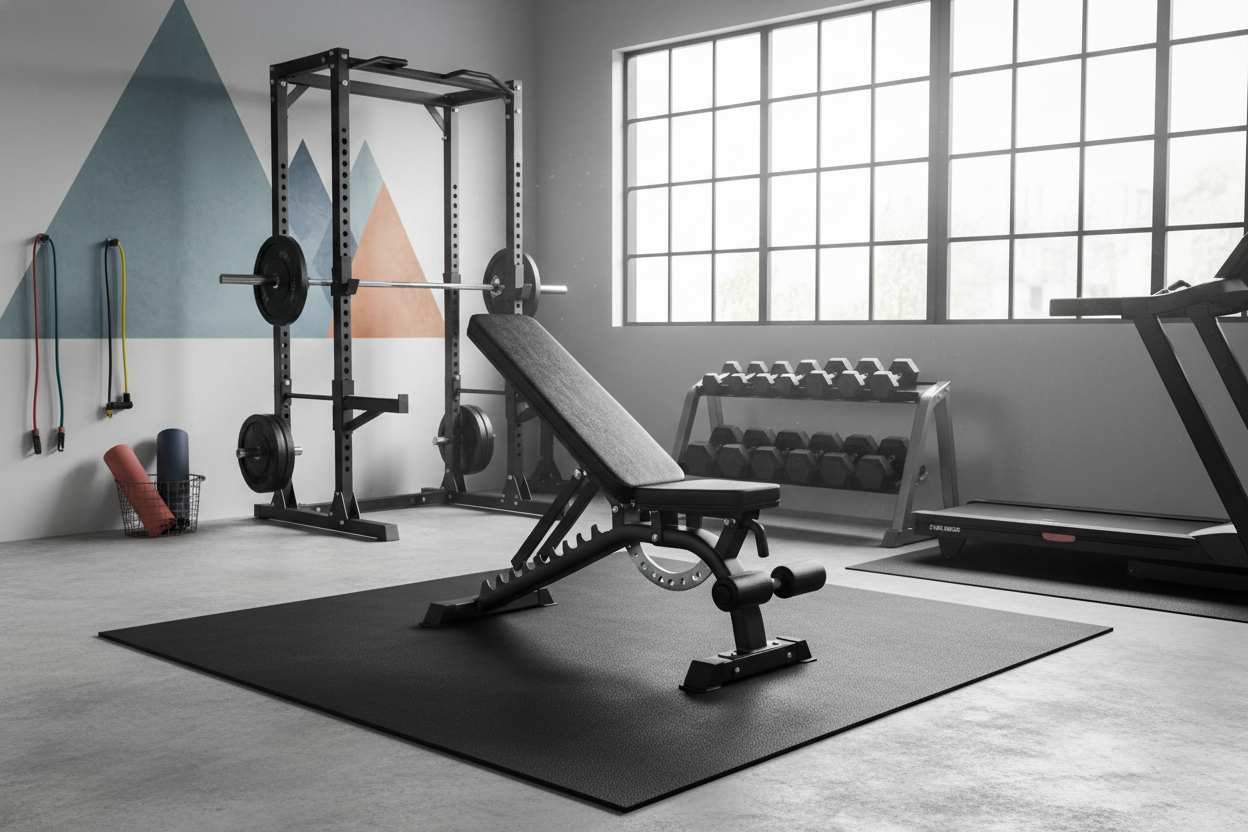
I have spent years training in garages, basements, and high-end commercial facilities. I have felt the terrifying wobble of a cheap frame while holding 100-pound dumbbells over my face, and I have felt the rock-solid confidence of a competition-grade seat. If you are shopping for an adjustable gym bench for home, you are probably noticing that everything looks the same in photos. But once that box arrives and you bolt it together, the reality of thin steel and poor tolerances hits hard.
- Height Matters: Look for a bench that sits 17-17.5 inches from the floor for proper leg drive.
- Steel Gauge: 11-gauge steel is the gold standard; anything higher (like 14-gauge) is for light hobbyists.
- Pad Gap: A gap wider than 2 inches will kill your lower back during flat presses.
- Weight Capacity: If it does not support at least 600 lbs (user + weights), skip it.
The Epidemic of the Flimsy Garage Gym Bench
Most people treat their bench as an afterthought. They spend two grand on a power rack and then buy whatever 'incline chair gym' pops up first in their search results. This is a massive mistake. Your bench is the literal foundation for every pressing movement you do. A true multi purpose weight bench needs to be heavy enough that it does not slide across your stall mats when you are trying to set your shoulder blades. I have seen too many people realize too late that an adjustable bench with weights is a terrible idea because these combo units usually compromise the structural integrity of both the rack and the bench to save a few bucks.
Spec 1: Why You Actually Need a Low Exercise Bench
The most overlooked spec is the bench adjustable height. I see guys buying benches that sit 19 or 20 inches off the ground. Unless you are six-foot-five, you are going to struggle to get your feet flat on the floor. Without flat feet, you lose leg drive, and without leg drive, your bench press plateaus. A height adjustable workout bench should ideally sit at the IPF standard of roughly 17 inches. This allows you to drive your heels into the ground and create the arch necessary for a powerful, safe press. If you want to see what this looks like in practice, the adjustable weight bench OWB01 hits that sweet spot perfectly. Finding a low exercise bench is the difference between feeling connected to the floor and feeling like you are balancing on a tightrope.
Spec 2: The Dreaded Pad Gap on Multipurpose Benches
Every multipurpose gym bench has a hinge. The problem is that many manufacturers use a cheap bolt-and-spacer design that leaves a three-inch canyon between the seat and the back pad. When you lie down to do a flat bench press, your lumbar spine ends up hovering right over that gap. It is uncomfortable at best and injury-inducing at worst. I have found that high-end designs use a sliding hinge or a very tight pivot to keep that gap under two inches. When I swapped my rack for adjustable weights and bench, I realized that a gapless or minimal-gap design completely changed how my back felt after a heavy chest day. Look for a bench where the seat tapers or the hinge is reinforced to minimize this dead space.
Spec 3: Do You Actually Need a Multi-Gym Setup?
There is a big debate about the weight bench multi gym. Some people love having a leg weights bench attachment for leg extensions and curls. If you are short on space, it is tempting. However, you have to be careful. Most cheap benches that include these attachments are top-heavy and prone to tipping. If you are going to go the attachment route, you need a heavy-duty frame. I usually recommend a weight bench with barbell rack only if the base is wide enough to handle the offset weight of a leg developer. If the bench feels light enough to pick up with one hand, it is going to shake like a leaf when you start loading plates onto a leg attachment.
Bringing Your Home Gym Weights and Bench Together
Buying a bench press online is a leap of faith, but if you check the shipping weight, you can usually tell if it is junk. A solid bench should weigh at least 60 to 80 pounds. If the shipping weight is 35 pounds, you are buying a lawn chair, not gym equipment. Your home gym weights and bench are an investment in your safety. Don't settle for a wobbly platform. If you are ready to stop guessing, I suggest browsing a reliable weight bench collection where the steel gauge and height specs are clearly listed. Buy it once, buy it right, and stop worrying about whether your bench will hold up under your next PR.
Personal Experience: The $90 Mistake
Early in my lifting career, I bought a 'budget' bench from a big-box store. It looked fine in the box. But the first time I tried to hit 225 lbs, the back pad flexed so hard I thought the plywood was going to snap. I ended up selling it for twenty bucks on Craigslist and buying a real commercial-grade bench. I wasted time and money because I didn't realize that 14-gauge steel has no business being under a grown man lifting heavy iron. Now, I won't touch anything that doesn't have a bolt-together frame and at least 2.5 inches of high-density foam.
FAQ
What is the best height for a home gym bench?
Target 17 to 17.5 inches. This is the standard for powerlifting and allows most lifters to keep their feet flat for better stability and power.
Is a decline setting necessary?
It is nice to have for core work and specific chest angles, but a solid Flat/Incline (FID) bench is more important than a shaky bench that happens to decline.
How can I tell if a bench is stable before buying?
Check the product weight and the width of the rear stabilizer bar. A wider 'T' or 'H' shaped base at the back usually prevents side-to-side wobbling.
Share:
Why the Best Exercise Devices Force You to Do the Work
Does Planet Fitness Have Squat Racks? (I Checked Every Machine)