
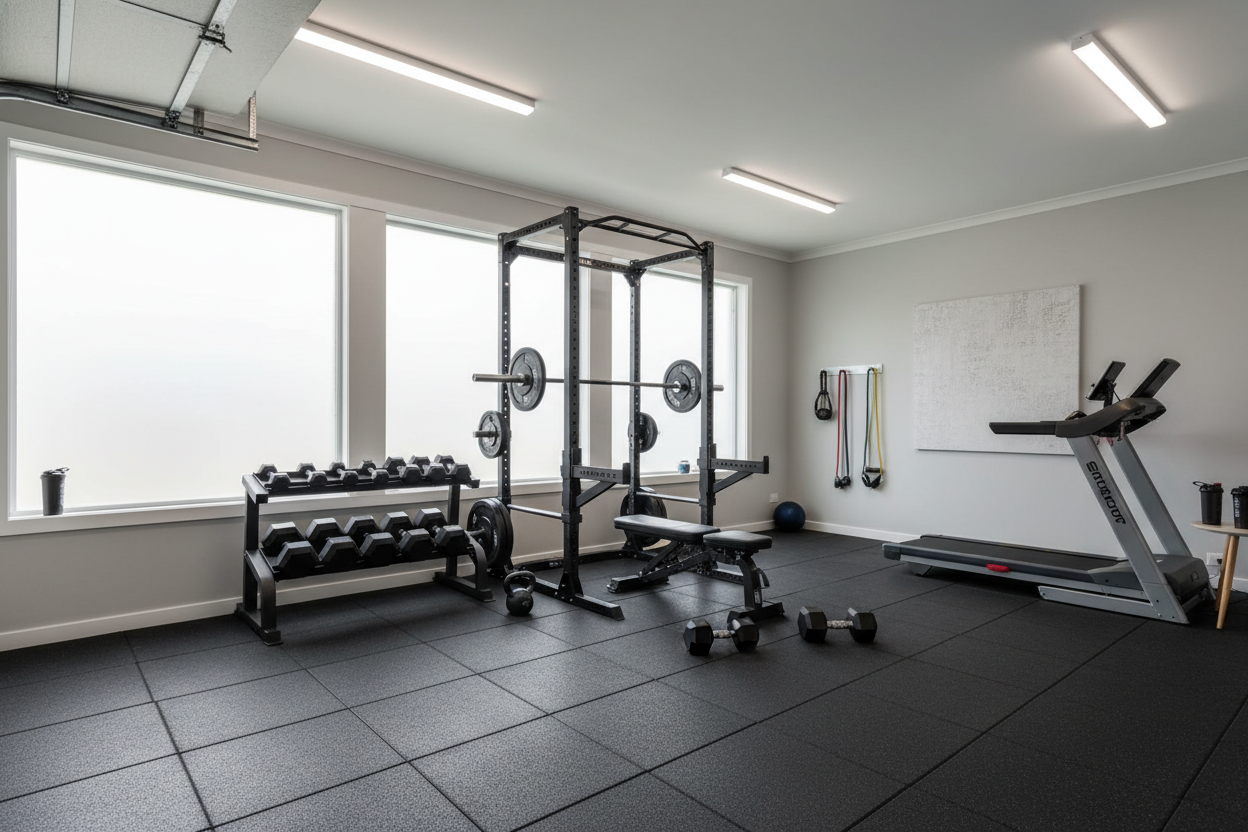
I remember the day my first rack arrived. I spent four hours bolting it to the concrete, wiping down the cosmoline from the barbell, and just staring at the setup. I thought that simply owning the gear meant the gains were inevitable. Fast forward six months: I was doing the same three sets of ten, skipping the movements I hated, and wondering why my physique looked exactly the same. Your garage exercise routine is likely suffering from the same 'home gym rot' that got me.
Quick Takeaways
- Structure beats variety; stop 'testing' your gear and start following a program.
- Isolation work is the missing link in most home setups.
- You don't need fifty machines, but you do need to hit the four core movement patterns.
- Safety is the ultimate bottleneck for solo lifters training to failure.
The 'New Toy' Phase (And Why Your Progress Stalled)
When you first transition to a garage workout, there is a massive surge of dopamine. You’re no longer waiting for the guy in the stringer tank top to finish his eighth set of curls. You have total freedom. But for most of us, that freedom is a trap. Without a coach or a crowd of regulars watching, the intensity drops. You start checking your phone between sets of your garage gym workout because there's no one to judge you for sitting on the bench for five minutes.
The 'New Toy' phase is when you spend more time researching the knurling on a new power bar than actually pulling heavy triples. We convince ourselves that adding a new attachment is the same thing as making progress. If your garage gym workout plan consists of whatever you feel like doing that day, you aren't training—you're just exercising. Real hypertrophy requires a boring, repetitive, and increasingly heavy garage gym workout routine that forces the body to adapt. The lack of a commute makes us lazy; we stop treating the session like a mission and start treating it like a hobby.
The 4 Core Movements Every Garage Setup Must Accommodate
You don't need a 5,000-square-foot commercial facility to look like you lift. You just need a way to execute the four pillars: the horizontal push, the vertical pull, the hip hinge, and the squat. If you have the essential home gym equipment, like a solid power rack and a versatile bench, you can hit 90% of your muscle-building potential. The problem is that most people over-complicate their garage gym training by trying to mimic every machine they see on Instagram.
For the horizontal push, a standard bench press is king, but don't sleep on floor presses if you're training without a spotter. For the vertical pull, a pull-up bar is non-negotiable. If you can't do a pull-up yet, use heavy resistance bands for assistance. The hip hinge is where garage lifters often fail; if you aren't doing some form of deadlift or RDL, your posterior chain will look like a flat pancake. Finally, the squat. Whether it's a back squat, front squat, or a brutal Bulgarian split squat, this is the anchor of any successful garage gym plan. These movements are the 'big rocks' of your garage gym exercises. If you nail these with progressive overload, the rest is just details.
Replacing Commercial Isolation Machines
This is where the garage gym bodybuilding program usually falls apart. In a commercial gym, you have leg extensions, pec decks, and cable crossovers to finish off a muscle group. In a garage, you're often left with just a barbell and some plates. To force growth, you have to get creative with isolation. You can mimic a leg extension by doing sissy squats or using a loaded plate on your feet while sitting on a high bench. You can replace a pec deck with floor flyes to protect your shoulders.
However, there comes a point where free weights alone aren't enough for maximum hypertrophy. This is why many lifters eventually look into Cables vs. Smith: Which Exercise Machine Best Fits a Garage Gym? to bridge the gap. Cables provide constant tension that a dumbbell just can't match. If you're trying to grow your side delts or your triceps, the strength curve of a cable lateral raise is vastly superior to the dumbbell version. You need that guided resistance to safely reach muscular failure without the stabilizing muscles giving out first. Adding a simple pulley system to your rack can change your garage workout routine from 'decent' to 'professional grade'.
A Brutal, No-Fluff 4-Day Split
Stop looking for the 'secret' garage gym programming and start lifting heavy four days a week. This upper/lower split is what I’ve used to pack on 15 pounds of lean mass in a drafty two-car garage. It’s simple, it’s fast, and it works if you actually push the intensity.
Day 1: Lower Body (Strength Focus)
Squats: 3 sets of 5 reps.
Romanian Deadlifts: 3 sets of 8-10 reps.
Walking Lunges: 3 sets of 12 reps per leg.
Calf Raises: 4 sets to failure.
Day 2: Upper Body (Strength Focus)
Bench Press: 3 sets of 5 reps.
Weighted Pull-ups: 3 sets of 6-8 reps.
Overhead Press: 3 sets of 8 reps.
Barbell Rows: 3 sets of 10 reps.
Day 3: Lower Body (Hypertrophy Focus)
Front Squats or Goblet Squats: 3 sets of 12 reps.
Glute Bridges: 3 sets of 15 reps.
Split Squats: 3 sets of 10 reps.
Core work: 3 sets of hanging leg raises.
Day 4: Upper Body (Hypertrophy Focus)
Incline Dumbbell Press: 3 sets of 12 reps.
Lat Pulldowns or Chin-ups: 3 sets of 10-12 reps.
Lateral Raises: 4 sets of 15 reps.
Dips: 3 sets to failure.
Keep your rest periods to exactly 90 seconds. In a home garage workout, it’s easy to get distracted. Use a timer. If you aren't sweating through your shirt by the end of the second movement, you aren't moving fast enough or heavy enough.
When You've Actually Outgrown Your Basic Rack
There is a limit to what a basic squat stand and a flat bench can do. I realized I had hit that wall when my joints started screaming from only doing heavy compound movements. To keep growing, you need variety and, more importantly, safety. If you’re training alone, you can’t truly push to failure on a bench press without a high risk of the 'roll of shame'. This is when a Smith machine home gym station becomes a legitimate investment. It allows you to blast your quads or chest to absolute failure without worrying about a bar crushing your windpipe.
If you have the floor space (usually an 8x8 area), moving toward a Full Body Multifunctional Training Station M1 is the ultimate endgame. It combines the stability of a rack with the hypertrophy benefits of a functional trainer. You stop spending twenty minutes rigging up bands and start spending that time actually lifting. When your progress stalls despite perfect nutrition and sleep, it’s usually because your equipment is limiting your ability to safely apply intensity. Don't be the guy with a $5,000 barbell and no way to do a seated row.
My Personal Experience
I spent two years trying to be a 'minimalist'. I had a bar, a rack, and a dream. I made great strength gains, but my physique looked blocky and unfinished. I was terrified of 'machines' because I thought they were for people who didn't want to work hard. The reality? I was just making it harder to hit my rear delts and hamstrings. I finally bought a functional trainer, and my shoulder health improved almost overnight because I could finally do face pulls and rotations properly. My mistake was thinking the equipment made the lifter. It doesn't—but the right gear allows the lifter to work harder.
FAQ
How do I stay motivated when the garage is freezing?
Layer up and start moving. Once you get through your first two warm-up sets of squats, the ambient temperature won't matter. Also, get a rubber floor mat; concrete sucks the heat right out of your boots.
Is a garage gym workout plan better than a commercial gym?
It’s better because of the consistency. You can't make excuses about traffic or gym hours. However, it’s worse if you don't have the discipline to follow a strict program without a social environment.
What is the most important piece of gear for a the garage workout?
A high-quality power rack with safety spotter arms. Everything else is secondary to not dying during a solo session. After that, invest in a versatile cable system for isolation work.
Share:
Why Free Weight Purists Are Wrong About Weight Lifting Machines
Stop Pinching Your Hands: Why Olympic Weight Benches Win