
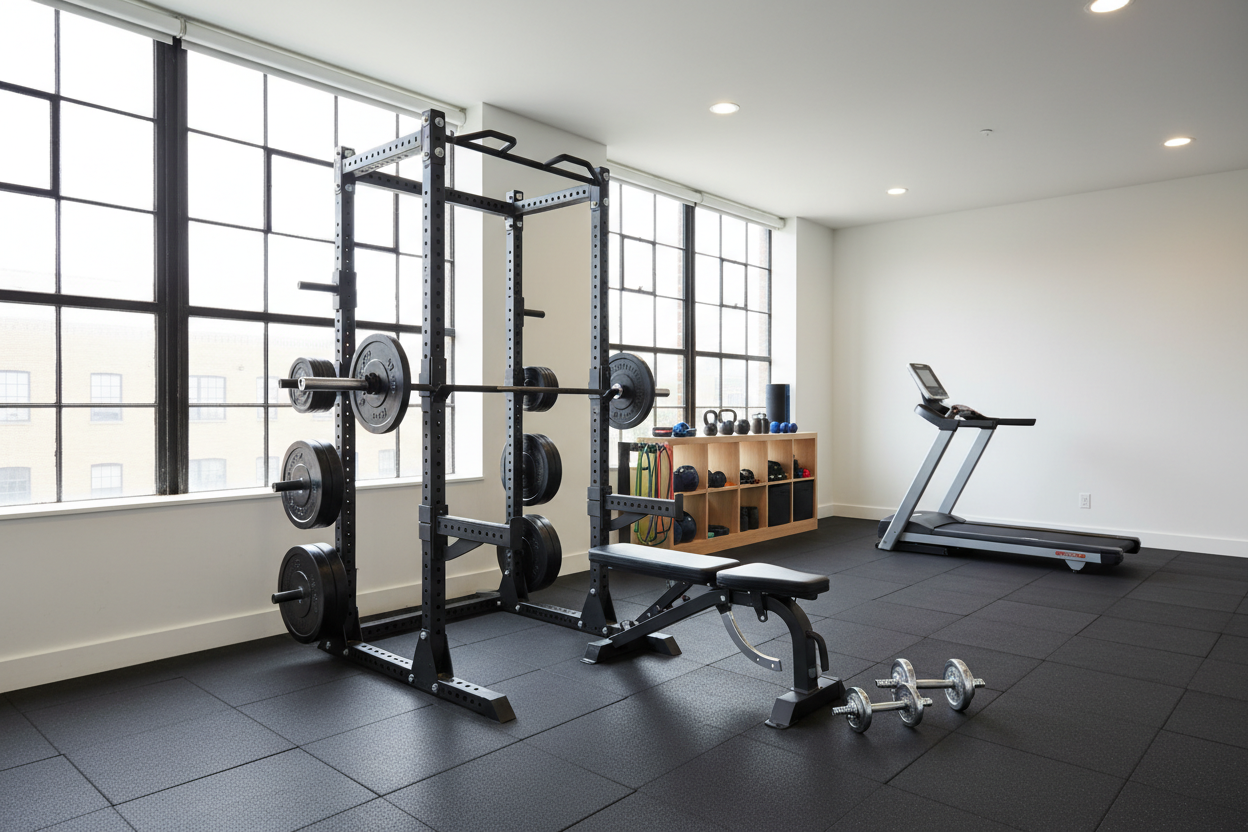
I remember the night I ordered my first real rack. I was tired of the local big-box gym raising rates while the showers smelled like a locker room from 1984. I stayed up until 2 AM comparing 11-gauge steel specs and hole spacing, convinced that if I just bought enough shiny steel, I’d magically hit a 500-lb squat. I spent thousands on equipment for home gyms that looked great in a catalog but turned my two-car garage into an obstacle course I hated walking into.
- Footprint is your most valuable currency—don't spend it all on one machine.
- Commercial gear is designed for 24/7 abuse, not for fitting next to your lawnmower.
- Versatility beats isolation every single time for solo lifters.
- If the steel is thinner than 11-gauge, think twice before dropping 400 lbs on it.
The Biggest Trap in Garage Gym Building
The most common mistake I see beginners make when planning their gym equipment home gym is trying to replicate a commercial facility. You see a seated leg curl machine or a massive cable crossover and think, 'I need that for my accessory work.' You don't. Commercial gyms have those machines because they serve hundreds of people with different goals. In your house, you are the only client. When you buy a single-use machine, you’re essentially paying rent on that floor space every single day, and the rent is high.
I once bought a standalone vertical leg press. It was a beast. It also took up a 4x4 foot patch of my garage and I used it once a week for four sets. That's a terrible ROI. When you’re looking at gym equipment home gym options, you have to prioritize pieces that allow you to do twenty movements, not one. If it doesn't help you squat, press, pull, or hinge in multiple ways, it probably doesn't belong in a space where you still need to fit a trash can and a workbench.
Why Commercial Gear Ruins a Two-Car Garage
Commercial gear is built for liability and longevity in a high-traffic environment. It’s over-engineered to survive a teenager trying to ego-lift the entire stack. In a home setting, that extra bulk is just a nuisance. A commercial-grade leg press can weigh 800 lbs and have a footprint larger than a king-sized bed. Unless you’re training for a pro bodybuilding stage, you probably don't need dedicated bodybuilding equipment for growth that only targets one muscle head at a time.
I’ve seen guys buy full-sized functional trainers that are 8 feet wide and 5 feet deep. They look awesome, but suddenly you can't park your car or even move your barbell around without hitting a weight stack. You want gear that works for you, not gear you have to work around. The goal is to maximize the 'workable' area. Every square inch of heavy steel that isn't being used for a compound lift is just a trip hazard. I eventually sold half my 'pro' gear just so I could have room to jump rope without hitting the ceiling or the walls.
The Core Four: What Actually Belongs in Your Setup
If you’re smart, you’ll build your gym equipment for the home around four pillars: a rack, a barbell, plates, and a bench. Everything else is just seasoning. But before you even bolt that rack down, you need to think about what’s under it. I learned the hard way that dropping a 225-lb deadlift on bare concrete is a great way to crack your foundation and annoy your spouse. A solid 4x8 gym mat is the first real piece of gear you should buy. It saves your floor and your joints.
Once the flooring is set, get a rack with 3x3 inch uprights. Why? Because the accessory market for 3x3 racks is massive. You can add dip bars, lever arms, and pull-up attachments later. For the barbell, don't buy the $50 stick from a sporting goods store. It will bend the first time you put 300 lbs on it. Get a multi-purpose bar with a decent knurl—something that won't cheese-grate your hands but won't slip when you're sweaty. For plates, iron is fine if you don't mind the noise, but bumpers are better if you plan on doing any Olympic lifts or just want to keep the peace with the neighbors at 6 AM.
Multi-Use Hybrids Are Your Best Friend
Space-saving is an art form. This is where high-quality hybrid machines come in. Instead of a dedicated squat rack, a plate-loaded lat pull-down, and a bench press station, you can find units that consolidate these. A well-built Smith machine home gym station can often act as your rack, your cable system, and your pull-up bar all in one 15-square-foot area. This is how you get a full-body workout without needing a warehouse.
I used to be a 'free weights only' snob until I realized how much time I wasted changing plates and moving benches. A hybrid station allows you to move from a heavy compound lift to a controlled isolation movement in seconds. It’s about efficiency. If you only have 45 minutes to train before work, you don't want to spend 10 of those minutes dragging equipment across the floor. Look for gear that uses pulleys and guide rods effectively without sacrificing the ability to use your own Olympic plates.
How to Spot Fake 'Heavy-Duty' Marketing
The internet is flooded with 'heavy-duty' gym equipment for the home that is actually made of recycled soda cans. Here is the reality check: if a power rack weighs less than 150 lbs, it isn't heavy-duty. Look for 11-gauge steel. In the world of steel, the lower the number, the thicker the wall. 14-gauge is fine for a spice rack, but I wouldn't trust my spine to it during a failed squat. Check the weight capacities too. If a bench is rated for 500 lbs, and you weigh 200 lbs, that only leaves 300 lbs for the bar. You'll outgrow that in a year.
Also, look at the hardware. Are the bolts tiny? Is the powder coating already flaking in the pictures? I once bought a 'pro' bench that arrived with welds that looked like a bird spit on the metal. It wobbled every time I tried to incline press. Unstable equipment isn't just annoying; it’s dangerous. You want wide footprints and rubber feet that actually grip the floor. If a company doesn't list the steel gauge or the footprint dimensions clearly, they are hiding something. Move on to a brand that treats their home gear like the life-saving equipment it actually is.
Start Small and Grow With Your Lifts
You don't need a finished showroom on day one. In fact, the best setups are built piece by piece as your strength increases. Start with the basics and only buy that specialized cable attachment or those adjustable dumbbells when your current program literally demands it. Most people quit their home training because they over-complicate the space. Keep it clean, keep it functional, and focus on the movements that move the needle.
If you're ready to stop browsing and start building, take a look at a curated home gym package. It takes the guesswork out of the 'Core Four' and ensures your components actually fit together. I spent years swapping out parts that didn't match. Save yourself the headache and the shipping costs by getting the foundation right the first time. Your garage is for training, not for storing expensive mistakes.
FAQ
Is 11-gauge steel really necessary?
For a power rack or anything holding significant weight, yes. It provides the mass needed to keep the rack from sliding or tipping. 14-gauge is okay for light accessory towers, but 11-gauge is the standard for safety and longevity.
How much space do I actually need?
At a minimum, you need an 8x8 foot area. A standard Olympic barbell is 7.2 feet long, so you need enough clearance to load plates on both sides without punching a hole in the drywall.
Should I buy iron or rubber plates?
Iron is cheaper and takes up less room on the bar, but it's loud and can damage floors. Rubber bumper plates are quieter and safer for the floor, but they are thicker, meaning you might run out of room on the sleeve if you're pulling 500+ lbs.
Share:
I Ditched the Machines for a Pure Barbell and Dumbbell Routine
How to Actually Use the Rowing Machine Planet Fitness Keeps on the Floor