
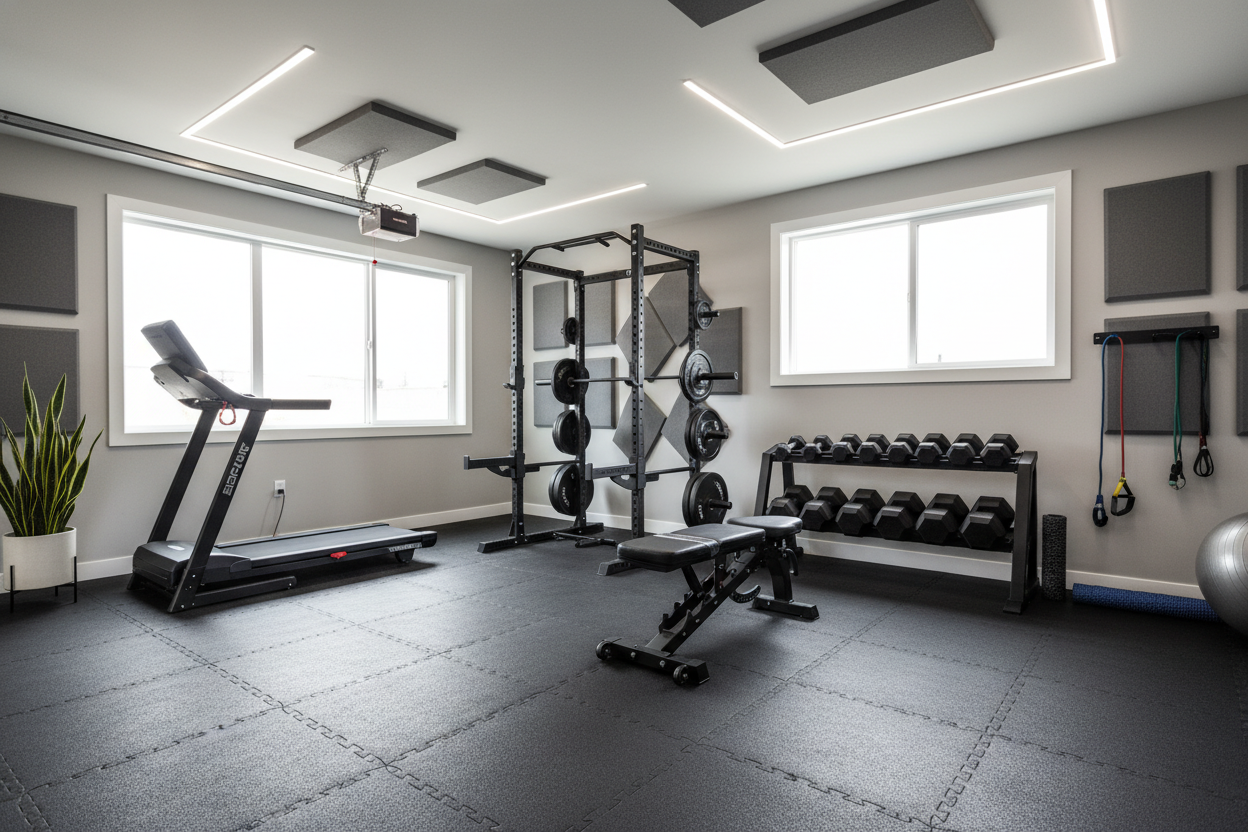
I remember the night I finally quit my commercial gym. I was standing in line for a squat rack while some guy spent ten minutes scrolling his phone on the bench. I went home and started searching for home gym ideas before I even took off my lifting shoes. I didn't have a 3,000-square-foot warehouse; I had a cramped spare room and half a garage bay.
Quick Takeaways
- Prioritize floor protection (3/4-inch stall mats) over aesthetic flooring like turf.
- Focus on multi-functional anchors like folding racks or compact cable systems.
- Vertical storage is the only way to survive in a small footprint.
- Measure your ceiling height twice before buying any rack or pull-up bar.
The Problem with Typical 'At Home Gym Inspo'
Most of the at home gym inspo you see on Instagram is built for likes, not for heavy triples. You see these beautiful home gyms with white walls, neon signs, and expensive turf runways. In reality, that turf is a nightmare to vacuum, and those neon lights won't help you hit a PR. Chasing these 'nice home gyms' often leads to terrible home gym design ideas that prioritize how the room looks over how it functions.
I've seen guys spend $2,000 on custom paint and lighting only to realize they don't have enough room to actually load a 45-pound plate onto their barbell. Real ideas for home gym design should start with the 'working zone'—the 8x8 foot space where the actual lifting happens. Everything else is secondary.
Idea 1: The Spare Bedroom Iron Sanctuary
If you're looking for in home gym ideas for a standard 10x10 bedroom, you have to think about the floor joists and the walls. You aren't going to fit a full power rack and a leg press in here. Instead, you need to maximize the corners. I recommend a heavy-duty adjustable bench and a high-quality rubber hex dumbbell set that won't rattle your floorboards or wake the neighbors when you set them down.
Skip the massive storage racks that sit in the middle of the room. Use wall-mounted weight pegs for your plates and a vertical dumbbell rack. This keeps the center of the room open for lunges or deadlifts. I've found that a 10x10 room feels twice as big if you just keep the floor clear of clutter.
Idea 2: The Half-Bay Garage Power Station
This is my favorite home gym example because it’s what I personally use. Most of us still need to park a car or store a lawnmower. The key to this gym set up idea is the single-wall layout. You want everything to live within 4 feet of the wall. A folding rack is great, but if you want maximum versatility in one footprint, a Smith machine home gym station with integrated cables is a beast for small spaces.
It allows you to do self-spotted bench presses and squats while providing a cable system for lat pulldowns and rows. When you're done, you can usually tuck your bench under the frame. This setup leaves the rest of your garage open for, well, garage stuff. It’s the ultimate way to balance a training habit with real-life storage needs.
Idea 3: The Low-Ceiling Basement Cave
Basements present a unique challenge for at home gym ideas because of ductwork and low ceilings. If your ceiling is under 8 feet, a standard 90-inch power rack is out of the question. You need to look for 'shorty' racks or focus on a seated-heavy program. I’ve helped guys design home gym setup ideas for 7-foot basements where we utilized seated utility benches and trap bars for deadlifts to keep the center of gravity low.
When you're shopping for a home gym package for a basement, check the pull-up bar height specifically. There's nothing worse than hitting your head on a joist mid-rep. Use bright LED shop lights to kill that 'dungeon' feel, and use mirrors to make the tight space feel less claustrophobic.
What the Coolest Home Gyms Actually Have in Common
The coolest home gyms aren't the ones with the most expensive machines; they're the ones with the best flow. An amazing home gym is a place where you can move from a squat to a row without moving three pieces of furniture. It’s about removing friction. If it takes you twenty minutes to set up your gear, you’re going to skip your workout.
Awesome home gyms are built over time, not bought in one weekend. Start with a solid foundation—a bar, some plates, and a way to rack them safely. If you want at home gym equipment ideas that won't end up on Craigslist in six months, buy gear that feels heavy and stable. If it feels cheap in the store, it's going to feel dangerous when you're under it.
My Biggest Home Gym Mistake
I once bought a cheap, 'space-saving' folding bench from a big-box retailer. It looked great in the photos. The first time I tried to incline bench 185 pounds, the locking pin sheared. I didn't get hurt, but I learned a valuable lesson: 'space-saving' shouldn't mean 'structural compromise.' Now, I only buy gear with a static weight rating of at least 800 pounds, even if it costs a bit more upfront. Your safety is worth the extra $100.
FAQ
How much space do I really need for a home gym?
You can get a world-class workout in a 6x6 foot area if you use adjustable dumbbells and a bench. For a full barbell setup, you need at least an 8x8 foot clear area to account for the 7-foot bar width and plate loading.
Do I need to reinforce my floor for a home gym?
For most residential spare rooms, a layer of 3/4-inch rubber stall mats is enough to protect the subfloor from dumbbells. However, if you plan on dropping 400-pound deadlifts, you should build a lifting platform to distribute the load across the joists.
What is the best way to deal with home gym smell?
Airflow is everything. If you're in a basement or garage, get a high-velocity floor fan. Also, avoid cheap recycled rubber mats that 'off-gas'—spend the extra money on low-odor vulcanized rubber mats from a reputable fitness brand.
Share:
I Tested 5 Hand Weights With Strap (Here's What Survived)
Stop Buying Cheap Treadmills: The Best Cardio Machine for Home