
I remember my first 'deal.' I bought a 100lb plastic set from a big-box store for $80. Within three months, the concrete inside the plates was rattling, the vinyl was cracking, and the 'barbell' felt like it was going to snap under a measly 135 pounds. Finding a home weight set for beginners shouldn't involve buying junk twice. You want iron that lasts longer than your car, not sand-filled toys that leak on your carpet.
- Skip the plastic: Vinyl-coated sand plates are bulky, leak, and break easily.
- Go Olympic: 2-inch sleeves are the industry standard for a reason.
- Prioritize the bench: A wobbly surface ruins your form and kills your confidence.
- Buy once: Spend a little more on a 300lb iron set now so you don't outgrow it by Christmas.
The Trap of the 'All-in-One' Box
Those 100-piece plastic box sets look like a steal when you're scrolling Amazon at midnight. They promise a full gym in a box for the price of a pair of shoes. Here’s the reality: they’re garbage. These are usually 'standard' weights with 1-inch holes, filled with sand or cement. They are physically massive because sand is far less dense than iron. A 25lb plastic plate is often the same diameter as a real 45lb iron plate, which is a nightmare for your range of motion.
This means you’ll run out of room on the bar before you even hit a respectable squat. Plus, the plastic shells crack. I’ve seen guys drop a vinyl plate and have a cloud of dust explode across their garage floor. It’s a mess, it’s unsafe, and it’s a waste of cash. A basic weight set made of real cast iron might cost a bit more upfront, but it’ll still be usable when your grandkids are lifting. Don't let the low price tag fool you into buying a temporary solution that ends up in a landfill in six months.
The Core Components of a Real Starter Setup
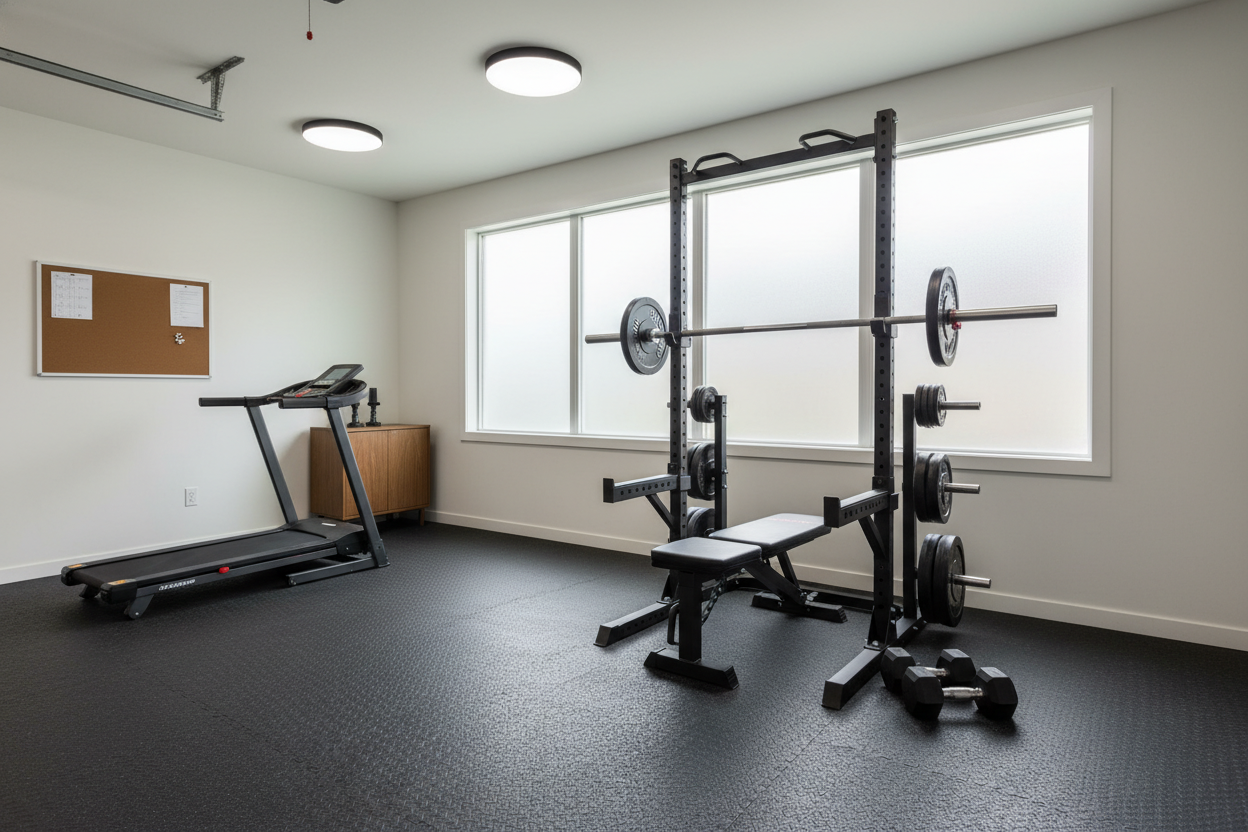
If you're serious about getting strong, you need three things: a 7-foot Olympic barbell, a stack of iron plates, and a solid bench. The barbell is where you shouldn't skimp. Look for a bar with at least a 700lb capacity and decent knurling—that's the sandpaper-like texture that keeps the bar from sliding out of your sweaty hands during a heavy set of deadlifts. You don't need a $600 competition bar, but a $50 bar from a cheap starter weight set will bend the first time you put it in a rack.
For the plates, simple cast iron 'Pound' plates are the way to go. They're thin, they're loud, and they're honest. You can fit more of them on the bar than bulky bumpers, which is great if you're working in a tight space. To tie it all together, you need a centerpiece like the Adjustable Weight Bench Owb01. It gives you a stable platform for flat and incline work, which is essential for building a complete chest and shoulder profile without the bench shifting under you mid-rep.
Why You Need a Bench That Doesn't Flinch
I’ve trained on benches that felt like they were built out of popsicle sticks. There is nothing more distracting than feeling a bench shift two inches to the left while you have 185 pounds hovering over your throat. A cheap, lightweight bench ruins your 'tightness.' To press heavy, your feet need to be planted and your back needs to be pinned to a surface that doesn't move. If the bench wobbles, your stabilizer muscles spend all their energy keeping you from falling off instead of moving the weight.
When you're looking for a Weight Bench, check the steel gauge. You want 11 or 12-gauge steel and a wide tripod or four-point base for maximum ground contact. If the bench only weighs 30 pounds, it's not going to support a grown man plus a heavy starter weights set. Investing in a heavy-duty platform isn't just about safety; it's about performance. You’ll lift more weight when you aren't worried about the furniture collapsing into a heap of scrap metal.
Dumbbells vs. Barbells for Day One Lifters
Dumbbells are great for isolation and they’re easier to store under a bed. But if your goal is to get strong as fast as possible, the barbell is the undisputed king. It allows for much smaller, more manageable jumps in weight. Most adjustable dumbbell sets jump in 5lb or 10lb increments. Going from a 40lb dumbbell to a 45lb dumbbell is a 12.5% increase in weight—that’s a massive jump that often leads to plateaus. With a barbell, you can add 2.5lb or 5lb total, making progress much smoother and more consistent.
However, if you're working in a 6x8 foot corner, a 7-foot barbell might be too long for the room. In that case, a high-quality starter weight set of dumbbells is your best bet. Just realize you'll hit a strength ceiling eventually. For most people starting out in a garage or basement, I recommend the barbell first. It’s the foundation of every classic strength program like Starting Strength or 5/3/1 for a reason: it works.
How to Expand Your Setup When You Get Stronger
After about six months of consistent lifting, you're going to want more variety. This is where people usually start looking for machines to supplement their free weights. If you're training alone in a garage, safety becomes the main concern. You don't always have a spotter to bail you out on a heavy set of bench presses when your triceps give up. Machines allow you to push your limits without the 'death-by-barbell' anxiety.
This is the perfect time to look at something like the Weight Bench Chest Press Machine Independent Arms Z1 Pro. It allows you to train to absolute failure on chest and shoulder movements with the safety of a fixed path. It bridges the gap between old-school free weights and the high-end isolation machines you find at a commercial gym. It’s the kind of upgrade that adds serious muscle mass once you've mastered the basic barbell movements.
The Final Blueprint: What to Buy Today
Stop overthinking the process. Your first home weight set for beginners should be simple, rugged, and expandable. Get a 300lb Olympic weight set (which usually includes a 45lb bar and 255lb of plates), a pair of spring collars, and a sturdy adjustable bench. That’s it. You can build a world-class physique with just those items and a little bit of sweat.
Simplicity breeds consistency. If your gym is too complicated or your equipment feels like it’s going to break, you won't use it. For a deeper dive into making sure your gear doesn't end up as a glorified laundry rack, check out our guide on How to Pick a Weight Set for Home That Won't Gather Dust. Get the iron, put it in the garage, and start moving it. The best time to start was yesterday; the second best time is right now.
Is iron louder than rubber?
Yes. Iron plates clank and rattle. If you have neighbors or sleeping kids nearby, you might want to look into bumper plates. Otherwise, iron is thinner and lets you fit more weight on the bar for heavy deadlifts.
Do I need a rack right away?
For benching and squatting safely, yes. You can start with floor presses and rows, but a squat rack is the next logical purchase after you've secured your weight set and bench.
What's the difference between 1-inch and 2-inch bars?
1-inch (Standard) bars are for light, casual lifting and are often found in cheap sets. 2-inch (Olympic) bars are the professional standard. Always buy 2-inch equipment so your gear remains compatible as you get stronger and buy more plates.
Share:
Don't Waste $50: The Best Cheap Weight Benches That Actually Survive
What I Learned Investigating a Real USA Dumbbell Manufacturer