
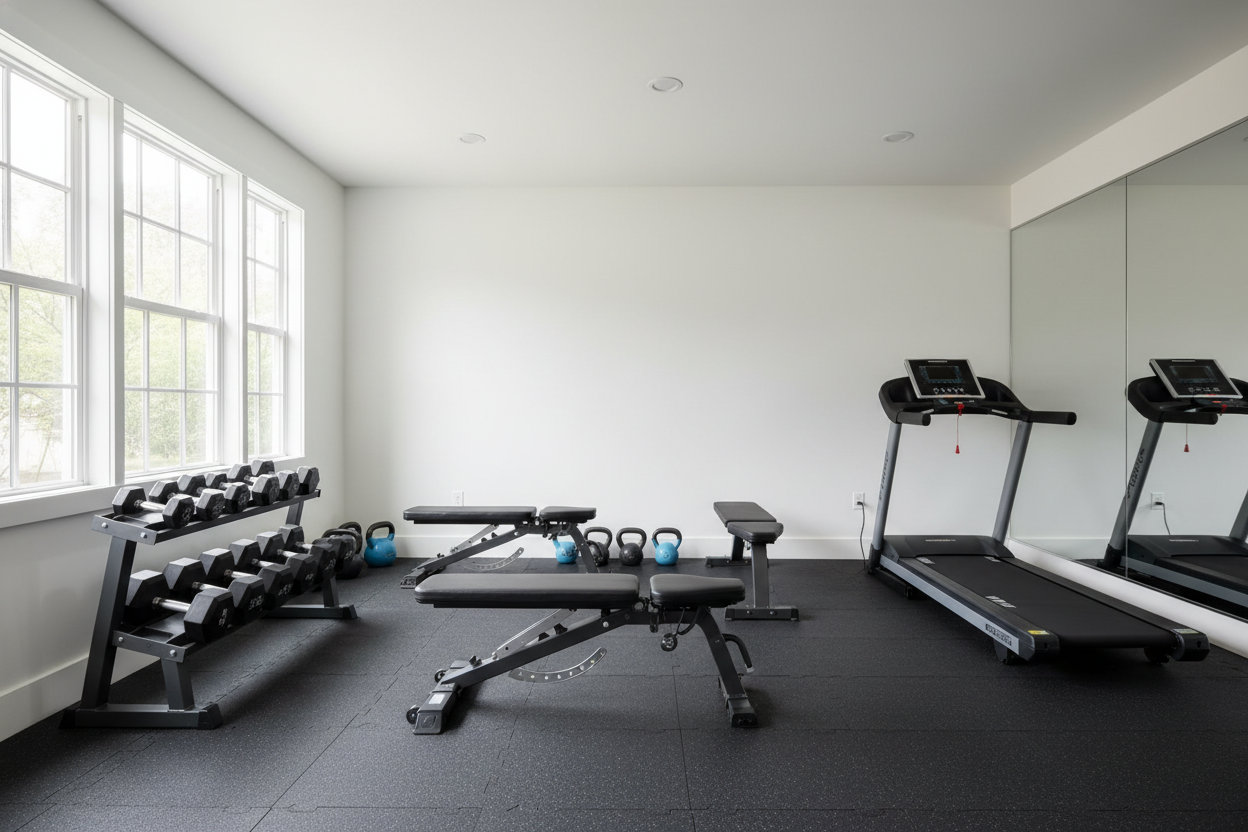
I’ve spent the last decade in garage gyms, basement dungeons, and commercial warehouses. I know the feeling of staring at a $500 price tag for a piece of steel and wondering if you’re being scammed. Naturally, you head to the big retailers and find dozens of benches for working out that cost less than a pair of decent lifting shoes.
Quick Takeaways
- Ultra-budget benches often use 14-gauge steel that feels unstable under a 200-lb load.
- Manufacturer weight ratings are often static (resting) rather than dynamic (moving weight).
- Low-density foam pads will bottom out, leaving your spine pressing against raw plywood.
- A cheap bench is fine for accessory work but risky for heavy barbell pressing.
The Temptation of the $49.99 Prime Delivery
It’s midnight, you’ve had one too many pre-workout samples, and you’re convinced that your home bench gym is just one click away. We’ve all been there. The appeal of the cheapest bench on the market is undeniable. You see a weight training exercise bench with a shiny 5-star rating and a price tag under fifty bucks, and you think, ‘It’s just a piece of metal, how bad can it be?’
For a beginner, the bench press bench price is often the biggest barrier to entry. When you’re already dropping cash on plates and a bar, an inexpensive weight bench feels like a smart place to save. But there is a massive difference between ‘affordable’ and ‘disposable.’ Most of these cheap bench weights setups are designed for light dumbbells and people who weigh 150 pounds, not for someone trying to move serious iron.
Fake Weight Capacities and Flimsy Steel
Here is a trade secret: weight ratings on a gym fitness bench are often total nonsense. A manufacturer might claim a 600-lb capacity, but that’s a static load—meaning they piled sandbags on it once in a factory and it didn’t collapse. When you’re actually training, you’re dealing with dynamic loads. If you’re doing an affordable bench press and you rack the weight slightly off-center, a bench press bench cheap frame will twist like a soda can.
Real stability comes from 11-gauge or 12-gauge steel. Most exercise bench cheap options use thin-walled 14-gauge steel that wobbles the moment you lie down. If you're skeptical about the numbers on the box, I've spent time testing the Day 1 Fitness bench to see where the marketing meets reality. You want a home weight training bench that uses a wide base and bolt-down feet, not something that looks like it was made from recycled folding chairs.
Pad Density: Why Your Shoulders Are Screaming
The frame isn't the only thing that fails on a cheap fitness bench. Let’s talk about the weights seat. High-quality benches use high-density foam that keeps its shape. On a workout bench cheap, they use open-cell foam that’s basically a sponge. The second you lay back with dumbbells, your shoulder blades sink right through the foam and hit the wooden backing.
This isn't just uncomfortable; it’s bad for your lifting. You need a firm surface for proper scapular retraction to protect your rotator cuffs. If your simple exercise bench feels like a sofa cushion, you aren't getting the leverage you need to drive the weight up. Over time, that plywood will crack, and you’ll find yourself shopping for another multipurpose fitness bench within six months.
When a Cheap Bench for Workout Is Actually Fine
I’m not a total gear snob. There is a time and place for a cheap weight training bench. If your routine consists of seated bicep curls, chest-supported rows, or Bulgarian split squats, you don't need a tank. A lightweight frame is actually easier to move around a cramped garage. If you’re just looking for a weights seat to sit on while you do lateral raises, save your money.
However, if you plan on progressing to heavy triples, you need a different strategy. If you're worried about stability during heavy sets, you might skip the free-weight struggle entirely and look at all-in-one chest press machines. These provide a fixed path of motion that doesn't rely on a $50 frame to keep you from getting crushed.
How to Upgrade Without Breaking the Bank
You don’t need to spend $800 to get a weight lifting bench price that makes sense. Browsing a collection of reliable home weight benches will show you that the $150 to $250 range is where the real value lives. In this bracket, you get actual steel, decent vinyl, and a frame that doesn't dance when you breathe on it.
I usually point people toward a rock-solid adjustable utility bench when they're ready to stop gambling. It’s the difference between a bench workout price that covers a one-time purchase versus buying three cheap bench for workout models over three years because they kept breaking. Buy once, cry once.
Personal Experience: The Wobbly Squat
A few years back, I bought a weight bench under $50 just to see if I was being too harsh. I was doing Bulgarian split squats with 50-lb dumbbells—nothing crazy. As I put my back foot on the pad, the entire rear stabilizer bar shifted about two inches. I didn't fall, but it was enough to make my heart skip. I realized that if I had been mid-press with a barbell, that shift could have ended in a trip to the ER. I gave that bench to a neighbor who only uses it for stretching and bought something with actual welds.
FAQ
How much does a workout bench cost for a decent home gym?
For a bench that is safe for heavy lifting, expect to spend between $150 and $300. This gets you 11-gauge or 12-gauge steel and high-density padding that won't bottom out.
Where can i buy a workout bench that isn't junk?
Avoid the 'daily deal' sites and stick to dedicated fitness equipment brands. Look for companies that list the steel gauge and have a clear warranty on the frame.
Is a flat bench better than an adjustable one for beginners?
A flat bench is usually cheaper and more stable because it has no moving parts. However, an adjustable bench is more versatile for hitting different angles of the chest and shoulders.
Share:
Why Your Next Olympic Bar and Bench Set Should Be Your Last
I Priced Out a Home Bench and Weights Setup (Here's the Math)