
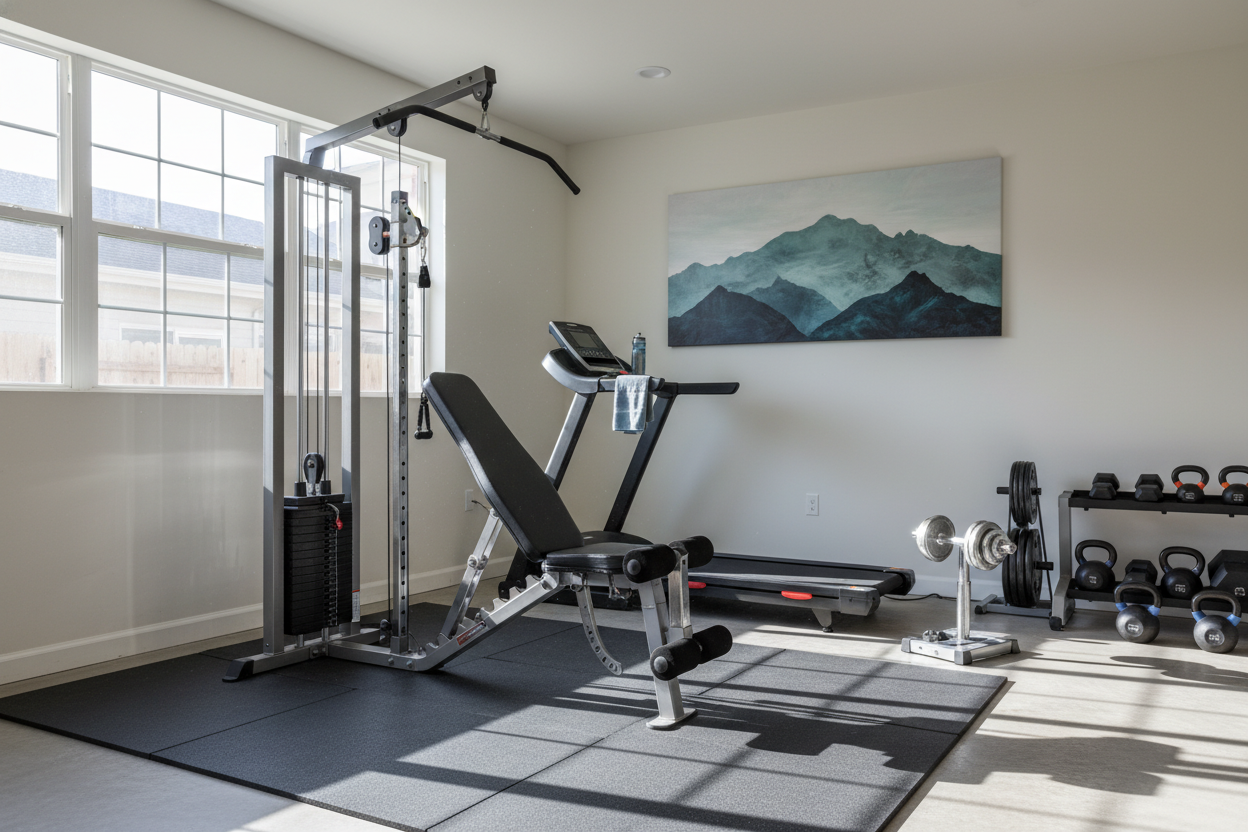
I remember staring at my cramped garage floor, trying to figure out how to fit a power rack, a bench, and a cable machine into a space originally meant for a single sedan. The temptation to buy a budget-friendly weight benches with lat pulldown is real when you realize a standalone selectorized lat machine costs more than a decent used mountain bike. You want the gains, but you don't have the square footage of a commercial gym.
Quick Takeaways
- Most combo units use 1-inch plate posts; you will likely need adapters for Olympic plates.
- Stability is the biggest trade-off; if the bench isn't bolted to the tower, expect some frame sway.
- Cable travel is often limited, making full extension frustrating for anyone over 6 feet tall.
- Look for 14-gauge steel or thicker if you plan on pulling more than 150 lbs regularly.
The All-In-One Dream vs. The Wobbly Reality
Marketing photos make a multifunction weight bench station look like a professional training center. In reality, these units are often surprisingly light. When you are cranking out lat pulldowns with 180 lbs on the carriage, the whole frame wants to tip toward you. It is basic physics.
Manufacturers often cut corners on the footprint to save space, but a narrow base usually equals a sketchy workout. I have seen frames that use thin 2x2 inch tubing that flexes visibly during a heavy set of rows. If you are a serious lifter, that flex feels less like a workout and more like a safety hazard. You want a unit with a wide stabilizer bar at the rear of the tower to keep things grounded.
Why Most Attached Cable Towers Suck (And How to Find a Good One)
Most of these attachments use a 1:1 cable ratio. That sounds great until you feel the friction. If the weight carriage slides on a square tube with cheap plastic bushings, it is going to bind the second you pull at a slight angle. It turns a smooth lat pull into a jerky, stuttering mess that ruins your mind-muscle connection.
Some lifters try to get around this by using a bench with resistance bands, but bands do not provide the constant tension of a true cable system. To find a tower that actually works, look for units that use round guide rods and nylon-coated aircraft cables. If the specs mention 'sealed bearing pulleys,' you are on the right track. If it just says 'plastic pulleys,' expect them to squeak and wear out within six months.
Adding Arms to the Mix: The Preacher Pad Dilemma
Buying a weight bench with lat pulldown and preacher pad sounds like peak efficiency. You can hit back, then immediately pivot to biceps. But here is the rub: that preacher pad usually plugs into the same accessory hole as the leg developer. You spend half your workout swapping attachments and tightening pop-pins.
The ergonomics are also hit-or-miss. If the pad is too narrow, your elbows will slip off mid-set. If the angle is not adjustable, it might put unnecessary stress on your wrists. I have found that while these attachments are great for a pump, they rarely feel as stable as a dedicated arm curl bench. If you are going this route, make sure the pad height can be adjusted independently of the seat.
The Ceiling Height Reality Check
Most home gyms are in basements or garages with 7-foot or 8-foot ceilings. A decent lat tower needs height to allow for a full stretch at the top of the movement. If the tower is only 80 inches tall, a tall lifter will be bottoming out the weight plates before their lats are fully engaged. You end up doing weird half-reps while sitting on the floor.
Measure your overhead clearance twice. Do not forget to account for the height of the pulley itself and the carabiner. I have seen guys buy a beautiful combo unit only to realize they can't actually fit the top bar on because of a low-hanging water pipe or a garage door opener.
The Verdict: Should You Buy One or Build Separately?
If you are a beginner or on a strict budget, these combos get the job done without breaking the bank. They provide a lot of variety for a small investment. However, if you are moving serious weight or plan on training for the next decade, I would suggest buying standalone adjustable weight benches and finding a separate wall-mounted pulley system later.
A dedicated bench will always be more stable for heavy presses. You want to focus on your chest, not whether the lat tower behind your head is going to rattle. Buy the best bench you can afford first, then add the cables once you have the room.
Personal Experience
I once bought a '5-in-1' bench from a big-box store during a clearance sale. The first time I tried a heavy pulldown, the front leg of the bench lifted two inches off the floor. I ended up having to stack 45-lb sandbags on the frame just to keep it grounded. It was a mess, and it eventually became a very expensive clothes rack. Don't be me—check the weight of the actual unit before you buy. Heavier is almost always better.
FAQ
Can I use Olympic plates on a lat tower?
Most budget units come with 1-inch standard posts. You will need to buy 2-inch sleeve adapters to use your Olympic plates without them rattling around.
Is it hard to assemble these combo units?
It is a bit of a nightmare. Cable routing is where most people mess up. Budget at least three hours and have a real socket wrench set ready; the 'tools' they include in the box are useless.
Will it fit in a small spare bedroom?
Probably, but check the 'working area.' Even if the bench is only 5 feet long, you need space for your legs and room to load plates on the sides. Usually, a 6x8 foot area is the bare minimum.
Share:
Joint Pain? The Real Benefits of Smith Machine Training
I Dropped a Dumbbell Set Plastic Shell Until It Leaked Sand