
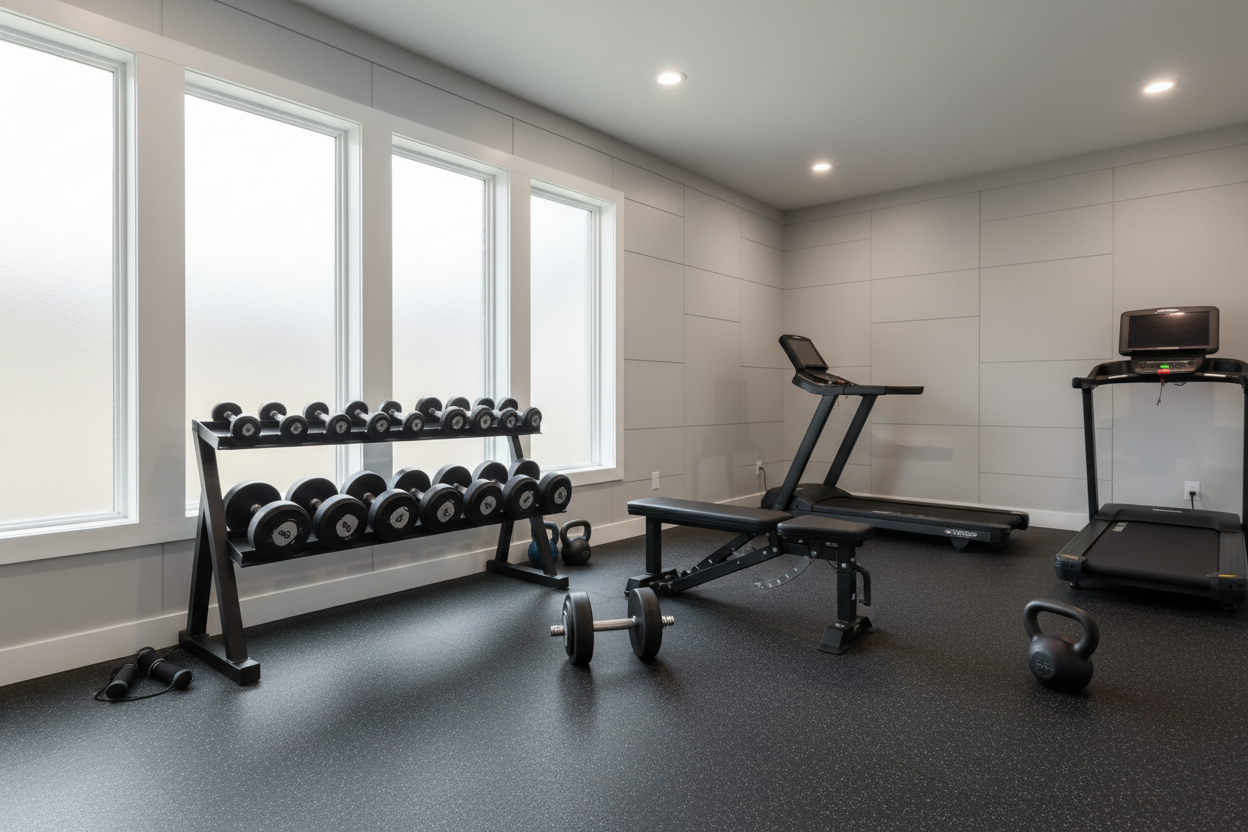
I remember the first time I tried to kick up a pair of 90-pound hex dumbbells for a heavy flat bench press. The sharp, unforgiving rubber edge dug into my mid-thigh so hard it left a bruise that lasted a week. It was a wake-up call. I realized that while my budget gear got me started, it was actively punishing me for getting stronger. That was the day I started obsessing over the circular dumbbell.
- Round dumbbells are significantly more comfortable for heavy pressing and thigh-loading.
- Commercial-grade urethane versions last longer and smell less than cheap rubber.
- They will roll on uneven garage floors, which can be a safety hazard.
- The price jump from hex to round is the biggest hurdle for most home lifters.
Why Everyone Starts With Hex (And Why I Looked Elsewhere)
Most of us start our home gym journey with whatever is cheapest at the local sporting goods store. Usually, that means rubber hex dumbbells. They are the Toyota Camry of the lifting world: functional, reliable, and they stay exactly where you put them. For a long time, I swore by them. They don't roll away when you're doing renegade rows, and they're easy to stack in a corner.
But as my lifts climbed, the limitations of the hex shape became a literal pain. The corners catch on your clothes during curls. They feel clunky during snatches. Most importantly, when you are upgrading your dumbbells, you start to realize that the 'commercial feel' isn't just about aesthetics. It is about how the weight moves with you. I found myself looking at the round, urethane-coated weights at the local powerhouse gym with genuine envy. They looked cleaner, felt more balanced, and didn't have those aggressive edges that seem designed to dent your floor or your shins.
The Unexpected Comfort of a Circular Dumbbell
The biggest argument for a circular dumbbell isn't how it looks on a rack—it is how it feels on your legs. If you do any kind of heavy overhead or chest pressing, you know the 'kick up.' You rest the dumbbells on your knees, then use your legs to drive them into position as you lie back. With a hex dumbbell, you are balancing a sharp corner on your quadriceps. It sucks. With a round dumbbell, the weight distributes evenly across your leg. It sounds like a small detail until you are handles 100-lb weights.
There is also the matter of the handle. Most round dumbbells, especially pro-style ones, feature a consistent handle diameter across the whole set. Many cheap hex sets have contoured handles that get thicker in the middle. I hate those. A straight, knurled handle on a round dumbbell gives you a more secure, 'locked-in' grip that feels identical whether you are grabbing the 20s or the 80s. The balance is also superior. Because the weight is distributed in a perfect circle around the handle axis, there is less 'oscillation' when you are doing fast movements like snatches or cleans. It just feels smoother.
I also noticed a massive difference in the 'drop' factor. We all try to be respectful of our equipment, but sometimes you have to bail on a set. Round dumbbells, particularly those coated in high-grade urethane, bounce predictably. Hex dumbbells have a tendency to land on a corner and shoot off in a random direction, potentially taking out your squat rack or your shins in the process. The circular profile is simply more predictable in a chaotic garage environment.
The Brutal Reality of Pricing a Round Dumbbell Set
Here is the part where your wallet starts to hurt. A full round dumbbell set is a luxury. If you look at a standard Rubber Hex Dumbbell Set Ds01, you are getting a workhorse for a fair price. Hex weights usually hover around $1.50 to $2.00 per pound. When you move into the territory of round, urethane-coated weights, that price can easily double. You are paying for the materials—urethane is much more durable than the recycled crumb rubber used in budget hex weights—and the precision machining required to get the balance right.
Is it worth it? That depends on your volume. If you are lifting five days a week and hitting heavy compounds, that extra $500 or $1,000 over the life of the set starts to look like a solid investment in your own comfort. However, if you're just looking for something to do some lateral raises with on the weekend, the hex set is the smarter financial move. I personally started by only buying round weights for my 'heavy' pairs—the ones I knew I'd be kicking up for presses—while keeping hexes for the lighter accessory work.
How to Stop Round Hand Weights From Rolling Away
The biggest flaw of round hand weights is gravity. Most garage floors are sloped toward the door for drainage. If you set a round dumbbell down carelessly, it’s going for a ride. I learned this the hard way when a 50-lb weight rolled into my water heater. To fix this, you need a dedicated rack with a 'lip' or a saddle-style cradle. Don't just throw these on the floor. If you must use the floor, always set them down on a rubber mat with enough texture to catch them, or use a small piece of 2x4 as a wedge. It’s a small price to pay for the ergonomic benefits, but you have to stay disciplined about it.
My Final Verdict: Hex or Pro-Style?
If you have the budget and the floor space for a proper rack, go round. The ergonomics, the lack of sharp edges, and the sheer durability of urethane make it a superior training tool. It makes the gym feel like a place you want to be, rather than a dungeon full of budget gear. But if you're tight on space or your floor is as slanted as a ski slope, stick with the hex. There is no shame in the hex game.
After years of buying, selling, and trading gear on Craigslist, I Finally Built A Weight And Dumbbell Set That Doesnt Suck. It took a lot of trial and error to realize that I didn't need everything to be 'pro-style,' but for the weights I use every single day, the circular design was worth every penny. Your quads will thank you the next time you're prepping for a heavy set of shoulder presses.
Dumbbell FAQ
Do round dumbbells roll easily?
Yes. If your floor isn't level, they will migrate. You need a rack with saddles or a flat, high-friction rubber mat to keep them contained.
Is urethane better than rubber?
Absolutely. Urethane is tougher, doesn't have that 'stinky' rubber smell, and won't mark up your floors like cheap black rubber can.
Can I mix hex and round dumbbells?
I do it all the time. Use round weights for your heavy presses to save your thighs, and keep hex weights for floor-based work like push-ups or renegade rows where stability is key.
Share:
Can a Thigh Press Machine Actually Replace Barbell Squats?
Are Full-Body Machines the Secret to a Safe Home Fitness Gym?