
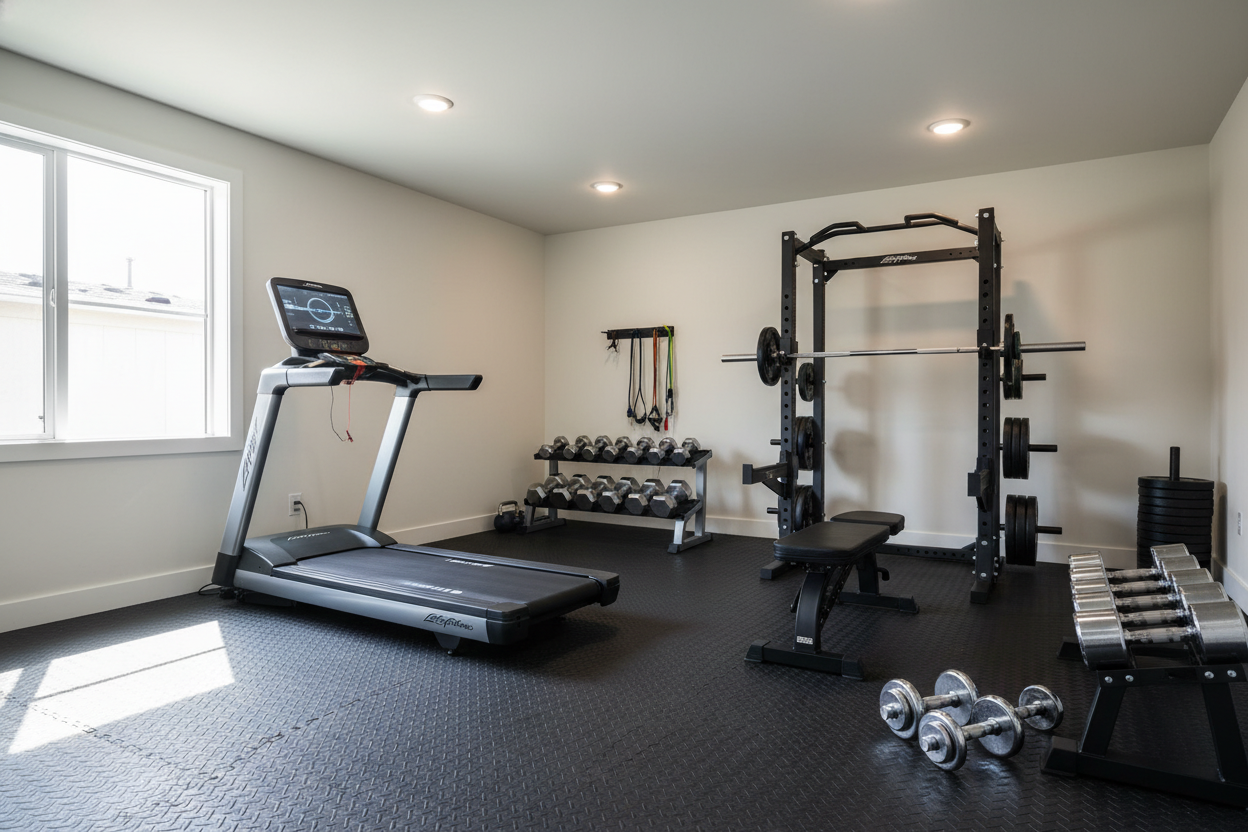
I remember the exact moment I decided to quit my local health club. It wasn't because of the crowds or the locker room smell—it was the realization that I was spending twenty minutes a day just waiting for a specific cable crossover. I wanted that life fitness experience in my own garage, away from the teenagers filming TikToks in the squat rack. But as I started measuring my floor space, the reality of a fitness life at home hit me like a 45-pound bumper plate to the shin.
Quick Takeaways
- Commercial gear is built for thousands of users, making it massive and often overkill for one person.
- The 'Health Club Halo' leads many to overspend on brand names rather than biomechanics.
- Maintenance on commercial electronics can be a nightmare for a residential owner.
- Smart residential alternatives often provide 90% of the feel at 30% of the cost.
Why We All Try to Buy What We Used at LA Fitness
It is called the 'health club halo.' You’ve spent years using a specific chest press or treadmill, and your brain associates those specific ergonomics with progress. Naturally, when you start building your own space, the first thing you do is pull up the life fitness website. You want what you know. The life fitness brand has spent decades dominating the commercial landscape, and life fitness llc has done such a good job that many lifters think anything else is just a toy.
I see it all the time in the home gym community. Someone gets a budget of five grand and immediately looks for a used life fitness company treadmill because they think it’s the only way to get a 'real' workout. They start thinking about buying Life Fitness dumbbells for a home gym just to match the aesthetic. But here is the truth: that commercial-grade gear is designed for a life of fitness where the machine runs 18 hours a day. In your garage, it’s going to run for maybe 60 minutes. You are paying a massive premium for 'up-time' you will never actually use.
The Brutal Reality of Commercial Footprints
The first time a freight truck drops off a commercial life fitness machine at a residential address, the driver usually gives you a look of pure pity. I’ve been there. Gear from the life fitness group is built with 11-gauge (or even 7-gauge) steel and massive shrouds. This stuff is heavy. We are talking about a single functional trainer that weighs more than your couch and dining table combined. Life is fitness, but your floor joists might disagree if you’re putting this in a second-story spare room.
The footprint is the real killer. An lf gym setup in a commercial space looks sleek because they have 10,000 square feet to play with. In a standard 20x20 garage, one commercial leg press will eat 25% of your usable space. I’ve seen guys have to take the door frame off their house just to get a commercial upright bike inside. It’s not just about the square footage; it’s about the 'dead zone' around the machine required for maintenance access that you just can't afford in a home setup.
Cardio Units: The 400-Pound Elephant in the Room
Let’s talk about lifecycle exercise equipment. If you’ve ever been on a Lifecycle, you know they feel incredibly smooth. They are the gold standard for a reason. However, a commercial Lifecycle is a fixed beast. It doesn't fold, it doesn't move easily, and it requires a dedicated circuit if you don't want to trip your breakers. For most people, the life of fitness doesn't require a machine that can survive a nuclear blast.
If you are working with a tight space, looking at residential exercise bike options is almost always the smarter play. You can get a high-quality magnetic resistance bike that weighs 100 pounds instead of 400. If you’re really cramped, a foldable upright exercise bike allows you to actually park your car in the garage when you're done training. You get the same heart rate spike without the permanent loss of half your floor.
Strength Training: Where the Premium Hurts the Most
So, what is life fitness actually charging you for when you buy a $5,000 selectorized machine? It isn't just the steel. You are paying for the liability insurance the company carries, the massive sales force, and a warranty that covers 500 people a day using it. As a solo lifter in your basement, you don't need to pay for a machine designed to survive a 300-pound linebacker dropping the stack every five minutes.
I’ve actually weighed every Life Fitness Smith machine bar in my local area, and while the balance is great, the internal mechanics are often more complex than they need to be for home use. Life fitness us and life fitness usa products are phenomenal, but they are over-engineered for the average person. When you buy from a gimnasio life fitness liquidation sale, you're often buying a machine that has already seen 100,000 reps. That 'premium' feel disappears pretty quickly when the bearings start to grind and you realize you can't find a replacement part at the local hardware store.
Smart Alternatives That Won't Break the Bank
Having a life for fitness mindset means being smart with your capital. You don't need a life fitness inc invoice to get big. I always recommend people look for versatile, residential-spec equipment that focuses on the 'big rocks' of training. Instead of buying three separate commercial machines, a single smith machine home gym station can cover your squats, presses, and rows in a fraction of the space. It gives you that stable, guided feel of a pro gym without the five-figure price tag.
The goal of life exercise is consistency. If your gym is so cramped with oversized commercial gear that you hate being in there, you won't train. Buy equipment that fits your actual life, not the life of a commercial gym owner. Focus on high-quality pulleys, smooth cables, and frames that fit through your door. Your bank account—and your floor—will thank you.
Personal Experience: The Leg Press Lesson
A few years back, I found a 'steal' on a used commercial leg press. It was a beast. I felt like a pro just looking at it. Then the delivery truck arrived. It took four of us three hours just to get it into the garage. Once it was in, I realized I couldn't actually reach my squat rack without shimmying sideways like a crab. I used it for three months, realized I preferred lunges and split squats anyway, and had to pay someone to haul it away because it was too heavy for me to move alone. Bigger isn't always better; sometimes it’s just a massive obstacle.
FAQ
Is commercial fitness equipment better than residential?
In terms of raw durability, yes. But for a home user, that durability is often irrelevant. Residential gear is designed for the specific constraints of a home—like standard ceiling heights and 110v outlets—which makes it much more practical.
Can I buy directly from the Life Fitness website?
Yes, they have a consumer section, but be prepared for the 'sticker shock.' You are paying for a brand name that carries a lot of weight in the commercial world, which doesn't always translate to better value for a home gym.
Is used commercial gear a good deal?
Only if you are handy. Commercial machines have proprietary parts. If a cable snaps or a bearing goes on an older unit, you might spend weeks hunting down a replacement that costs three times what a standard part would cost.
Share:
The Rock Fitness Bench Feels Expensive, But Is It Actually Safe?
Those Diagrams Are Lying: How to Use Gym Equipment at Planet Fitness