
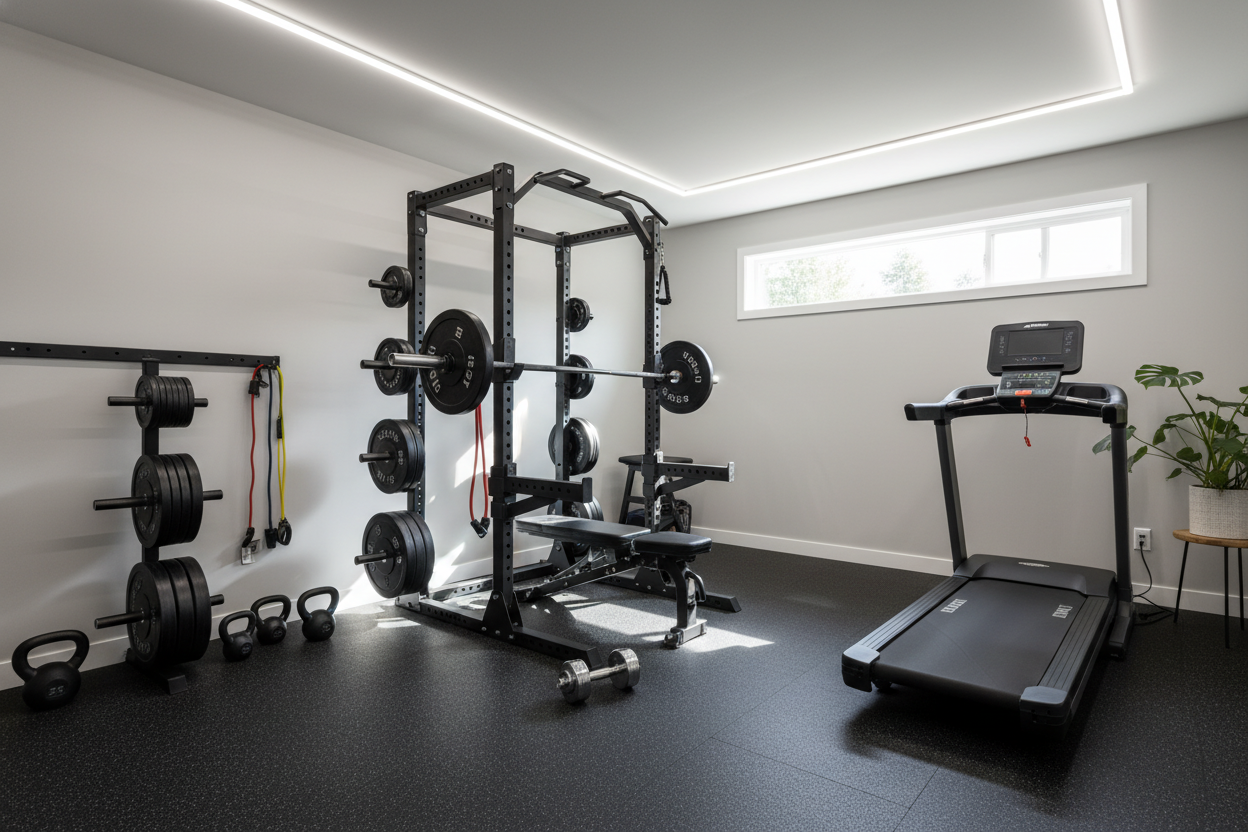
I remember staring at my credit card statement after my local commercial gym hiked its monthly fee for the third time in two years. I spent the next three hours scrolling through Craigslist and Amazon, paralyzed by the sheer volume of shiny steel and plastic. Everyone wants to know what is best exercise machine, but the question is fundamentally flawed because it assumes we all have the same basement square footage and the same desire to look like a 1970s bodybuilder.
Quick Takeaways
- Context is king; your specific goals dictate which of the top machines you actually need.
- Safety matters more than ego when you are training solo in a garage.
- Space-saving combos are almost always better than single-purpose units for home use.
- Isolation machines often build more muscle than 'functional' tools by removing the balance requirement.
The Problem With Searching for a 'Perfect' Setup
The search for the best exercise machine usually leads people to one of two places: a dusty treadmill that becomes a clothes hanger or a cheap multi-gym that feels like it might collapse if you sneeze too hard. I’ve seen it a hundred times. People buy for the person they want to be on January 1st, not the person who actually has to lift in a cold garage on a Tuesday morning.
The truth is that the best fitness machine is the one that removes the most friction from your workout. If you hate setting up a barbell, a machine that stays ready to go is your winner. If you have limited time, a machine that allows for quick weight changes is superior. Stop looking for a magical piece of gear and start looking for the tool that solves your specific training bottleneck.
If You Want to Build Serious Legs Safely
Barbell squats are great for the 'hardcore' crowd, but they aren't mandatory for massive legs. In fact, many lifters find that their lower back gives out long before their quads do. If your goal is pure hypertrophy, you want a machine that lets you push to absolute failure without worrying about a 300-pound bar crushing your spine.
I am a massive advocate for the leg press hack squat combo machine because it solves the biggest home gym issue: floor space. Instead of two massive frames, you get the best of both worlds in one footprint. It allows you to hammer your teardrop and glutes with a level of stability you just can't get from free weights. When you don't have to balance the load, you can actually recruit more muscle fibers.
The Safest Bet for Solo Heavy Lifters
Training alone in a garage at 11 PM changes how you approach the best workout machine. You aren't going to go for that risky third rep on a bench press if you're worried about the bar pinning your neck. This fear-based lifting is the fastest way to stall your progress. You need a setup that has your back when there is no one around to catch the weight.
That is where a heavy-duty Smith machine earns its keep. Purists will tell you it's 'cheating' because the bar is on a track, but those people usually have a team of spotters. For the home lifter, a best full body exercise machine is often just a high-quality Smith rack. It lets you do incline presses, squats, and rows with built-in safety catches that engage with a simple flick of the wrist. It’s the ultimate insurance policy for your gains.
The Best Option for Glute Isolation
If you have ever tried to balance a 45-pound plate on your lap while sitting on a bench, you know why barbell hip thrusts are a nightmare to set up. It’s awkward, it hurts your pelvis, and the bar constantly rolls around. Most people quit the movement because the setup is more exhausting than the set itself.
Investing in a dedicated hip thrust machine is the smartest move for anyone serious about posterior chain development. It locks your body into the ideal pivot point, keeps the weight off your hip bones, and allows for much heavier loading. It turns a 10-minute setup into a 10-second one. In my experience, the more convenient an exercise is, the more likely you are to actually do it.
So, How Do You Choose Your Champion?
Picking from the top machines on the market comes down to three things: your training split, your square footage, and your budget. If you are a bodybuilder, prioritize isolation machines. If you are a general fitness enthusiast, look for a multi-functional rack. Don't buy a machine just because it looks cool in a showroom; buy it because it fits the 8x8 foot corner of your spare bedroom.
Check the pulley ratios. Check the gauge of the steel (11-gauge is the gold standard). Most importantly, check the weight capacity. A machine that tops out at 150 lbs might seem fine now, but you’ll outgrow it in six months if you’re consistent. Buy your second machine first.
Personal Experience: My Biggest Gear Mistake
I once bought a cheap, bolt-together power tower because it was on a clearance rack. I thought I was being savvy. In reality, the thing wobbled so much during dips that I felt like I was on a boat. I hated using it so much that I stopped training chest and triceps for a month. I eventually sold it for twenty bucks and bought a solid, welded unit. The lesson? If the gear feels flimsy, you won't use it. Spend the extra money on something that feels like it’s bolted to the earth.
FAQ
Is a Smith machine better than free weights?
For building muscle (hypertrophy) and safety when training alone, it is often superior. For athletic performance and balance, free weights have a slight edge. Most home lifters benefit more from the safety of the Smith machine.
How much space do I need for a leg press combo?
You generally need at least an 8x8 foot area. This gives you enough room to load plates on the sides and move around the machine without hitting your shins on other equipment.
Are home machines as good as commercial ones?
The gap is closing. Modern 'light commercial' gear uses the same 11-gauge steel and aircraft-grade cables as the stuff you see in big-box gyms, just in a more compact frame.
Share:
Can the Best Smart Exercise Equipment Actually Replace Free Weights?
Stop Coasting: The Right Way to Do Cardio on Machines