
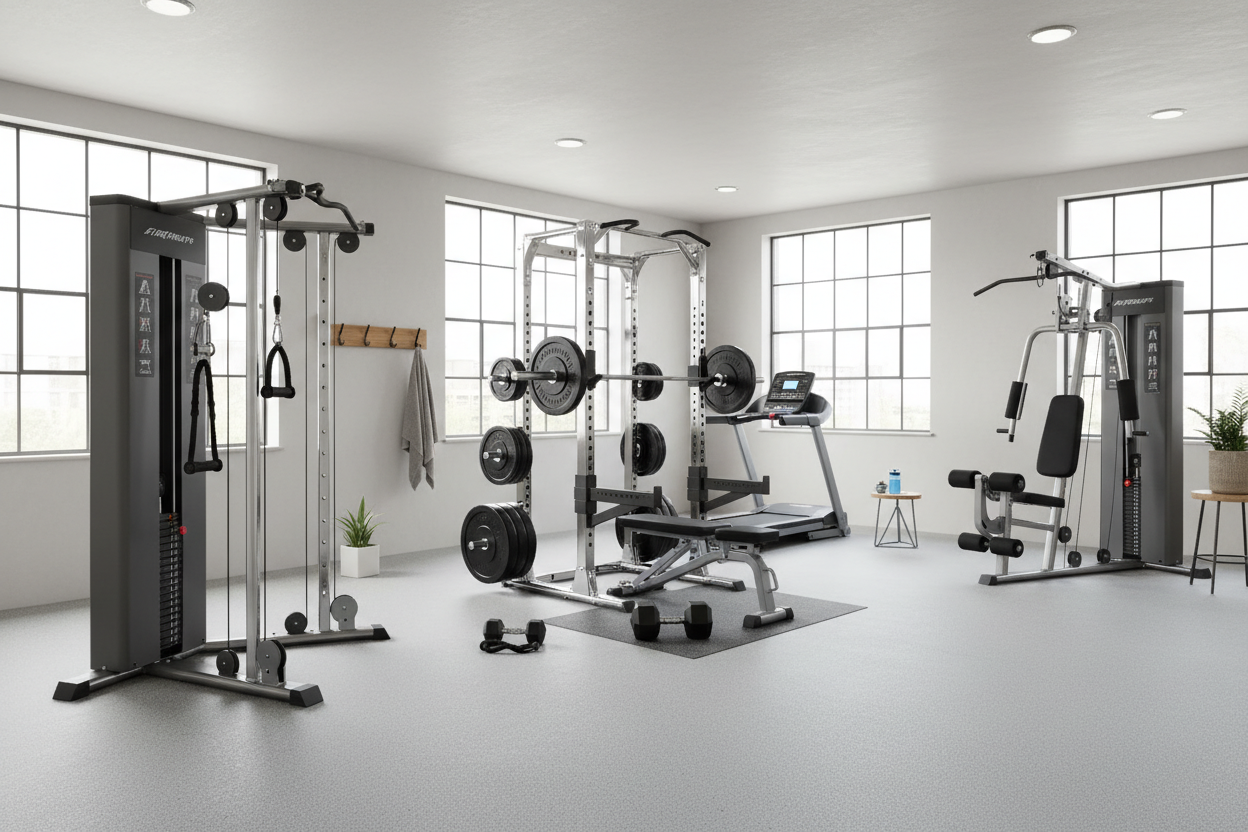
Walking into a big-box commercial gym is like walking into a buffet when you are starving. You see rows of shiny selectorized stacks and think you need to sample every single one to get your money's worth. Before you know it, you have spent two hours bouncing from the chest press to the abductor machine, yet you do not feel any stronger. People constantly ask me how many machines should i use at the gym because they are tired of feeling like they are just spinning their wheels while their workout sessions stretch into infinity.
Quick Takeaways
- Stick to 3 to 5 machines per session to maximize intensity and avoid 'junk volume.'
- Prioritize big compound movements (like the leg press) before moving to isolations.
- Focus on 2-3 high-quality sets per machine rather than doing one set on ten different pieces of equipment.
- If you are training at home, one multi-functional unit beats five single-station machines every time.
The 'Kid in a Candy Store' Trap
I see it every Monday night. A guy walks in, sees the chest press is open, does one set, notices the cable fly is free, hops on that for ten reps, then wanders over to the shoulder press because he likes the color of the frame. This is what I call the 'Kid in a Candy Store' trap. If you are wondering how many machines should i do at the gym, the answer is definitely not 'every single one that is currently unoccupied.'
When you bounce between 12 different machines, you never actually reach the level of intensity required to stimulate muscle growth. You are just doing 'activity.' To see real changes in your physique or strength, you need to provide a specific stimulus. Doing one set of everything is the fastest way to ensure you are mediocre at everything. A structured workout should feel like a targeted strike, not a disorganized scramble across the gym floor.
The Magic Number: Quality Over Quantity
If you want a hard answer, the sweet spot is 3 to 5 machines per workout. Why? Because hypertrophy—muscle growth—requires you to take sets close to failure. If you are trying to do 8 or 10 different machines, there is no way you are maintaining that level of intensity by the time you reach the end. You end up performing 'junk volume,' which is just extra work that fatigues your central nervous system without providing any additional muscle-building benefit.
When you limit yourself to a handful of movements, you can actually track your progress. You can remember that you did 180 lbs on the hack squat last week and aim for 185 lbs today. When you are asking how many machines should you do at the gym, remember that three machines done with absolute intensity will always beat seven machines done with half-hearted effort. For most of my clients, we pick two 'heavy' machine movements and two or three 'accessory' isolations. That is plenty to trigger a growth response without leaving you incapacitated for a week.
How to Pick Your Core Machines for the Day
Not all machines are created equal. You need to categorize them so you do not waste your limited slots on fluff. I always suggest starting with 'Heavy Compounds.' These are machines like the leg press, the converging chest press, or the seated row. These allow you to move the most weight and recruit the most muscle fibers. If you only have time for three machines, these should take up two of those spots.
Once the heavy lifting is done, you move to 'Targeted Isolations.' This is where the leg extension, the pec deck, or the lateral raise machine come in. These are designed to hammer a specific muscle group without taxing your whole body. A balanced session might look like this: a heavy leg press (Compound), a lying leg curl (Isolation), and a calf raise (Isolation). This structure ensures you hit the big targets first and use your remaining energy to polish the details. If you find yourself wandering toward a sixth or seventh machine, you probably did not work hard enough on the first three.
What If You Train in a Garage?
Many lifters eventually get tired of the commercial gym crowd and decide to build a Home Gym. The challenge here is space. You cannot fit a 40-machine circuit in a 20x20 garage. I went through this exact transition myself. I realized that while I loved the variety of a commercial club, I did not actually need 90% of it. In fact, I Missed The Weight Machines At The Gym So I Built My Own because I wanted that specific machine feel without the commute.
In a residential setting, you have to be even more surgical with your choices. You do not have the luxury of 'junk volume' because you literally do not have the floor space for it. You learn very quickly that a high-quality rack and a few key pieces of hardware can replicate almost everything you were doing at the big-box gym. The goal is to maximize the utility of every square foot. If a machine only does one thing and takes up 15 square feet, it better be the best damn thing you do all week.
Consolidating Your Footprint: The All-In-One Route
The smartest way to hit your 4-machine quota at home without needing a 5,000-square-foot warehouse is to look at multi-functional equipment. A Smith Machine Home Gym Station is the ultimate space-saver here. Instead of having a separate chest press, squat machine, and cable crossover, you get one footprint that handles all of them. This allows you to maintain that machine-based hypertrophy focus without the clutter.
These units are perfect for people who want the stability of a machine but the versatility of a full commercial floor. You can transition from a stabilized squat to a cable row in seconds. It keeps the heart rate up and the 'junk volume' down because you are forced to be efficient. When you consolidate your equipment, you stop worrying about how many machines are in the room and start focusing on how much weight is on the bar.
Personal Experience: My 10-Machine Mistake
Years ago, I thought more was better. I had a routine that involved ten different machines every Tuesday. I would spend twenty minutes just waiting for the leg extension to open up. By the time I got to my eighth machine, I was so tired I was just moving the weight with momentum, not muscle. My gains plateaued for six months. It wasn't until I cut my routine down to four key movements—and actually pushed those to the limit—that my strength exploded. I realized I was just 'exercising' instead of 'training.' Don't make my mistake; pick your few, and master them.
FAQ
Is 3 machines enough for a full body workout?
If you pick the right ones, yes. A leg press, a chest press, and a row cover almost every major muscle group in the body. It is better to do three sets of three big moves than one set of nine small ones.
Should I do machines or free weights first?
Generally, do your hardest, most unstable movements first. If you are using free weights, do those at the start. If you are doing an all-machine day, start with the heaviest compound machine like the leg press.
How many sets should I do on each machine?
Two to three working sets is the gold standard. If you feel like you need five or six sets to feel the muscle, you probably aren't lifting heavy enough or with enough focus on the eccentric phase.
Share:
Why I Bring a Tape Measure to Every Gym Machine Store
Don't Buy the Best Home Gym All-In-One Until You Check These 3 Specs