
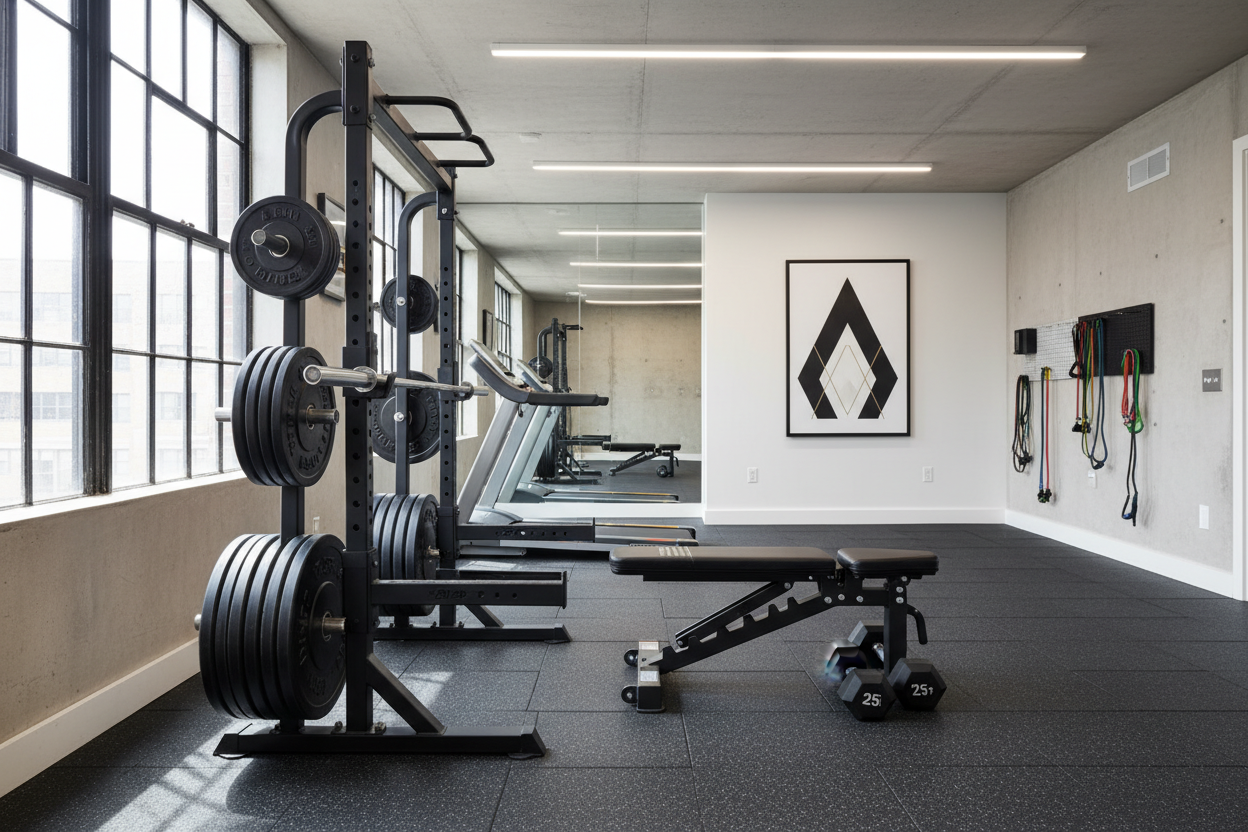
I remember the first time I fell for a 'deal.' I was twenty, broke, and desperate to build a home gym. I found a 100-lb set at a big-box store for about eighty bucks. I brought it home, ripped open the box, and realized I’d bought a pile of plastic-coated sand and a hollow bar that felt like a shower curtain rod. Within three weeks, the sand started leaking, and the bar developed a permanent smile after a set of floor presses. That was my introduction to the world of the weights training set.
The Trap of 'Cheap' Weight Packages
Marketing departments are geniuses at selling garbage to beginners. They flood the internet with cheap weight sets for sale that look incredible in photos but fail the second they hit a concrete floor. These weight packages are almost always 'standard' size, meaning the holes are one inch wide. This is a dead end. You can't use these plates on a real Olympic bar, and the bars that come with these sets usually have a weight capacity that a moderately athletic teenager would exceed in a month.
Then there’s the cement-filled plastic. They are bulky, awkward, and they crack. If you want to pick a weight set for home, you have to ignore the sirens of the $150 'complete' kit. Real iron doesn't hide behind thick plastic shells to look bigger than it is. Buying these 'deals' is just a down payment on the real set you'll have to buy six months later when the cheap stuff breaks.
How Much Does a Set of Weights Cost, Really?
I get asked this constantly: 'how much is a set of weights?' and 'how much does a set of weights cost?' The answer depends on your ceiling. If you just want to stay toned, you can go cheap. If you want to get strong, you need to pay the 'iron tax.' On average, you should expect to pay between $1.50 and $2.50 per pound for new equipment once you factor in the barbell.
Tier 1: The Bare Minimum Starter Setup
If you have less than $300, you’re looking at light weight sets. This usually gets you a pair of adjustable dumbbells or a very basic 160-lb iron set weights kit with a one-inch bar. It’s better than nothing, but it’s the fitness equivalent of a spare tire—it’ll get you a few miles, but you shouldn't try to win a race on it. You’ll outgrow the 25-lb 'heavy' plates faster than you think.
Tier 2: The Garage Gym Sweet Spot
This is where most of you should live. For $500 to $1,000, you can get a legitimate weight set for men and women that will last a lifetime. This range gets you a 300-lb Olympic weight set with weights made of cast iron or crumb rubber. More importantly, it includes a barbell with a 500-lb to 1,000-lb capacity. This is gear you can drop, sweat on, and eventually leave to your kids in your will.
Tier 3: Professional Weight Sets
Once you cross the $1,000 threshold, you’re entering the realm of professional weight sets. You’re paying for precision. Calibrated steel plates that are accurate to within 10 grams, barbells with needle bearings that spin like a Swiss watch, and urethane coatings that won't scuff. Is it overkill for a 30-minute morning pump? Yes. Is it glorious to lift with? Absolutely.
Where to Buy a Weight Set Without Getting Ripped Off
Figuring out where to buy weight set gear is where most people lose their minds. Shipping is the silent killer. A 300-lb set might cost $400, but the freight shipping could be another $200. I always recommend checking local specialty fitness stores first; sometimes their 'markup' is actually cheaper than the shipping cost of an online 'deal.'
If you're hunting for deals on weight sets on the used market, bring a scale. I once bought a pair of '45s' from a guy's driveway only to get them home and find out one weighed 42 lbs and the other weighed 49. Your nervous system hates uneven loads. If you buy new, look for companies that offer flat-rate shipping or have local pickup hubs.
Building Out Your Weight Set Up (Don't Forget the Bench)
A weight set up is more than just plates on the floor. I’ve seen guys buy $800 worth of iron and then try to bench press while lying on a yoga mat. It’s dangerous and limits your range of motion. You need a foundation. At the very least, you need a bench with a barbell rack so you can safely perform the big compounds.
Don't skimp here. A cheap bench is a literal safety hazard when you have 200 lbs hovering over your throat. Browse a reputable weight bench collection and find something with a footprint that fits your space—usually about 4 by 2 feet—and a weight capacity that includes your body weight plus the weights you plan to lift.
Final Verdict: Should You Buy a Pre-Packaged Bundle?
The math usually favors the bundle. When you buy a complete weight lifting set with weights, the manufacturer saves on logistics, and they pass that to you. Just make sure the 'bundle' isn't hiding a garbage barbell. The bar is the most important piece of the puzzle. If the plates are iron and the bar has sleeves that rotate, you’re usually in good shape.
Personal Experience: The 'Mystery Iron' Mistake
Years ago, I bought a used set of 'no-name' plates because the price was too good to pass up. They looked fine, but the holes were slightly oversized. Every time I did a deadlift, the plates would shift and rattle, throwing off my balance. I ended up spending more money to replace them with a name-brand set three months later. Buy once, cry once. It’s a cliché because it’s true.
FAQ
Do I need bumper plates or iron?
If you're doing Olympic lifts (cleans, snatches) or deadlifting on a floor you care about, get bumpers. If you're just doing basic strength training and have stall mats, iron is cheaper and takes up less space on the bar.
Are adjustable dumbbells better than a barbell set?
They are great for space-saving and accessory work, but you can't squat or deadfill heavy with them. A barbell set is the king of total-body strength.
How much space does a weight set take up?
A standard 7-foot Olympic bar needs at least 8 feet of width to account for plate loading. For the whole setup, including a bench, plan for an 8x8 foot area.
Share:
Why an Inspire Fitness Weight Bench Ruined Cheap Benches for Me
I Tried the Best All In One Home Gym (And Hate That I Love It)