
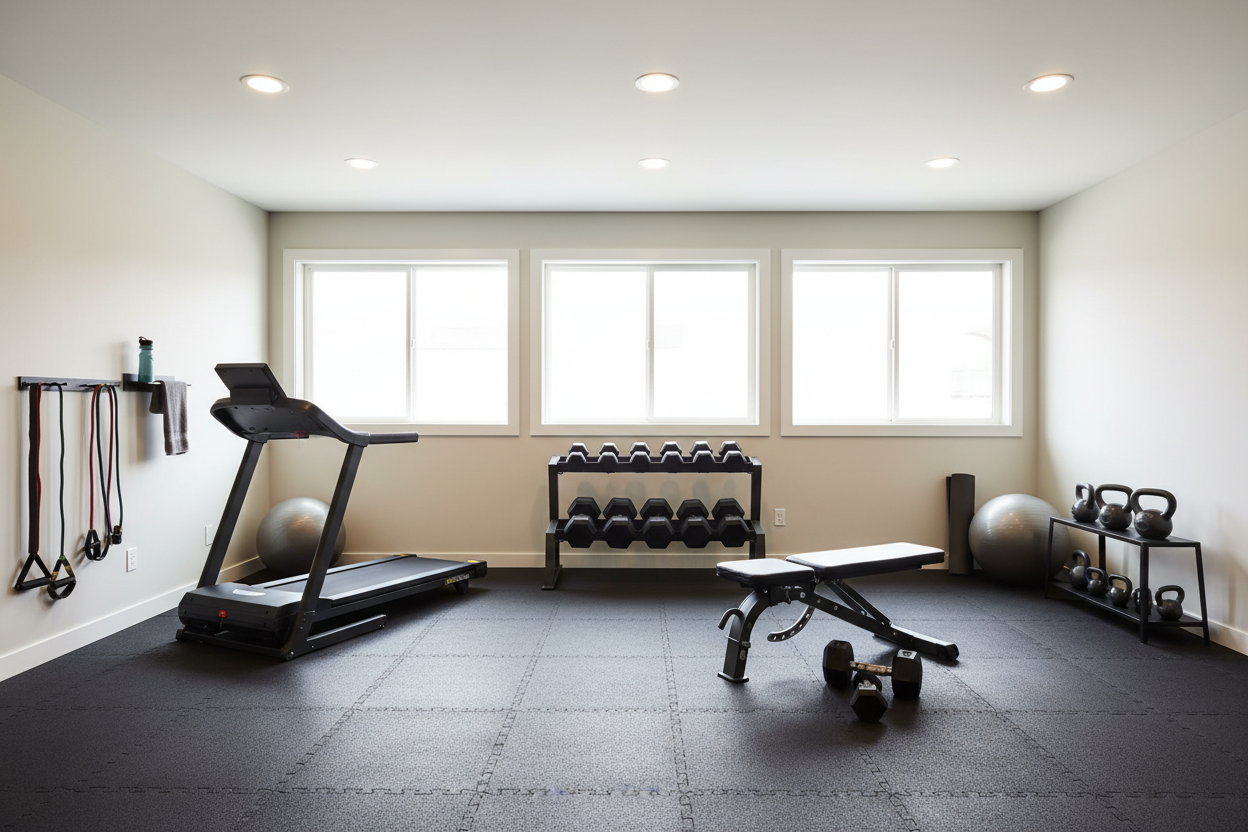
I remember the day I almost lost my security deposit. I dropped a 45-lb plate in my second-floor walk-up, and the sound was like a gunshot echoing through the floorboards. I spent the next twenty minutes staring at the laminate, praying I hadn't cracked the subfloor. Building a solid apartment weight set isn't just about finding gear that fits; it's about finding gear that doesn't get you evicted or hated by everyone in your building.
- Adjustable dumbbells are the only way to save your floor space.
- Layered flooring (foam + rubber) is mandatory for noise dampening.
- Vertical storage is your best friend in a studio apartment.
- Avoid cheap, oily rubber mats that smell like a tire fire for months.
The Reality of Lifting in a Rented Box
Most modern apartments have floors that feel like they're made of cardboard. If you're on anything but the ground floor, your heavy set of squats is your neighbor's personal earthquake. You have to account for both the static weight of the gear and the dynamic force of you moving it. A 300-lb rack is fine sitting there, but dropping 200 lbs from knee height is a different story.
I've found that a 300-lb total setup is the sweet spot for small apartment gym equipment. It's enough to get strong, but it won't cause structural concerns for most joists. The key is spreading that weight out. Don't stack all your plates in one corner of a 4x4 closet; use a rack or a mat that distributes the load across a larger surface area. Shared walls also mean you need to be mindful of the 'clank'—metal-on-metal noise travels through studs like a telephone wire.
Why Traditional Dumbbells Suck for Small Spaces
I used to have a full rack of hex dumbbells. It took up six feet of wall space and looked like a cluttered commercial gym graveyard. It was a nightmare to clean around and even worse to move when my lease was up. When you're building the best home gym weight setup, you need to prioritize the footprint-to-utility ratio.
Ditch the fixed weights. A pair of high-quality adjustable dumbbells replaces 15 sets of iron. I prefer the versions with metal handles and aggressive knurling over the plastic-shrouded ones. They feel more like real gym equipment and don't rattle when you're doing heavy overhead presses. Plus, they fit on a small stand that takes up less room than a nightstand. If you go this route, you can fit the best home gym for apartment dwellers into a 2x2 foot corner.
Selecting a Bench That Actually Disappears
A weight bench is usually the biggest space-killer in an apartment. If it doesn't fold flat or stand up on its end, it's basically a very uncomfortable piece of furniture you'll eventually trip over in the dark. I look for something like the adjustable weight bench OWB01 because it actually supports a heavy press without the terrifying wobble of a cheap department store bench.
My rule is simple: if I can't slide it under my bed or stand it vertically in a closet, I don't want it. You want a tripod design at the base so it stays stable on uneven apartment floors, and high-density foam that doesn't bottom out after three months of use. A bench that can handle 600+ lbs might seem like overkill, but that over-engineering is what keeps it from creaking and groaning every time you sit down.
Protecting Your Floors (And Your Lease)
Those cheap puzzle mats from the big-box stores are useless for weights. They compress instantly and offer zero impact protection for the floor underneath. I learned this the hard way after leaving a permanent indentation in some luxury vinyl plank that cost me a chunk of my deposit. You need real density to survive an apartment weight set.
I use a sandwich method. Put down a layer of high-density foam mats first, then top them with a 3/4-inch rubber horse stall mat or a heavy-duty gym tile. It’s heavy as hell to haul up the stairs, but it deadens the sound and protects the subfloor from cracking. If you're worried about the thud of dumbbells hitting the floor, get a pair of crash pads. They look like giant couch cushions and make a 50-lb drop sound like a soft whisper.
The 'No-Drill' Cable and Pulling Alternatives
You can't exactly bolt a four-post power rack into your landlord's drywall. For back days and accessory work, I rely on a doorway pull-up bar—the kind that uses leverage against the frame, not screws. Combine that with a set of heavy-duty resistance bands, and you can mimic almost any cable machine exercise to create the best apartment workout without a massive footprint.
If you eventually move into a ground-floor unit or a place with a garage, a smith machine home gym station becomes a viable upgrade for heavy, stabilized lifting. But in a typical apartment, you're better off with suspension trainers. They hook over any door and let you hit rows, face pulls, and core work without taking up a single square inch of floor space when you're done. It's about being smart with the air space, not just the floor space.
Putting It All Together: My 5x7 Minimalist Blueprint
Building the best apartment gym equipment setup is about being surgical with your purchases. You don't need a 20-piece kit. A pair of 50-lb adjustable dumbbells, a folding bench, and two 4x6 rubber mats are enough to get you through any program from PPL to 5/3/1. This entire setup fits in a 5x7 area, leaving plenty of room for your actual life.
Don't feel like you have to buy everything at once. You can slowly grow your home gym over time, adding a single kettlebell or a weighted vest as your strength increases. Start with the essentials, protect your floors, and enjoy the fact that you never have to wait for a squat rack or deal with a crowded locker room again.
Is it safe to have heavy weights on an apartment floor?
Generally, yes. Standard residential floors are built to handle about 30-40 pounds per square foot of live load. As long as you aren't stacking 1,000 lbs of iron in a tiny corner, your floor will be fine. Just use high-density mats to distribute the weight across the joists.
How do I stop the rubber smell of new mats?
Cheap mats off-gas like crazy. If they smell like a tire fire, leave them on a balcony or in a garage for three or four days before bringing them inside. Wiping them down with a mix of water and dawn dish soap also helps strip the oily residue that carries the scent.
Can I deadlift in a second-story apartment?
Technically yes, but your neighbors will hate you if you aren't careful. If you must deadlift, use thick crash pads to soak up the impact and never, ever slam the weight. Focus on a slow, controlled descent to keep the noise levels down and the floor intact.
Share:
I Broke the Top Home Gym Equipment to See What Actually Lasts
Will the Bench Press on a Smith Machine Actually Build a Bigger Chest?