
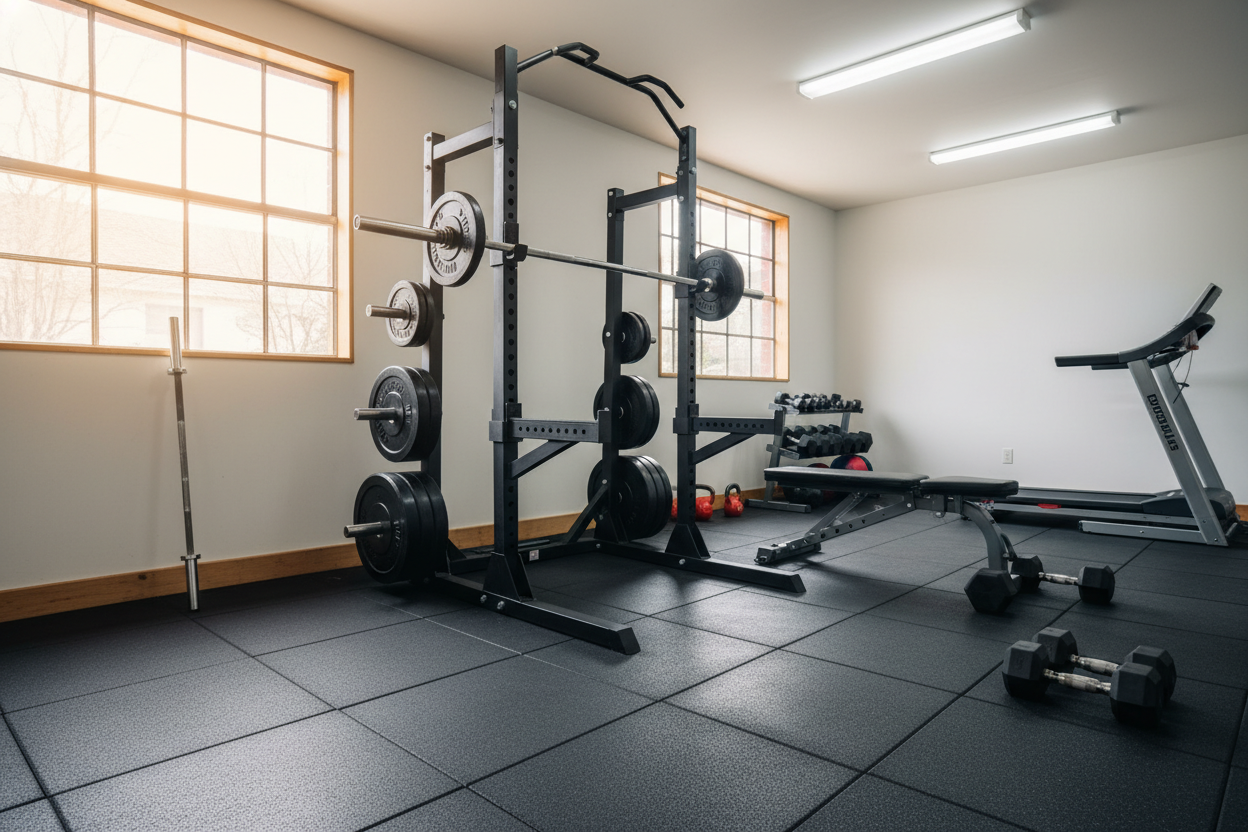
I remember the day I decided to quit my $80-a-month commercial gym. I was ready to build a sanctuary in my garage, but the shipping costs on a seven-foot stick of steel were enough to make me choke. That is when I started frantically searching for a barbell nearby, hoping to find a deal that wouldn't bankrupt me before I even hit my first set of squats.
Quick Takeaways
- Check the sleeve spin; if it grinds or feels gritty, walk away.
- Avoid 1-inch 'standard' bars; they are a dead-end for your home gym.
- Used cast iron should ideally cost between $0.70 and $1.00 per pound.
- Roll every bar on a flat floor to check for bends before handing over cash.
The Urgency Trap: Why We All Search for Local Gym Gear
The motivation hits you like a truck. You’ve watched enough Garage Gym Reviews to know you want a rack, but you want it now. Waiting ten days for a freight delivery feels like an eternity. Plus, paying $150 to ship a heavy barbell and weights set feels like lighting money on fire. This urgency usually leads you to two places: the local big-box sporting goods store or the chaotic world of Facebook Marketplace.
Hunting for a barbell nearby is a smart move to save on 'shipping tax,' but it is also where most beginners make their first expensive mistake. You are looking for a tool that can safely hold hundreds of pounds over your face. This isn't the time to grab the first shiny thing you see at a local chain store just because it's convenient.
The Big-Box Store Illusion (And Why Cheap Steel Bends)
Big-box retailers love the 'all-in-one' starter kit. They sell a barbell with weights for sale as a package deal for about $300. It looks fine in the box, but the steel is usually mystery meat with a 300-lb weight capacity. That sounds like a lot until you realize that a 300-lb capacity bar often starts to permanently deform at 225 lbs.
You might wonder, does it really matter which barbell for weights you buy? When you're a beginner, you might think any steel works. But these cheap bar and weight set combos have terrible, passive knurling that feels like wet soap once you start sweating. If you plan on actually getting strong, these bars are essentially disposable. You’ll be looking for a replacement the second you hit a three-plate deadlift.
Facebook Marketplace Roulette: How to Spot a Lemon
Marketplace is where the real deals live, but it is a minefield. When you find a weights and bar for sale, you need to perform a 'field strip' inspection. First, the spin test. Grab the sleeve (the part where the weights go) and give it a flick. It should spin smoothly. If it stops instantly or makes a grinding sound, the bushings are shot.
Next, check for a bent shaft. This is the most common reason people put a barbell weights set for sale. Roll the bar on a flat concrete floor or the store's tile. Watch the center of the bar and the ends. If it wobbles or 'hops,' the bar is a lemon. Don't buy a bent bar; it will rotate in your hands during a lift and eventually cause a wrist or elbow injury. This is non-negotiable when looking for an Olympic barbell.
Standard vs. Olympic Sizing: The Mistake You Cannot Un-Make
The biggest trap in the used market is the 1-inch 'standard' weightlifting bar set. These bars are thinner and the plates have tiny holes. If you buy a cheap barbell weight set with 1-inch holes, you are stuck. You cannot use those plates on a real 2-inch Olympic bar later, and you cannot put Olympic plates on that skinny bar.
Buying a 1-inch set is a dead-end investment. You will eventually want a real bar, and when that day comes, you'll have to sell your entire local haul for pennies on the dollar and start over. Always hold out for the 2-inch sleeves, even if the cheapest barbell set you find nearby is a bit more expensive upfront.
So, How Much Should Local Weights Actually Cost?
I get asked 'how much are barbell weights' at least once a week. In the current used market, you should aim to pay $0.70 to $1.00 per pound for standard cast iron plates. If someone is selling a barbell bar set with bumper plates, expect to pay closer to $1.50 per pound. Anything more than that and you might as well buy new gear with a warranty.
I often explain why I lift with a $400 barbell and cheap exercise weights. It's because iron is iron. A 45-lb plate from 1985 weighs the same as a brand-new one. Spend your local budget on the heavy, ugly plates, but save your real money for a high-quality bar. A used, rusty plate can be fixed with a wire brush and some spray paint; a cheap, bent bar is just scrap metal.
When to Give Up on Local and Just Pay for Shipping
If your local search for a weights barbell gym setup only turns up rusted 1-inch bars or overpriced 'vintage' plates at $3/lb, stop wasting your gas. Sometimes the cheapest barbell and weights are the ones you only have to buy once. If the local market is dry or full of scammers, just order a 20kg Olympic barbell online.
The shipping cost is a 'sanity tax' that guarantees you aren't lifting on a pipe that's going to snap during a PR attempt. A quality bar delivered to your door will outlast five 'deals' you found on the street corner.
Personal Experience: The Parking Lot Mistake
I once bought a 'like new' barbell set from a guy in a grocery store parking lot at dusk. It looked fine under the dim yellow lights. I got it home, put it on my rack, and realized the shaft had a permanent 2-degree bend. Every time I tried to bench, the bar wanted to rotate and dump the weight on my chest. I couldn't even sell it in good conscience. I ended up using it as a literal stake for my tomato plants. Check your gear in broad daylight and never skip the roll test.
FAQ
How can I tell if a barbell is high quality just by looking?
Look at the ends of the sleeves. High-quality bars usually have a snap ring or a bolt with a clean finish. If you see a giant, cheap-looking hex bolt at the end, it's likely a low-end bar with poor internal components.
Is rust on used weights a dealbreaker?
Not at all. Surface rust is purely cosmetic. As long as the iron isn't literally crumbling away (pitting), you can clean them up in an afternoon with some vinegar and a wire brush.
Should I buy a barbell and weights set for sale at a garage sale?
Garage sales are the best place to find 'clueless' deals. Many people just want the heavy stuff out of their house. If you see a 2-inch bar, offer a flat price for the whole pile. You can often get weights for $0.50/lb or less this way.
Share:
Why Your Mini Dumbbells Keep Peeling (And Which Hand Weights to Buy)
Ignore the Influencers: The Real Things You Need to Workout at Home