
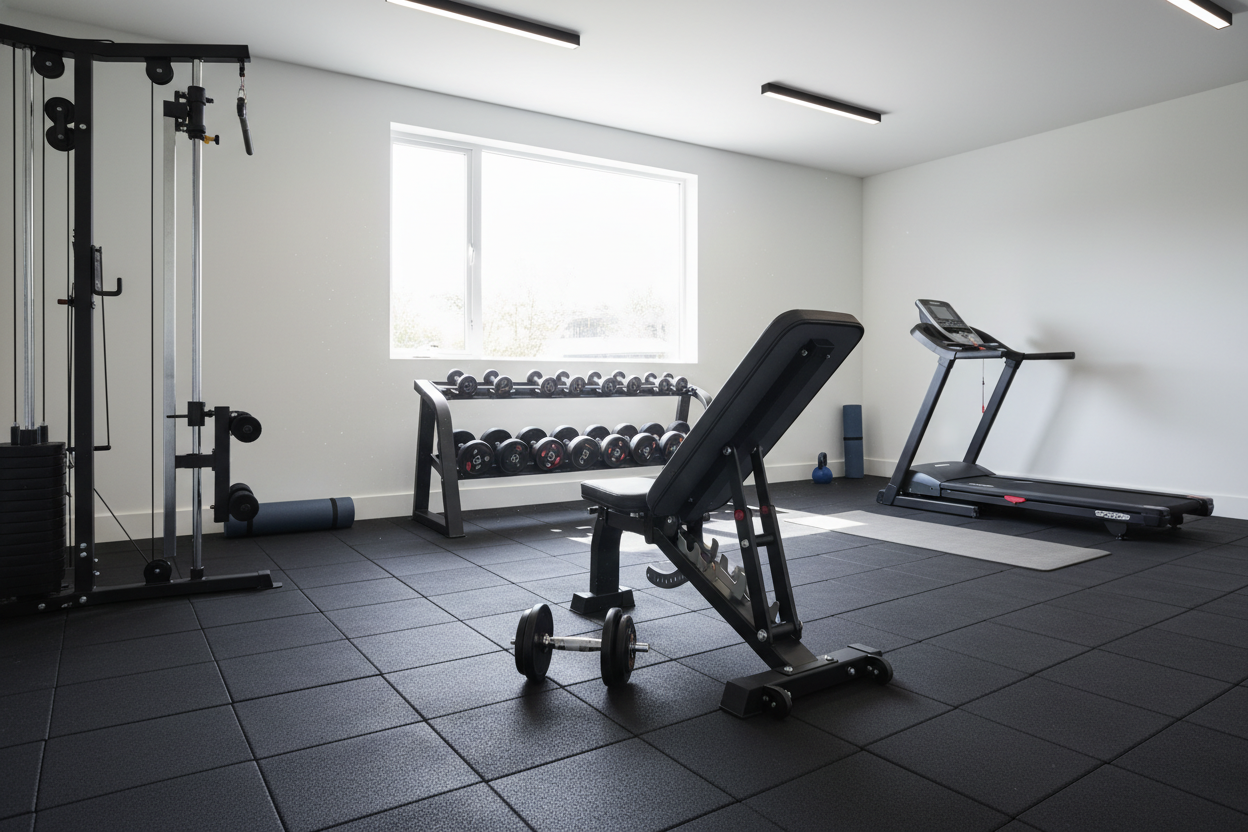
I remember the first time I tried to max out on a fifty-dollar bench I bought from a big-box store. I was halfway through a heavy set of presses when the whole frame started to shimmy like a Jenga tower in a breeze. Finding a solid adjustable lifting bench shouldn't feel like a life-or-death gamble every time you unrack the bar.
Quick Takeaways
- Look for a 3-post or wide-based 4-post frame to eliminate side-to-side sway.
- Avoid pad gaps wider than 2 inches to protect your lower back.
- Ladder-style adjustment systems are generally faster and safer than pop-pins.
- Always factor your body weight into the total weight capacity of the bench.
The Terrifying Reality of the 'Budget Wobble'
There is a specific kind of terror that hits when you are holding 100-pound dumbbells and your adjustable utility bench decides to tilt three degrees to the left. Most budget benches use thin 14-gauge steel and a single, tiny bolt as the main pivot point. That is a recipe for disaster. You want a footprint that is wide enough to prevent side-to-side sway but narrow enough that your feet aren't constantly tripping over the front stabilizer when you are trying to set your leg drive.
The hinge is the heart of the bench. If it's sloppy, the whole experience feels cheap. I look for benches that use beefy bolts and nylon washers to keep things quiet and tight. If you can grab the backrest and wiggle it more than half an inch side-to-side, it's going to feel like a boat in a storm once you add a loaded barbell into the mix.
Pad Gap: The Silent Killer of a Good Bench Press
The 'pad gap' is that annoying canyon between the seat and the backrest on a flat incline weight bench. If it is too wide, your lower back or tailbone sinks into it during a heavy press. This isn't just uncomfortable; it's a great way to lose your arch and potentially pinch a nerve. When you are hunting for an adjustable home gym weight bench, look for designs where the seat is shaped to minimize this gap or where the entire mechanism slides to close the distance.
I prefer a gap of 1.5 inches or less. Anything more and you will find yourself constantly scooting up or down the pad trying to find a 'sweet spot' that doesn't exist. High-density foam is also a must. If you can feel the plywood base through the vinyl with your thumb, your shoulders will definitely feel it under 225 pounds.
Weight Capacity vs. Real-World Load
Marketing teams love to slap a '1,000 lb capacity' sticker on an adjustable fitness bench that looks like it was made from recycled soda cans. That is usually a static rating—meaning the bench can hold the weight if it is perfectly still. But when you are dropping a heavy set of dumbbells back onto the pads, the dynamic force is much higher. I have seen a cheap adjustable weight bench buckle because the user didn't account for their own 200-pound body weight plus the weight they were lifting.
Always check the frame gauge. 11-gauge steel is the gold standard for a reason. It doesn't flex. If you are serious about adjustable benches weight training, don't settle for anything less. A bench rated for 600 pounds might sound like plenty, but if you weigh 220 and are benching 300, you are dangerously close to the limit of what that thin steel can handle safely over hundreds of sessions.
Ladder vs. Pop-Pin: Which Adjustment Style Wins?
I have spent years fumbling with spring-loaded pop-pins in the dark of my garage. They are slow, and if the pin doesn't seat perfectly into the hole, the backrest can collapse. A ladder-style adjustable lifting bench is superior for most home lifters. You just lift the pad and drop it into the groove. It is faster, more intuitive, and visually obvious if the bench is locked in. For a rock-solid adjustable lifting bench, the ladder system is my go-to every time.
Pop-pins have their place, especially if you need to move the bench frequently and don't want the ladder arm swinging around. But for pure stability under a dumbbell bench adjustable routine, the simplicity of steel-on-steel contact in a ladder system is hard to beat. It removes the 'play' that often develops in spring-loaded pins over time.
When to Ditch the Bench for a Specialty Press Machine
Sometimes, an adjustable bench gym setup just doesn't cut it for high-volume hypertrophy. If you are training alone in a garage and want to push your chest to absolute failure without a spotter, a dedicated chest press machine is a smarter move. It removes the stability requirement entirely, allowing you to focus on the squeeze rather than balancing the weight.
Benches are versatile, but machines offer a fixed path of motion that is safer for your shoulders when you are tired. I still do my heavy compound work on a weightlifting bench adjustable model, but I've started moving my 'burnout' sets to a machine. It's about using the right tool for the job.
Personal Experience: My Biggest Gear Mistake
I once bought a bench because it folded flat to fit under my bed. It was great for space-saving, but terrible for my ego. The first time I tried to do a heavy adjustable incline weight bench press, the 'locking' mechanism—which was just a thin metal pin—sheared off. I ended up flat on my back with 60-pound dumbbells inches from my face. Now, I only buy benches with a welded frame and a tripod foot design. If it can't handle me jumping on it, I'm not lifting on it.
FAQ
Is a 3-post bench better than a 4-post?
Usually, yes. A 3-post design (one foot in the front, two in the back) gives your feet more room to drive into the floor without hitting the bench feet. It's much better for proper powerlifting form.
What is the best pad width?
12 inches is the standard. If you have very broad shoulders, you might like a 14-inch 'fat pad,' but 12 inches works for 90% of lifters without restricting shoulder blade movement.
How do I stop my bench from sliding on stall mats?
Look for a bench with thick rubber feet. If yours is sliding, you can add some grip tape to the bottom of the feet, but a heavy 11-gauge bench usually stays put just by its own weight.
Share:
Why the Row Machine Planet Fitness Picked Isn't a Concept 2
Why I Traded My Barbell for Dumbbells for Resistance Training