
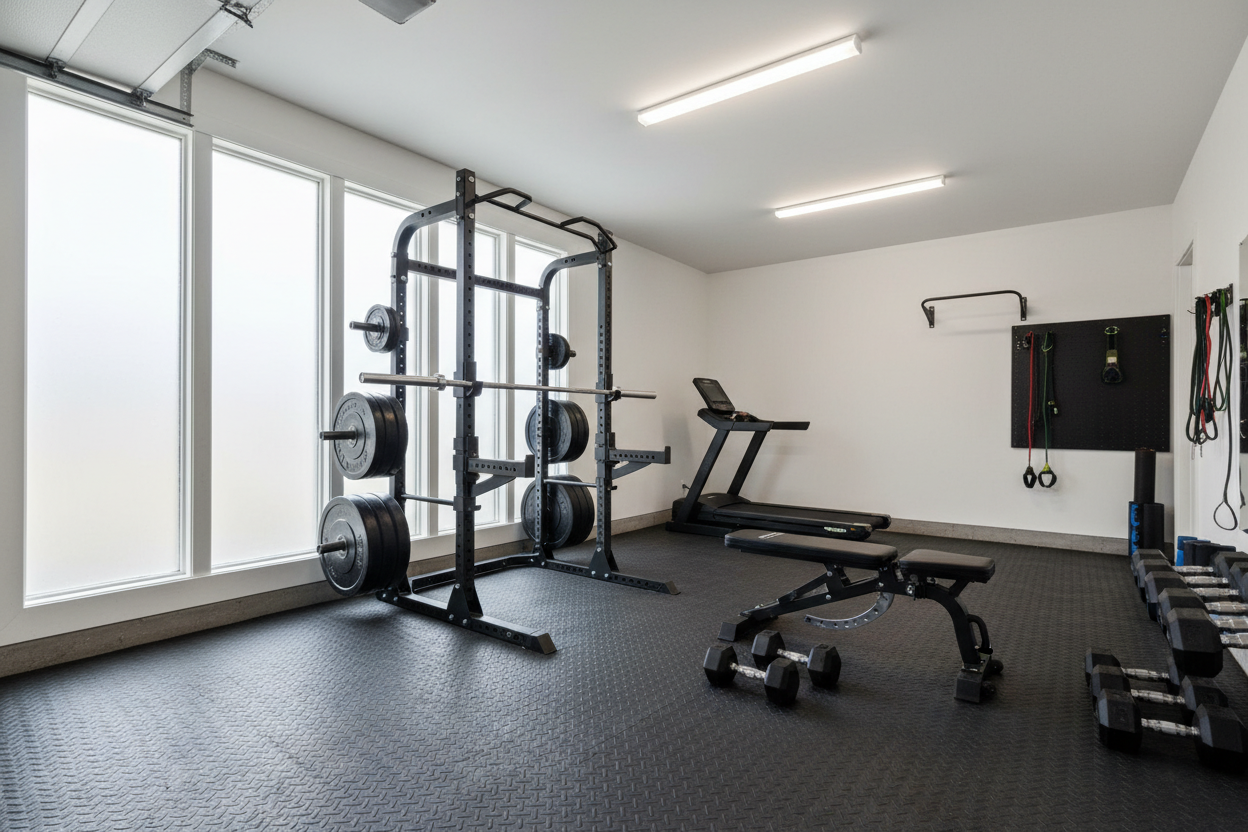
I spent years paying $60 a month to wait in line for a squat rack that felt like it was held together by spit and prayer. When I finally decided to buy my own equipment for a gym in my garage, I almost blew three grand on machines I would never actually use. It is a common trap: you walk into a big-box club, see forty different machines, and think you need to clone that floor plan to get results.
Building a training space is about efficiency. You want gear that works as hard as you do, doesn't shake when you rack 225 lbs, and doesn't cost as much as a used Honda Civic. Whether you are looking for equipment gym staples or specialized fitness center equipment, the goal is the same: maximum utility in a minimum footprint.
Quick Takeaways
- Prioritize a versatile rack and a high-quality barbell over single-use machines.
- Buy weight plates used to save cash; buy your barbell and bench brand new for safety.
- Commercial gear is often too bulky and over-engineered for personal training spaces.
- Focus on 11-gauge steel and 3x3-inch uprights for long-term durability.
Why Copying Commercial Gyms is a Huge Mistake
Most fitness center equipment is designed for one thing: survival. It has to withstand 18 hours of daily abuse from people who do not respect the gear. This means it is often over-engineered, massive, and incredibly expensive. If you try to replicate Fitness 19 equipment in your basement, you will run out of room before you even buy a set of dumbbells.
Equipment for gyms in the commercial world is also built to look 'safe' for insurance purposes. That is why you see so many machines with fixed paths and plastic shrouds. For your own space, you want tools that allow for natural movement. Do not pay the 'commercial tax' for a brand name that just takes up three parking spots worth of floor space without adding any real training value.
The Core Gear Every Good Training Space Actually Needs
When setting up a home gym, your goal is versatility. Every piece of equipment for gymnasium use should serve at least three purposes. If it only does one thing—like a dedicated bicep curl machine—it is a waste of money and floor space. You need tools that allow you to squat, press, pull, and hinge without needing a 5,000-square-foot warehouse.
The foundation of any serious training space is the 'Big Three': a rack, a barbell, and a bench. With those, you can perform 90% of the movements that actually build muscle and strength. Everything else is just accessory work designed to fill the gaps. Focus on the quality of these core pieces first.
Start with a Solid Foundation (Racks and Rigs)
The rack is the heart of your gym. If your rack is trash, your training will feel like trash. I always look for 11-gauge steel and at least 3x3-inch uprights. You want something that does not walk across the floor when you are re-racking a heavy set of squats or doing pull-ups. A flimsy rack isn't just annoying; it's a safety hazard when you're training alone.
If you are tight on space, a Smith machine home gym station can be a lifesaver. These integrated systems often combine a rack with cable pulleys and plate storage, giving you the functionality of three different machines in one footprint. It is the smartest way to get professional fitness club equipment utility in a residential setting without sacrificing your entire garage.
The Truth About Benches (Don't Skimp Here)
I have a personal vendetta against cheap benches. I once bought a 'budget' bench that claimed a 500-lb capacity, but the moment I laid down with 225, the frame creaked like a haunted house. A wobbly bench kills your leg drive and destroys your confidence on heavy presses. You need a rock-solid foundation to push heavy weight safely.
Look for high-density foam that does not bottom out and a wide tripod base for stability. A weight bench with barbell rack is a great entry point because it keeps your footprint small while giving you a dedicated station for chest and leg work. Just make sure the vinyl has some grip so you aren't sliding around mid-set when things get sweaty.
Where to Save and Where to Splurge on Gear
Here is my 'Golden Rule' for equipment for gymnasium setups: spend money on the things you touch. You should splurge on your barbell and your bench. A cheap barbell has terrible knurling that will tear your hands up, and the sleeves won't spin properly, which causes unnecessary wrist strain during cleans or presses. A good bar can last a lifetime; a cheap one will rust and bend in a year.
On the flip side, you can save a fortune on gym instruments like plates and kettlebells. Iron is iron. A used 45-lb plate from a garage sale weighs the same as a brand-new one from a boutique brand. As long as the hole is the right size and it isn't cracked, buy it used. This allows you to put those extra hundreds of dollars toward a better rack or a higher-end barbell.
Navigating the 'Latest Gym Equipments' (Hype vs. Helpful)
Every year, a new wave of 'smart' the gym equipment hits the market. Most of it is junk. If a piece of gear requires a tablet and a $40/month subscription just to change the resistance, you are buying a glorified coat rack. Real fitness club equipment should last a decade, not until the next software update or when the company's servers go dark.
However, some innovations are worth the spend. Adjustable dumbbells that swap weights in seconds are a massive space-saver compared to a full rack of fixed weights. High-quality urethane coatings on plates are great if you train in a humid garage and want to avoid the constant battle against rust. Just do not get distracted by the flashing lights and touchscreens; they don't make the weight any lighter.
My Biggest Mistake
When I first started outfitting my space, I bought a full set of hex dumbbells from 5 to 50 lbs. It cost me nearly $1,000 and took up an entire wall. Six months later, I realized I only ever used the 25s, 35s, and 50s. I could have bought a pair of high-end adjustable dumbbells for half the price and kept my floor space. Don't buy for the 'look' of a professional gym; buy for the movements you actually do every week.
FAQ
Is commercial gym equipment better than home gear?
Not necessarily. Commercial gear is built for durability over thousands of users, but it is often too bulky for a home. Modern home-gym gear is designed specifically to fit in tight spaces while still handling heavy loads.
What is the minimum space needed for a gym?
You can do a lot in an 8x8 foot space. That is enough for a compact rack, a bench, and a barbell. If you have a standard one-car garage, you have more than enough room for a world-class setup.
Should I buy rubber or iron plates?
If you plan on dropping weights from overhead or doing deadlifts, get bumper plates to protect your floor. If you are just doing bench and squats and want to save money, cast iron is fine—just make sure you have thick rubber stall mats down first.
Share:
The Real Reason You Don't Exercise at Home Gym Setups
Why I Finally Bought the Best Workout Gym Machines for My Garage