
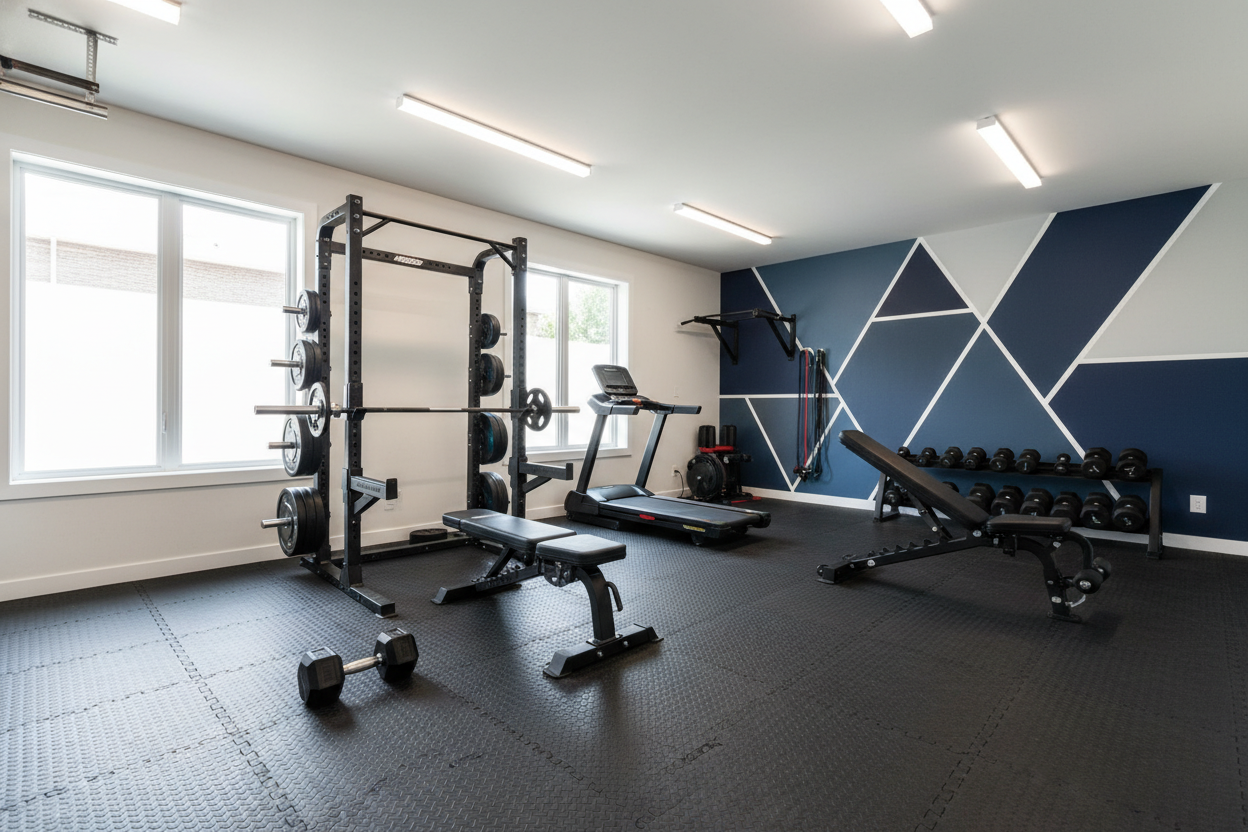
I remember the sound. A sharp, metallic crack right as I was touching 225 to my chest. I was using a $60 weight lifting benches I’d bought from a big-box store because I thought steel was just steel. I was wrong. The frame buckled, the back pad shifted thirty degrees, and I spent the next three seconds fighting not to let the barbell crush my windpipe.
Most lifting benches sold for home use are, frankly, dangerous liabilities. They are designed for people who plan to use them as a clothes rack, not for anyone planning to actually move heavy iron. If you’re serious about a lift weight bench, you need to look past the shiny vinyl and check the specs that keep you out of the ER.
- 11-gauge steel is the gold standard; 14-gauge is for laundry.
- Continuous welds beat spot welds every time.
- Firm padding is non-negotiable for leg drive.
- Check the gap; a wide pad gap will ruin your back.
The Terrifying Reality of a Snapped Frame Mid-Set
That snap I heard wasn't just metal; it was my confidence. I was using a flimsy portable work out bench that promised a 300-lb capacity. The problem is that many manufacturers test those capacities in static environments—meaning they gently place weight on it and see if it holds. They don't account for the dynamic force of a lifter shifting, driving their heels into the floor, or racking a bar with some aggression. When you're moving fast, that 300-lb limit is reached much quicker than the sticker suggests.
Cheap exercise benches for home use thin-walled 14-gauge steel. It feels sturdy when you’re doing bicep curls, but the moment you put real load on it, the frame flexes. After that near-miss, I realized that saving fifty bucks wasn't worth a trip to the hospital. I Traded My Flat Pad for an Adjustable Utility Weight Bench (Here's Why) because I needed something that could handle the abuse of a garage gym environment without folding like a lawn chair.
Big-box store models often rely on bolts where there should be welds. Every bolt is a potential failure point. If the frame isn't reinforced at the stress points, it’s only a matter of time before the metal fatigues and gives way. I’ve seen frames literally tear at the bolt holes because the metal was too thin to support the torque. I learned that the hard way so you don't have to; if it looks like it belongs in a toy aisle, keep it out of your rack.
The Anatomy of Indestructible Weight Lifting Benches
When you're shopping for a weights bench for home, the first thing you need to look at is the gauge of the steel. In the world of weight training benches, a lower number means thicker metal. 11-gauge steel is roughly 3mm thick and is what you’ll find in commercial gyms. 14-gauge is about 2mm. That 1mm difference sounds small, but it’s the difference between a rock-solid foundation and a shaky mess that vibrates every time you move.
Next, look at the welds. You want to see 'fat' continuous weld lines, not tiny little spot welds that look like bird droppings. A continuous weld ensures the joint is actually stronger than the surrounding metal. If you see a bench for weight training that is held together almost entirely by small carriage bolts, keep scrolling. You want a welded spine that can handle the sheer force of a heavy eccentric phase.
To find the real winners when browsing for a weights bench for home, check the total weight of the unit itself. A bench that weighs 40 lbs is going to move when you do. A bench that weighs 70 to 90 lbs is going to stay planted. Mass moves mass, and you want your equipment to have enough mass to stay put when you’re grinding out a final rep. Look for powder-coated finishes over cheap paint; they resist the sweat-induced corrosion that eventually eats through thin steel frames from the inside out.
Finally, look at the footprint. A tripod design (three feet on the ground) is great for keeping your feet out of the way, but only if the rear stabilizer is wide enough to prevent tipping. For most home lifters, a standard four-point frame with a wide rear base is the safest bet for maximum stability during heavy dumbbell work where your center of gravity might shift.
The Wobble Factor on Exercise Benches for Home
There is nothing more distracting than a back pad that shifts an inch to the left when you're trying to set your scaps for a heavy press. This side-to-side play is usually caused by poor tolerances in the hinge mechanism. If the bolt hole is even slightly too large for the pin, the whole bench for lifting will feel like it’s on ice. This isn't just annoying; it's a recipe for a shoulder impingement.
I’ve tested dozens of these, and the ladder-style adjustment systems are usually the worst offenders for wobble unless they are precision-machined. I Abused the Vibespark Adjustable Weight Bench for 30 Days and specifically looked for how the locking pins held up under lateral tension. You want a pin that fits snugly with zero 'clunk' when you move the pad. If you can wiggle the back pad more than half an inch with your hand, imagine what it will do with 200 lbs of meat and iron on top of it.
If you're doing heavy dumbbell work, that wobble becomes dangerous. Your stabilizer muscles are already working overtime to keep the bells in line; you don’t need your home workout bench press fighting you too. Before you buy, check the user reviews specifically for mentions of 'side-to-side play'—it’s the silent killer of good lifting form and the first sign of a poorly manufactured hinge.
Why Soft Padding Kills Your Home Workout Bench Press
Most people sit on a bench in a store and think, 'Oh, this is nice and soft.' That is the exact opposite of what you want. A soft, squishy pad is a disaster for a home workout bench press. When you're trying to create a stable platform, you need to retract your scapula and dig your upper back into the pad. If the pad is soft, your shoulders just sink in, killing your leverage and putting your rotator cuffs at risk.
Think of it like trying to jump off a mattress versus jumping off concrete. You need that firm surface to transfer force from your legs, through your core, and into the bar. High-density foam (the stuff that feels almost too hard at first) is what you need. It provides a 'grip' for your shirt and doesn't compress to the plywood base the moment you pick up a pair of heavy dumbbells. If you can feel the wood through the foam with your thumb, it's too soft.
Furthermore, a cheap bench for weight training often uses thin vinyl that gets slippery the moment you sweat. You want a textured 'sticky' vinyl that keeps you locked in place. If you're sliding toward the head of the bench every time you use leg drive, you're losing power and risking a neck injury. Firm padding isn't about comfort; it's about performance and orthopedic safety. A good pad should be about 11-12 inches wide to support the shoulder blades without obstructing the humerus during the bottom of the press.
The Setup I Actually Trust With 300+ Lbs Today
After breaking two benches and nearly my collarbone, I stopped looking for deals and started looking for overbuilt specs. I need a piece of equipment that I don't have to think about when I'm under the bar. The weight training benches in my gym now all share one trait: they are heavy, simple, and built with 11-gauge steel. I no longer trust anything that can be folded up and put under a bed.
If you're looking for a recommendation that won't let you down when the weights get heavy, the Adjustable Weight Bench Owb01 is the one I currently trust in my rotation. It has the frame thickness and the bolt-down stability that most 'portable' models lack. It doesn't creak, it doesn't groan, and most importantly, it doesn't move when I’m trying to drive my heels through the floor on a max effort set.
Don't make the mistake of thinking you'll 'upgrade later.' Buy the bench that can handle the weight you plan to lift three years from now. It's cheaper to buy one $300 bench than it is to buy a $100 bench, break it, buy another $150 bench, and then finally buy the good one anyway. Invest in your safety first, and the gains will follow.
FAQ
What is the best height for a weight bench?
The IPF standard is between 16.5 and 17.7 inches. Most home benches are a bit taller (18-19 inches), which can make it harder to get proper leg drive if you have shorter legs. Look for something around 17 inches if you want to press like a pro.
Can I use an adjustable bench for heavy powerlifting?
Yes, but it has to be a high-end model. Cheap adjustable benches have a gap between the seat and back pad that can be uncomfortable or even unstable. A dedicated flat bench will always be more stable, but a high-quality adjustable bench is fine for 99% of lifters as long as the hinge is reinforced.
How do I know if my bench is safe?
Check the underside. If you see thin metal plates and tiny screws holding the pad to the frame, be careful. If the frame flexes when you push on it sideways with your hand, it’s not meant for heavy weight. Also, check the weight rating; if it doesn't specify a 'dynamic' load, assume the limit is lower than advertised.
Share:
The Only Pieces of Home Gym Leg Equipment You Actually Need
Are Workout Bench Attachments Actually Worth the Wobble?