
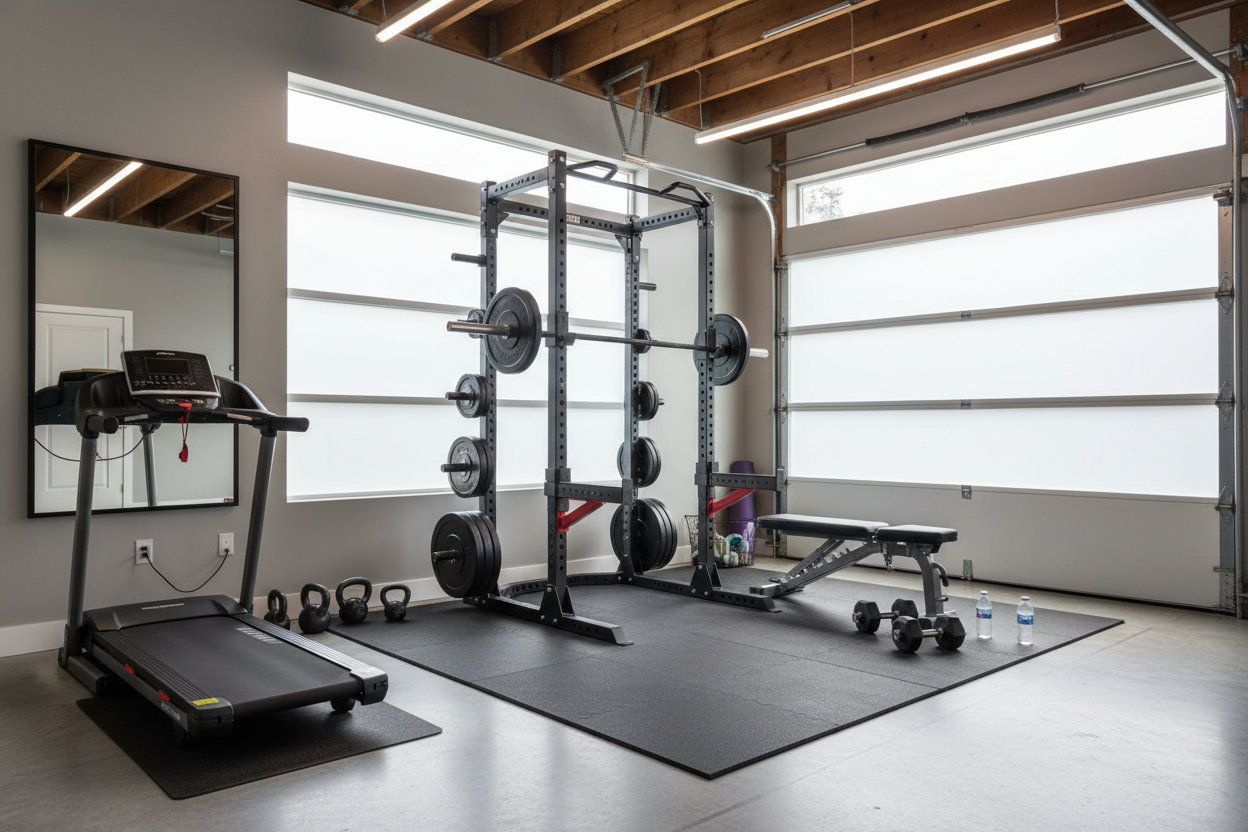
I remember standing in a big-box sporting goods store, staring at a 300-pound lifting weights set that cost less than a pair of decent sneakers. It looked like a steal. Then I touched the barbell. The knurling felt like wet soap, and the plates were covered in a greasy, mystery film that smelled like a tire fire. I realized right then that buying cheap gear is the fastest way to spend twice as much money in the long run.
Building a home gym shouldn't feel like a compromise. You don't need a 50-piece catalog of chrome-plated junk. You need three specific things that won't break when you actually start moving heavy steel. After years of testing bars that bent under 315 pounds and benches that wobbled like a folding chair, I’ve narrowed down the perfect minimalist setup.
Quick Takeaways
- Standard 1-inch bars are a waste of money; always go with 2-inch Olympic sleeves.
- Your barbell is where 60% of your budget should go.
- Bumper plates are mandatory if you train in a garage or on a second floor.
- A cheap bench is a safety hazard, not a bargain.
Why That 300-Pound Box at the Sporting Goods Store is a Trap
We’ve all seen them: the all-in-one weightlifting sets for sale at the local mall. They promise a full gym in a box for a price that seems too good to be true. That’s because it is. These sets usually feature a low-tensile strength bar that will permanently 'smile' (bend) the first time you leave it loaded overnight or drop a heavy deadlift.
The weight lifting price might look attractive, but the hidden costs are high. The collars slip, the plates are often 5 to 10 pounds off their stated weight, and the finish chips off within a month, leaving rust all over your hands. You aren't buying a tool; you're buying a future trip to the scrapyard. If you want a setup that lasts through a decade of squats, you have to piece it together yourself.
The Holy Trinity: Curating Your Own Setup
Instead of a bundle, I recommend the 'Holy Trinity' approach. You need a high-quality barbell, a set of resilient plates, and a bench that feels like it’s bolted to the earth. By hand-picking these three components, you ensure that every dollar is spent on durability rather than marketing fluff.
This isn't about being a gear snob. It's about functional strength. When you stop worrying if your equipment is going to fail, you start focusing on the lift. Curating your own set allows you to prioritize what matters: sleeve rotation, grip texture, and structural integrity.
The Barbell: Your Gym's Engine
The barbell is the most important piece of equipment you will ever own. Period. Look for a multi-purpose bar with a tensile strength of at least 190,000 PSI. This is the sweet spot where the bar has enough 'whip' for cleans but enough stiffness for heavy squats. Avoid anything that doesn't list its PSI rating.
Pay attention to the bushings. Bronze bushings are the gold standard for most home lifters; they provide a smooth, consistent spin that won't seize up after a year of sweating on them. As for the knurling, you want something that bites but doesn't draw blood. If the bar feels like a smooth pipe, you'll be reaching for the straps before you even hit your working sets.
The Plates: Bumper vs. Iron
If you're hunting for lift weights for sale, you’ll face the classic debate: iron or rubber? Iron is classic and makes that satisfying clank, but it’s loud and brutal on concrete floors. For a home setup, I’m a bumper plate convert. They allow you to drop the bar safely and keep the noise levels low enough that your neighbors won't call the cops during your 6:00 AM session.
I eventually upgraded to colored rubber plate sets because the color coding makes it impossible to miscalculate your weight when you're gassed. Plus, high-quality virgin rubber doesn't have that toxic smell that recycled crumb rubber often carries. They fit tight on the bar and don't bounce halfway across the room when you bail on a lift.
The Bench: Don't Lie Down on Cheap Steel
The bench is where most people try to save money, and it’s a massive mistake. A cheap bench with a 300-pound total capacity is useless once you factor in your body weight plus the bar. You need a frame made of at least 11-gauge steel with a wide tripod base to prevent rocking.
I always suggest looking for a sturdy adjustable weight bench if you have the space. It opens up incline and shoulder work that a flat bench can't touch. When browsing quality weight benches, check the pad density. If you can feel the plywood base through the foam with your thumb, your shoulders are going to hate it during a heavy press.
Let's Talk Numbers: The Real Cost Breakdown
The weight lifting price for a curated setup is higher upfront—there's no way around that. You might spend $800 to $1,200 on these three items compared to $400 for a big-box bundle. But here is the math: that $400 set will be broken or outgrown in 12 months. You'll then spend the $1,000 anyway to replace it.
A quality bar and plate set retains about 70-80% of its value on the secondary market. If you decide to quit lifting, you can sell it in a weekend. Cheap gear has zero resale value. You are essentially paying a 'quality tax' now to avoid a 'replacement tax' later. For the price of a few months at a high-end commercial gym, you can own gear that will outlive you.
Navigating the Wild West of Used Gym Marketplaces
If the retail price is too steep, look for used weightlifting sets for sale on Facebook Marketplace or Craigslist. This is where the real deals happen, but you have to be fast and skeptical. People often sell 'rusty' bars that just need a little 3-in-One oil and a wire brush to look brand new.
When you go to inspect used gear, bring a tape measure and a level. Check if the bar is straight by rolling it on a flat floor. If the sleeves don't spin or the bar has a permanent bend, walk away. I've found that reading specs on gym machines and free weights before you show up is the only way to ensure you aren't overpaying for a generic brand that someone slapped a fancy sticker on.
Personal Experience: My $200 Mistake
My first 'real' gym setup included a bar I bought at a garage sale for $50. It looked fine until I tried to deadlift 365 pounds. As I pulled, I felt the bar oscillate in a way that felt... wrong. When I set it down, the bar stayed in a slight 'U' shape. I had to finish my workout with a bent bar that tried to roll out of my hands on every rep. I spent the next week researching tensile strength and ended up buying the bar I should have bought in the first place. Don't be like me. Buy the good bar first.
FAQ
Is a 300lb set enough for a beginner?
It usually is for the first six months. However, once you start deadlifting and squatting regularly, you'll hit that 300lb limit faster than you think. Buying a bar that can handle 1,000lbs now means you only buy it once.
What is the difference between iron and bumper plates?
Iron plates are thinner, allowing you to fit more weight on the bar, but they are loud and can crack concrete. Bumper plates are made of dense rubber, designed to be dropped, and are much quieter for home use.
Do I really need an Olympic barbell?
Yes. Standard 1-inch bars are not built for heavy loads and the plate selection is very limited. Olympic bars (2-inch sleeves) are the industry standard for a reason: safety and compatibility.
Share:
Can You Replicate Fitness 19 Equipment on a Garage Gym Budget?
Your Cluttered Gym Setup Design Is Ruining Your Workouts