
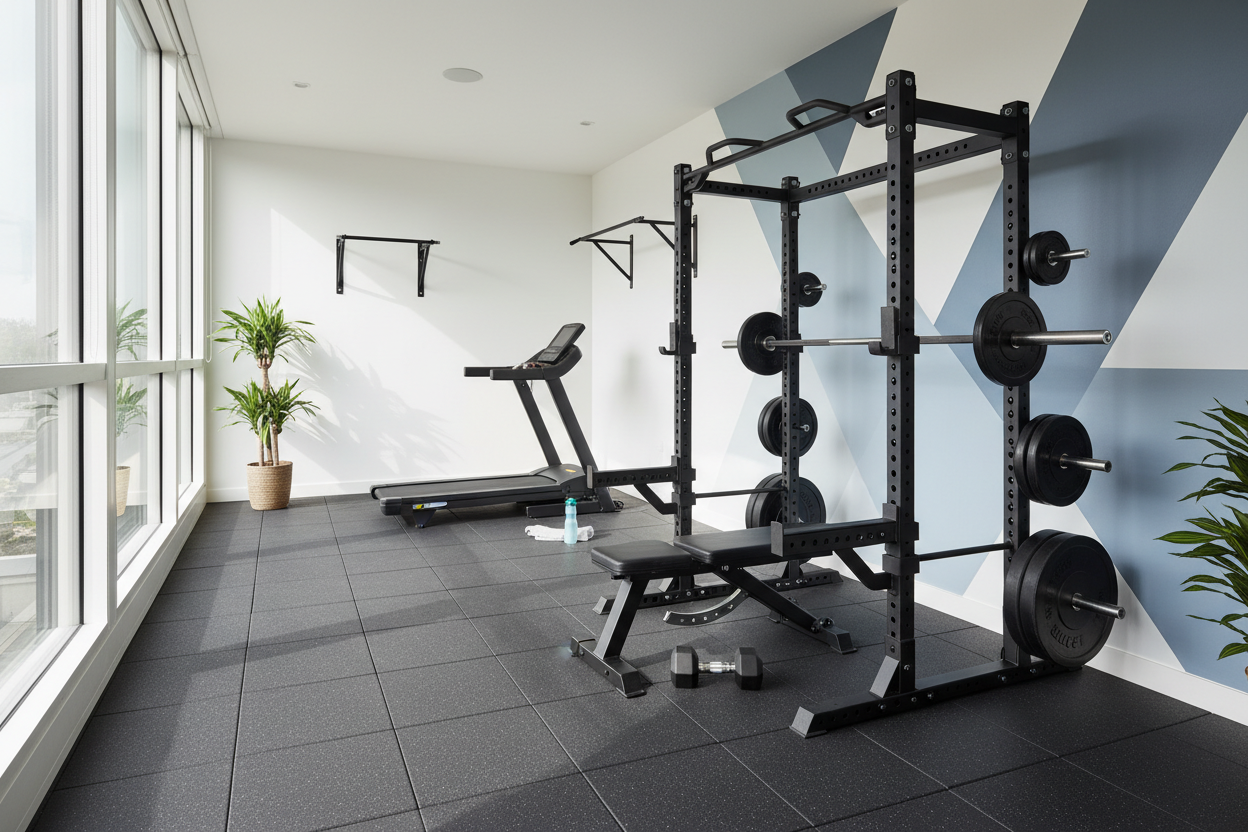
Walking into a weight lifting equipment store usually starts with the same smell: off-gassing rubber floor mats and that weirdly sterile 'new plastic' scent. It’s designed to feel professional, but if you look closely at the floor plan, it’s actually a maze designed to keep you away from the high-quality iron for as long as possible. I’ve spent a decade outfitting garage gyms, and I’ve seen every trick in the retail fitness playbook.
- Skip the 'Decompression Zone' full of colorful foam rollers and yoga mats.
- Ignore the massive, single-use weight stack machines in the center aisle.
- Head straight for the back corner where the 11-gauge steel and heavy plates live.
- Always perform a 'shake test' on showroom floor models before opening your wallet.
The Decompression Zone (Where Budgets Go to Die)
The first 15 feet of most retail fitness equipment stores are what I call the 'fluff zone.' Retailers know that when you first walk in, you’re in a high-energy buying mood. They fill this space with high-margin 'fitness props'—things like neon-colored resistance bands, $60 yoga mats, and vibrating foam rollers that promise to fix your recovery but mostly just collect dust under your bed.
These items are the impulse buys of the fitness world. They look great on a shelf and feel low-risk because they cost less than a barbell. But for anyone serious about fitness shopping, this area is a distraction. I’ve seen guys spend $200 on accessories before they even reach the power racks. If you are there to build a real home gym, walk past the 'activewear' and the jump ropes. You aren't here for props; you're here for tools.
Retailers love these items because they don't require much floor space and offer huge markups. A $40 foam roller probably cost the store $8 to stock. Compare that to a 45-lb iron plate, which has razor-thin margins and costs a fortune to ship. They want you to fill your basket with the light stuff so you feel like you’ve accomplished something before you see the real price tags on the heavy-duty gear.
Why the Shiny Machines Are Always Dead Center
Once you clear the fluff, you’ll hit the 'showroom stars.' These are the massive, selectorized machines with shiny chrome stacks and complex cable pulleys. They look impressive in a workout supply store because they feel like 'real' gym equipment. Beginners love them because there’s a diagram on the side telling you exactly what to do. However, for a home gym owner, these are often the worst investments you can make.
A single-function leg extension machine takes up a 4x5 foot footprint and costs $2,000. For that same space and money, you could have a power rack and a full set of plates. If you absolutely love the feel of a machine but want to save space, look for plate-loaded options. For instance, an independent arms chest press provides a much better training stimulus than a fixed-path weight stack machine and usually fits better in a 6x8 ft corner.
These center-aisle machines are the 'retail exercise equipment' equivalent of a flashy sports car with a lawnmower engine. They look great, but they lack versatility. In a home gym, every square inch is a premium. Unless you’re training for a high-level bodybuilding show, you don't need a dedicated machine for every muscle group. You need a barbell, a rack, and a solid place to lay your back.
Finding the 'Iron Corner' at the Back
The real weightlifting equipment store inventory is almost always tucked away in the back or along the far perimeter. Why? Because heavy steel isn't pretty. It’s hard to dust, it’s heavy to move, and it doesn't have the same 'curb appeal' as a treadmill with a 22-inch touchscreen. But this is where the 3x3 11-gauge steel lives—the stuff that will actually outlive you.
When you reach the back, stop looking at the price tags for a second and start looking at the welds. You want to see 'stacked dimes'—clean, consistent welds that haven't been ground down to hide imperfections. This is also the section where you should be testing heavy-duty weight benches for wobble and gauge thickness. A good bench shouldn't have a side-to-side shimmy when you're moving 225 lbs over your face.
I remember my first trip to a retail fitness equipment store where I bought a 'pro' bench that felt solid in the store. Once I got it home and put 300 lbs on it, the frame groaned like an old floorboard. I realized then that the floor models are often bolted into the concrete or tightened to the point of stripping the threads just to feel stable. Don't be afraid to get hands-on and really move the gear around.
The Showroom Shake Test
Don't just look at the equipment—attack it. Grab the upright of a power rack and try to move it. If it sways more than an inch with a simple hand-shove, it’s going to be a nightmare when you’re trying to rack a heavy squat. Check the pull-up bar for flex. If you're a 200-lb person and the bar bows when you hang, that's a red flag for the steel quality.
For benches, sit on the very edge. If the bench tips or feels like the feet are lifting, the base isn't wide enough. Check the gap between the seat and the back pad. A gap larger than two inches is going to be a literal pain in the lower back during your bench press. These are the details you can't see on a spec sheet but will feel every single workout.
Dodging the Upsell When You Buy Fitness Gear
The moment you show interest in a rack, a salesperson will appear. In most weight lifting equipment store environments, these folks are trained to bundle. They’ll try to sell you the 'protection plan' or a set of proprietary attachments that only fit their specific brand of rack. Be polite, but firm. Tell them you’re interested in the steel, not the 'extended service agreement' for a piece of stationary metal.
When you specialty fitness equipment shops, the staff usually knows their knurling from their chrome. But in big-box stores, they might just be reading the same box you are. Ask about the weight capacity. If they say 'it’s plenty for most people,' ask for the static vs. dynamic load rating. If they can’t give you a number, they aren't selling you professional gear; they're selling you a lifestyle product.
I’ve found that the best way to handle the upsell when you buy fitness products is to come in with a list. I know I need a 20kg bar with a 28.5mm diameter and a center knurl. If they try to push a 32mm 'cardio bar' on me because it's on sale, I know I'm in the wrong place. Stick to your training needs, not their sales quotas.
When to Walk Out and Just Buy Online
There are times when the physical store just isn't the right choice. If you see proprietary bolt sizing—like 13mm or 17mm instead of the industry-standard 5/8 or 1 inch—walk away. They are trying to lock you into their ecosystem so you can't buy cheaper, better attachments from other brands later. Also, check the steel. If it’s 14-gauge (thin like a soup can), it has no business in a serious lifting environment.
Rebranded generic imports are another red flag. If the gear looks identical to the stuff you see on Amazon for half the price, the store is just marking up low-tier gear and slapping a 'pro' sticker on it. Use a guide to avoid junk when buying fitness equipment to ensure you aren't paying a premium for middle-man logistics. If the store won't let you test a bar with actual plates, they don't trust their own product.
Buying online often gets you better steel for less money, even with shipping. The only reason to buy in-person is if the gear is so heavy that shipping is prohibitive, or if you find a floor model deal that’s too good to pass up. My rule of thumb: if I can’t deadlift the box it comes in, I want to see it in person first. Otherwise, the internet is your best friend for high-end iron.
FAQ
What is the most important spec for a power rack?
Look for 11-gauge steel and 3x3 inch or 2x3 inch uprights. Anything thinner (like 14-gauge) will feel unstable once you start lifting over 200 lbs. Also, ensure the hole spacing is standard so you can add accessories later.
Are 'all-in-one' gyms worth the money?
Usually, no. They try to do ten things poorly rather than one thing well. You’re better off with a high-quality rack and a set of adjustable dumbbells. Most 'all-in-one' units use cheap cables that fray and plastic pulleys that crack under heavy use.
How can I tell if a barbell is high quality in a store?
Spin the sleeves. They should spin smoothly without a grinding sound. Check the knurling—it should feel 'grippy' but not like it's going to slice your hands open. If the bar has a permanent bend while sitting on the rack, it’s made of cheap, low-tensile strength steel.
Share:
I Tested Every Machine to Build This Planet Fitness Upper Body Workout
The Brutal Truth About Running a Personal Trainer Home Gym