
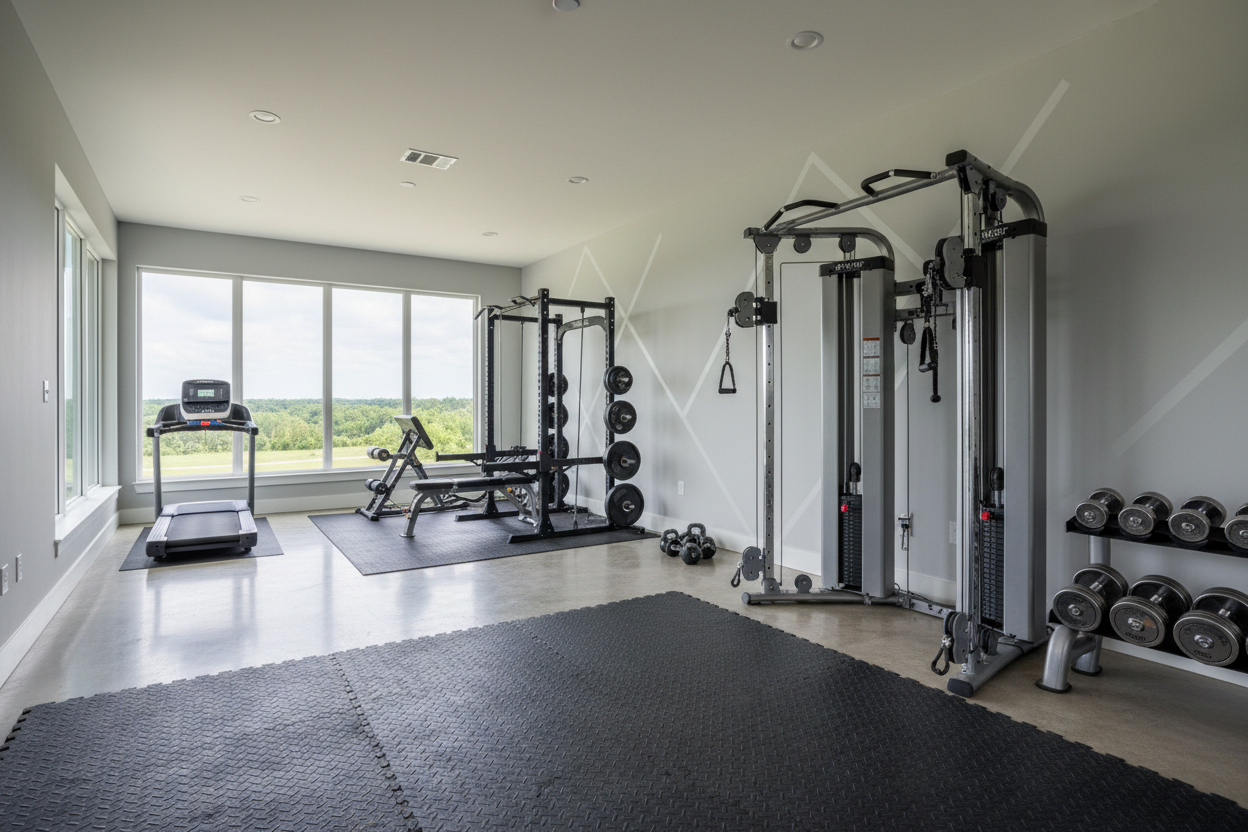
I remember the day I realized I’d messed up. I had just finished bolting a dedicated seated row machine into my garage floor, and I couldn't even walk around it to get to my water bottle. It was 300 pounds of steel that did exactly one thing. If you’re looking for machines to exercise at home, don't make my $800 mistake. Most people start their home gym journey by trying to clone the local big-box gym, but that’s the fastest way to end up with a cramped, unusable space.
Quick Takeaways
- Single-use machines have the worst footprint-to-utility ratio for home gyms.
- Commercial gear is built for high traffic, not space efficiency.
- Look for 11-gauge steel and aluminum pulleys for a 'commercial feel' in a small frame.
- Combo units like Smith/Cable stations replace up to six individual machines.
- Foldable cardio gear is the only way to save your floor for heavy lifting.
The Trap of Trying to Recreate a Commercial Gym
When you walk into a commercial facility, you see rows of shiny, specialized gear. There is a machine for your inner thighs, a machine for your rear delts, and a machine just for shrugging. It looks professional. Naturally, when you start building your own spot, you want that same variety. You start hunting for a machine for exercise that targets that one specific muscle you’re worried about.
The problem is that commercial gyms have 10,000 square feet to play with. You probably have half of a two-car garage. Buying a dedicated pec deck means you’ve just sacrificed the space where your power rack or your deadlift platform should go. I’ve seen guys buy three different training machines only to realize they can no longer perform a basic barbell squat because they can't move their arms without hitting a weight stack.
It’s a psychological trap. We think more machines equals more progress. In reality, a cluttered gym is a gym you’ll eventually stop using because it’s a chore to navigate. You want a flow to your workout, not an obstacle course.
Why Most Dedicated Training Machines Bleed Your Wallet
Let’s talk about the 'cost-per-use' metric. If you spend $1,200 on a high-end seated leg curl, and you use it once a week for four sets, you’re paying a massive premium for a very specific movement. Most of these standalone units are built to withstand 18 hours of daily abuse. In a home setting, you’re paying for 'commercial grade' durability you’ll never actually exhaust, all for a machine that only does one thing.
I once spent a fortune on a dedicated hack squat. It was a beautiful piece of engineering, but it was a total space hog. I could have bought a high-end rack, a barbell, and several years' worth of plates for the same price. It felt as wasteful as buying one of those passive exercise machines that move your body for you. While a real leg press isn't 'passive,' the return on investment for a home user is just as bad when you factor in the lost square footage. You’re essentially paying a mortgage on steel that sits idle 95% of the week.
Every dollar you spend on a single-use rig is a dollar you aren't spending on high-quality flooring, better bars, or versatile cable systems. Don't let a 'good deal' on a used isolation machine trick you into ruining your floor plan.
How to Spot a Multi-Use Machine for Exercise That Actually Works
If you're going to buy a machine for exercise, it needs to be a Swiss Army knife. The market is flooded with 'all-in-one' units, but most of them are garbage. You’ve seen them—the ones made of thin 14-gauge steel that wobbles when you load more than a hundred pounds. If the machine looks like it was made from recycled soda cans, stay away.
First, check the steel gauge. You want 11-gauge steel for anything that’s going to hold a heavy load. Next, look at the pulley system. Cheap units use plastic pulleys with basic bushings that create a jerky, 'sticky' feel during the movement. High-quality multi-stations use aluminum pulleys with sealed bearings for a smooth-as-butter stroke. If the cables look thin and the frame feels light, those are major red flags to look for in any exercise machine.
You also need to look at the weight stack. A 150-lb stack might sound like enough for lateral raises, but you’ll max it out on lat pulldowns in a month. Look for units that offer at least 200 lbs per side or plate-loaded options that let you use your existing iron.
The Ultimate Compromise: Cable and Smith Combos
This is the setup that finally saved my garage. I used to be a 'free weights only' snob until I realized I couldn't safely hit failure on bench press alone at 5 AM without a spotter. A high-end full body multi training station solves this. It combines a Smith machine—perfect for safe solo sessions—with a functional trainer cable system.
With one of these, you get the guided barbell for shrugs, squats, and presses, but you also get dual adjustable cables. This allows for hundreds of movements, from cable crossovers to face pulls, all within a single 4x6 foot footprint. It replaces the cable crossover, the Smith machine, the pull-up bar, and the landmine station in one shot. It’s the only way to get that commercial-level isolation without giving up your parking spot.
What About Cardio Gear?
Cardio equipment is the biggest space-waster in the home gym world. People buy these massive, 300-pound non-folding treadmills and then wonder why they have no room for a power rack. Unless you are an elite runner, you don't need a commercial-grade deck taking up the center of your room.
I eventually ditched my old treadmill for a foldable upright exercise bike. It gives me 16 levels of magnetic resistance for a brutal HIIT session, but the best part is that I can fold it up and shove it into a corner when I’m done. My floor space is reserved for heavy lifting, not a motorized belt that’s going to collect dust six months out of the year. Keep your cardio gear compact so your strength gear can stay heavy.
FAQ
How much space do I actually need for a multi-station?
Most high-quality combo units require about a 5x7 foot area for the machine itself, but you should budget for an 8x10 foot 'work zone' so you have room to move around it and load plates without hitting the walls.
Are Smith machines 'cheating' compared to free weights?
It's not cheating; it's a different tool. A Smith machine removes the stability requirement, which actually lets you isolate the target muscle more effectively. It’s a supplement to your barbell work, not a total replacement.
Should I buy plate-loaded or selectorized machines?
Selectorized (weight stacks) are faster for supersets and feel more 'premium,' but plate-loaded machines are significantly cheaper and have a higher weight ceiling if you already own a lot of Olympic plates.
Share:
The Only Cheap Exercise Equipment I Still Use 5 Years Later
The Best Home Gym Fitness Equipment Is Just 3 Things