
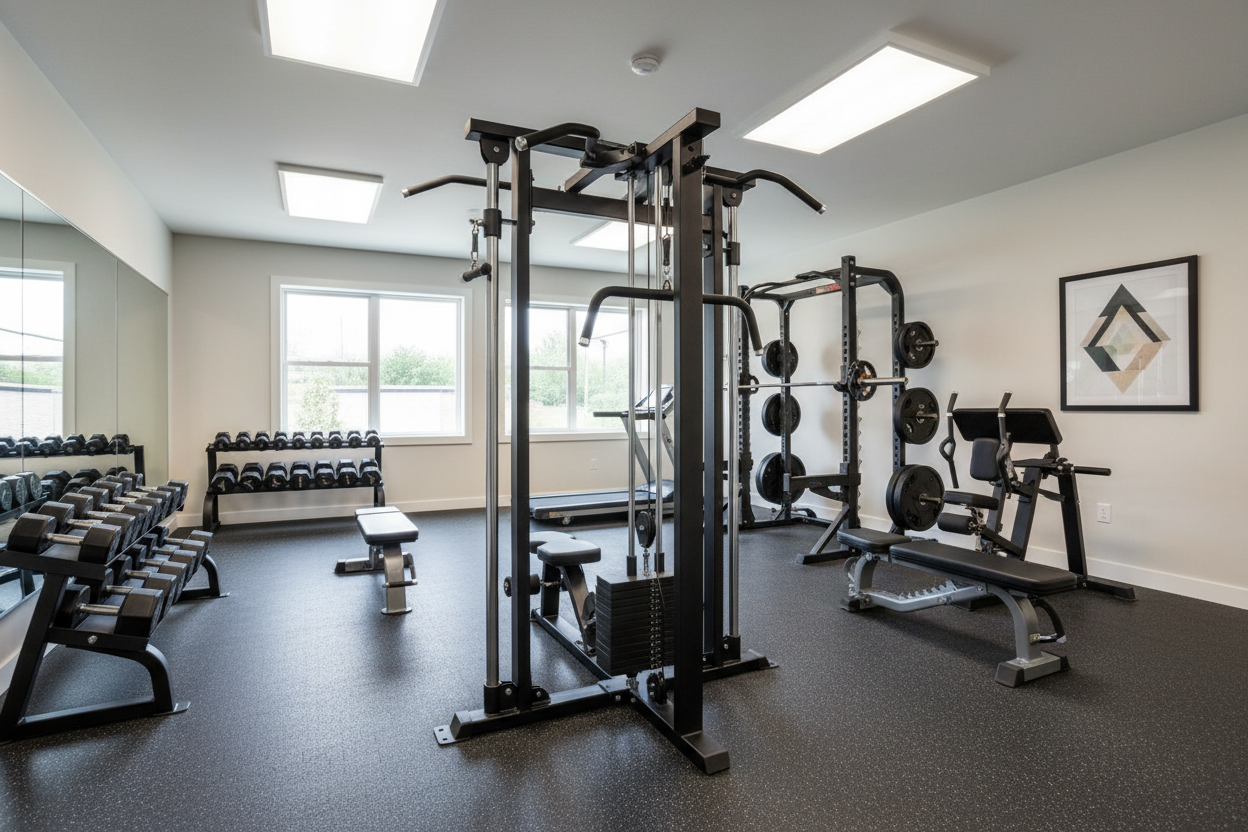
I remember the first time I bought a cheap 'all-in-one' tower from a big-box store. I was excited to finally have a dedicated station for heavy rows, but the second I loaded three plates, the uprights started bowing like a cheap fishing rod. Finding reliable back and shoulder workout machines shouldn't feel like a gamble with your safety or your wallet.
Most home gym owners are tired of the 'membership price hike' and the crowded platforms at commercial gyms. But when you move that training into your garage, you realize that space is a premium. You need gear that works hard without taking up the footprint of a small car.
Quick Takeaways
- Cables offer the most consistent tension for shoulder health.
- Avoid machines with plastic pulleys; they will eventually melt or snap under heavy friction.
- Linear bearings are non-negotiable for a smooth Smith machine experience.
- A strong lower back is the foundation for every heavy upper-body pull.
The Problem With Most 'Combo' Upper Body Rigs
The market is flooded with the 'back shoulder exercise machine' that promises to do everything but ends up doing nothing well. The physics usually fail first. To get a good overhead press and a deep low row in the same footprint, manufacturers often use awkward cable ratios and flimsy 14-gauge steel.
When you load up for a heavy set of rows, a cheap machine will wobble. That lateral movement isn't just annoying; it kills your force production. If you are fighting to keep the machine stable, you aren't focusing on the mind-muscle connection in your lats. I’ve seen cables jump off tracks mid-rep because the frame flexed too much. It is a recipe for a torn rotator cuff or a smashed toe.
Lat Pulldown and Low Row Towers: The Gold Standard
If I could only pick one anchor for an upper-body day, it is a dedicated lat pulldown and low row tower. This is the bedrock of any serious section for core and back equipment. Free weights are great, but cables provide constant tension that dumbbells just can't match, especially at the top of a pulldown where your lats are fully lengthened.
Look for commercial-grade aluminum pulleys. They handle heat better than nylon and stay smooth for years. A good tower allows you to hit the rear delts with face pulls and the lats with vertical pulls without having to reset your entire gym. If the machine uses a 1:1 cable ratio, you are getting the true weight on the stack, which is essential for tracking progress accurately.
Can a Smith Machine Handle Your Overhead Presses?
The Smith machine gets a lot of hate from the 'functional fitness' crowd, but for hypertrophy, it is a beast. It is a highly effective back and shoulder machine for heavy shrugs and bent-over rows because it removes the stability requirement, letting you bury the muscle in volume. However, the old-school vertical path is a shoulder killer for many.
I finally tried a Smith machine that moves forward and back, and it changed my perspective on overhead pressing. These 3D tracks allow for a more natural J-curve, which saves your joints while allowing you to push to absolute failure. If you are looking for a Smith machine home gym station, prioritize one with high-quality linear bearings and a safety catch system that actually works when you're pinned under a heavy bar.
The Trap of the 'Do-It-All' Leverage Gym
Leverage gyms look incredible in photos. They have that 'commercial' aesthetic and the promise of plate-loaded power. But here is the reality: the fixed arc of a lever arm is unforgiving. If your bench isn't positioned perfectly to the millimeter, that 'gym machines for shoulders and back' setup will grind your AC joints into dust.
Unlike cables, which adjust to your body's natural path, a lever forces you into its path. I have found that while they are great for shrugs, they often fall short for overhead pressing unless the machine has multiple pivot points. For most garage gym athletes, a high-quality cable system is a much safer and more versatile investment.
Don't Forget Your Posterior Chain Support
You cannot build a massive back if your lower back is the weak link. Every heavy row requires a braced core and stable hamstrings to act as an anchor. If your lower back rounds during a seated row because your hamstrings are tight or weak, you are begging for a disc issue.
I started integrating a 3-in-1 core, back, and hamstring trainer into my pull days, and the stability carryover was immediate. When your posterior chain is 'bulletproof,' you can actually sit into a heavy row and pull with your lats instead of your ego. It provides the literal foundation for everything else you do on your upper-body machines.
My Final Verdict on Dual-Action Rigs
If you are shopping for a back and shoulder machine, stop looking at the plastic-covered rigs on late-night TV. You want 11-gauge steel, aluminum pulleys, and a footprint that doesn't slide when you rack the weight. A solid lat tower or a 3D Smith machine will outlast ten cheap combo rigs.
Buy for the weight you want to lift three years from now, not the weight you are lifting today. If the machine feels light when you're putting it together, it's going to feel dangerous when you're actually training.
Personal Experience: The Labrum Lesson
I once spent $800 on a 'do-it-all' leverage arm attachment for my power rack. On paper, it was perfect. In practice, the pivot point was three inches too high for a natural shoulder press. I ignored the 'clicking' in my shoulder for a month because I wanted to love the machine. Eventually, I felt a sharp pinch that sidelined my pressing for eight weeks. I sold that attachment for half price on Marketplace and went back to a high-quality cable tower. Don't force your body to fit the machine; make sure the machine fits your body.
FAQ
Are plate-loaded machines better than weight stacks?
Plate-loaded machines are usually cheaper and easier to move, but weight stacks (selectorized) allow for faster drop sets and generally offer a smoother feel. If you have the budget, go with a stack.
How much ceiling height do I need for a lat tower?
Most standard towers require at least 82 to 84 inches. Always measure your ceiling—and your floor mats—before ordering, or you'll find yourself doing seated rows with the top pulley hitting the drywall.
Do I really need aluminum pulleys?
Yes. Nylon pulleys are fine for light work, but they develop grooves over time. Aluminum pulleys provide a consistent, 'frictionless' feel that makes a home machine feel like a $5,000 commercial unit.
Share:
The Best Exercises Machine for Home Doesn't Have a Screen
Your Logbook is Lying. Do Smith Machines Make Lifting Easier?