
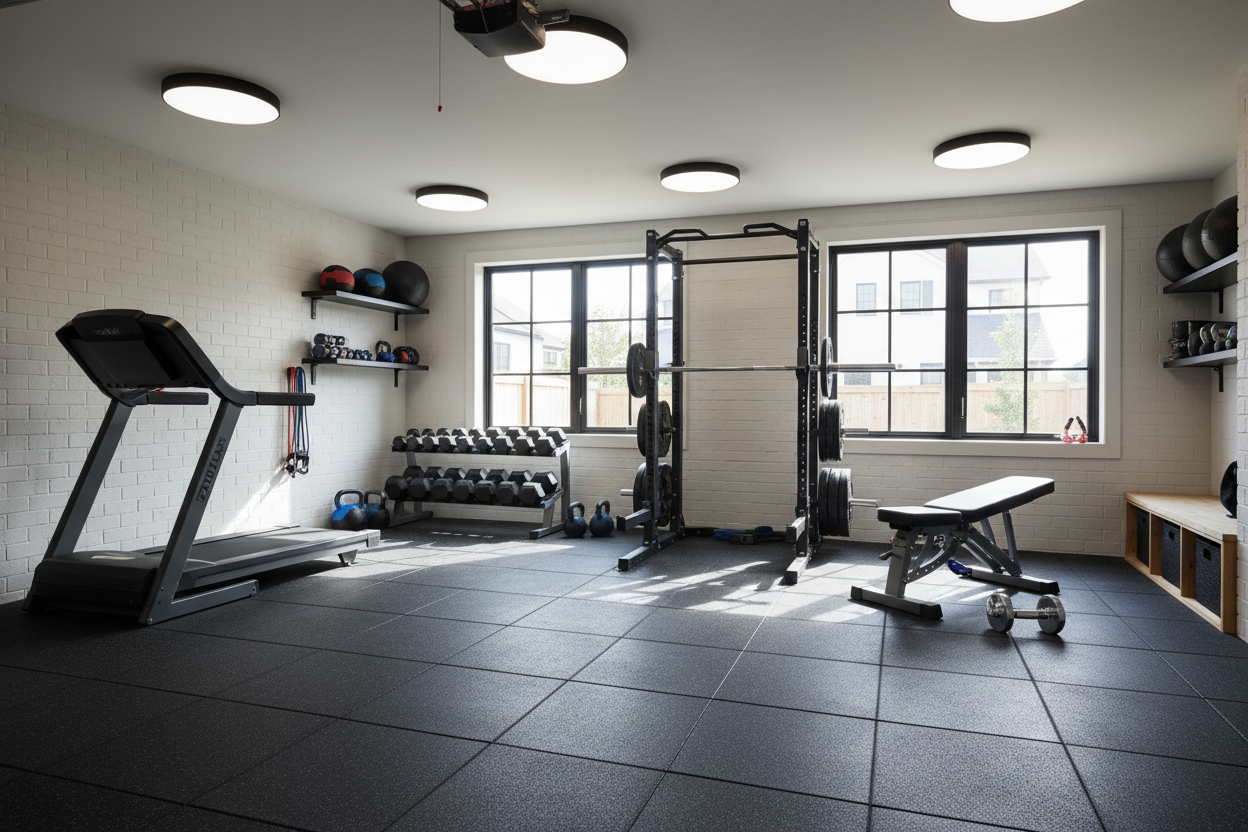
I’ve spent the last decade building my garage gym piece by piece, obsessing over knurling patterns and steel gauges. Last week, I decided to leave my sanctuary and visit five different exercise equipment stores to see what a regular person walks into. I wanted to see if the retail experience lived up to the glossy brochures or if it was just a high-pressure sales floor designed to separate you from your cash.
What I found was a mix of loose bolts, questionable advice, and massive retail markups. If you’re hunting for workout equipment stores, you need to know what’s happening behind the curtain before you swipe your card.
Quick Takeaways
- Floor models are rarely assembled correctly, making even good gear feel shaky.
- Salespeople prioritize high-margin machines over basic, effective iron.
- Big box benches often have dangerously low weight capacities that include the user.
- Local shops are mostly useful for saving on shipping for heavy iron plates.
The Floor Model Illusion: Why 'Try Before You Buy' is a Trap
Walking into home exercise equipment stores feels like a win because you can actually touch the gear. But here is the reality: floor models are a mess. At three out of the five stores I visited, the power racks had visible wobble because the staff didn't use the right washers or simply hand-tightened the bolts. You’re testing a version of the product that is structurally compromised from the jump.
On the flip side, some stores bolt their flimsiest machines directly into the concrete floor. This makes a $400 squat stand feel like a tank. In the real world, without those floor bolts, that rack would be dancing across your garage after one heavy re-rack. I’ve tested 50 pieces of exercise equipment for home in my own space, and I can tell you that five minutes in a showroom tells you nothing about how a rack handles a 400-pound drop.
The Sales Pitch: Pushing Gimmicks Over Basic Iron
I walked into these shops pretending to be a beginner. Every single time, the salesperson steered me toward a multi-station cable machine. They talked about 'versatility' and 'safety,' but what they were really doing was pushing a high-margin item that takes up a massive footprint. They want you to buy a $3,000 pulley system instead of a $500 rack and a decent barbell.
When I asked about an all-in-one exercise equipment for home, the rep lit up. He didn't ask about my ceiling height or if I planned on doing heavy deadlifts. He just wanted to show me the tablet attached to the frame. Most of these machines have 1:2 or 1:4 cable ratios, meaning that 200-lb stack only provides 50 lbs of actual resistance. For anyone serious about getting strong, you'll outgrow that in a month.
Big Box Chains vs. Specialty Workout Equipment Stores
The experience at a generic sporting goods store is vastly different from a specialty shop. Big box stores carry 'consumer grade' gear. This is usually 14-gauge steel (which is thin) and uses 1-inch holes instead of the industry standard 2x3 or 3x3 inch tubing with 5/8 or 1-inch holes. If you buy the cheap stuff, you're locked into their ecosystem of crappy attachments.
Specialty stores are better because they carry 11-gauge steel and commercial brands. However, the markup is staggering. You are paying for the store's rent, the salesperson's commission, and the 'convenience' of taking it home today. You could buy the exact same specs online for 40% less if you’re willing to wait for a freight truck.
The Sporting Goods Store Trap
I saw a bench press combo at a major chain for $199. I checked the manual tucked under the seat. The total weight capacity was 300 lbs. If you’re a 200-lb adult, that means you can only safely bench 100 lbs before the frame is at its limit. That’s not a piece of gym equipment; it’s a liability waiting to collapse in your basement.
Are Local Home Exercise Equipment Stores Ever Worth It?
There are exactly two reasons I’d ever buy from a local store again. First: cast iron plates. Shipping 500 lbs of iron is expensive. Sometimes, a local shop has a 'buck a pound' deal that beats any online price once you factor in the freight costs. Just bring a truck and some moving blankets.
Second: Floor model clearance. If a store is refreshing its inventory, you can sometimes snag a high-end treadmill or elliptical for 60% off. Since cardio machines are a nightmare to assemble, getting a pre-built one delivered from a local shop can save you a Saturday of frustration and a few hundred bucks.
My Final Verdict: Skip the Showroom
Unless you are hunting for raw iron plates or a clearance treadmill, stay away from the retail floor. The 'advice' you get is usually commission-driven, and the gear is either overpriced or under-built. The direct-to-consumer market has completely lapped the retail world in terms of value and steel quality.
If you want to build a serious home gym, do your research online. Look for 3x3 inch 11-gauge steel, check the actual weight capacities (not just the 'user weight'), and buy from companies that actually use the gear they sell. Your wallet—and your safety—will thank you.
FAQ
Is it better to buy a treadmill in-store or online?
Buy in-store only if they offer a floor-model discount and include professional delivery. Cardio machines are complex; if it breaks in the first month, a local shop is much easier to deal with for repairs than a nameless online warehouse.
Why is retail gym equipment so expensive?
You aren't just paying for the steel. You're paying for the showroom's electricity, the staff's salary, and the shipping costs the store paid to get it there. Online brands cut those costs out and pass the savings to you.
How can I tell if a store rack is high quality?
Check the gauge of the steel. If it feels light enough to pick up one-handed, it's junk. Look for 11-gauge steel and hardware that is at least 5/8 inches thick. If it uses plastic pulleys or thin cables, keep walking.
Share:
Exactly When You Should (and Shouldn't) Buy Budget Gym Equipment
I Did the Math on a Life Fitness Membership (Here Is the Cost)