
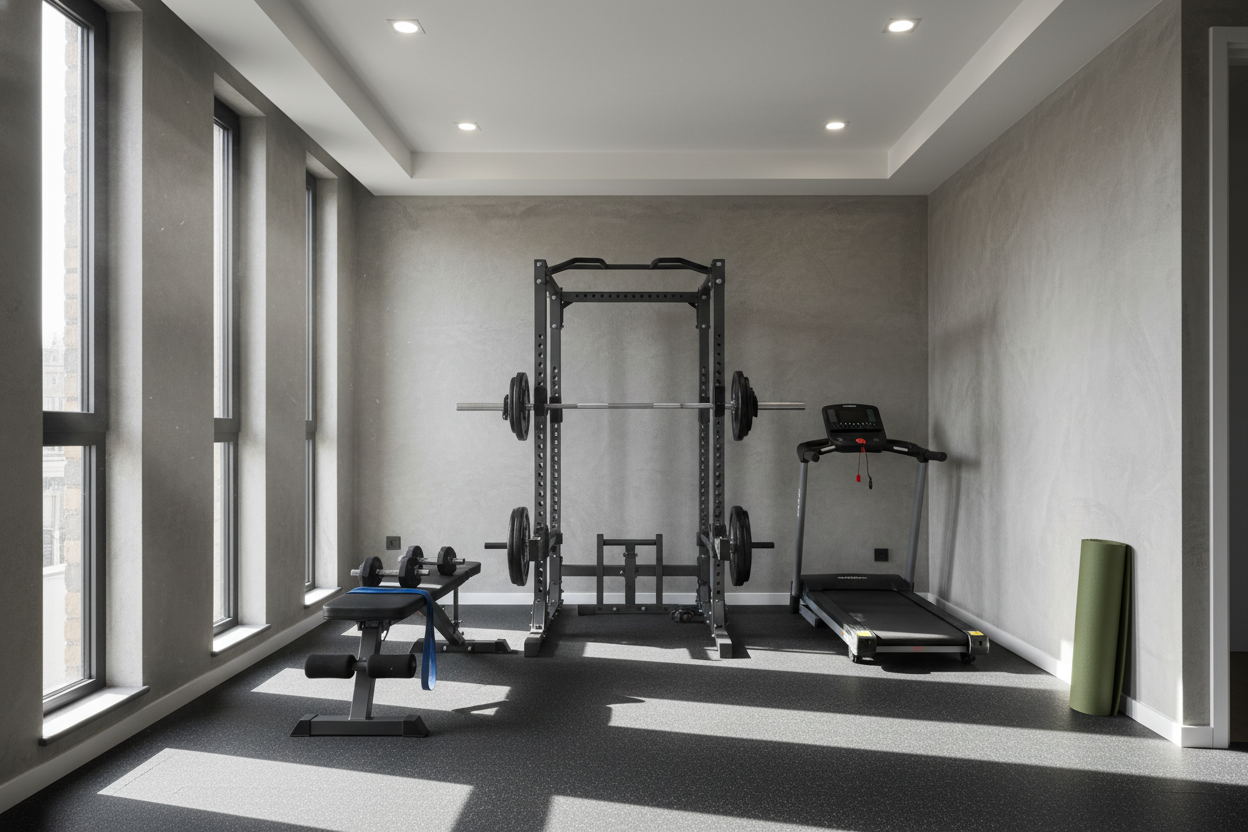
I remember the day I tried to sneak a 45-lb plate up three flights of stairs hidden in a laundry basket. My local commercial gym had just hiked their rates again, and I was tired of waiting twenty minutes for a rack. I decided right then that I needed a barbell for apartment life, even if it meant risking my security deposit and my relationship with the guy living downstairs.
- Floor load capacity is rarely the issue; acoustic vibration is the real enemy.
- Standard 7-foot bars are often too long for bedroom widths; consider a 6-foot 'shorty' bar.
- Crash pads are non-negotiable if you plan on deadlifting.
- Independent squat stands offer the best footprint-to-utility ratio for renters.
The Brutal Truth About Weightlifting in an Apartment
Most people freak out about the floor collapsing. Unless you are living in a literal condemned shack or trying to stash a 1,000-lb total in the center of a cantilevered balcony, the structural integrity of your floor is probably fine. Modern residential buildings are designed to handle significant 'live loads.' The real problem is the 'thud.'
A barbell apartment setup creates a specific kind of low-frequency vibration that travels through floor joists like a drum. When you lock out a heavy deadlift and set it down—even gently—your neighbor doesn't just hear it; they feel it in their teeth. You have to think like an acoustic engineer, not just a lifter. This means thick rubber is your best friend.
Will Deadlifting in Apartment Buildings Get You Evicted?
If you're pulling 500 lbs and dropping it from the hips, yes, you're getting a 'cure or quit' notice by Tuesday. Successful deadlifting in apartment buildings requires two things: equipment and etiquette. First, buy a pair of 4-inch thick silencer pads (crash pads). They are bulky, but they are the only thing that actually kills the vibration.
Second, you have to master the controlled eccentric. You shouldn't be slamming weights anyway if you want to keep your neighbors happy. I use a combination of horse stall mats and crash pads. I’ve pulled heavy triples at 9:00 PM and never had a knock on the door. Bumper plates help with the high-frequency 'clank,' but they won't stop the floor from shaking—only mass and foam can do that.
How to Pick a Barbell for Apartment Layouts
A standard Olympic barbell is 86 inches long. Most spare bedrooms or 'nooks' in modern apartments are barely 10 feet wide. If you center a 7-foot bar in a 10-foot room, you only have 17 inches of clearance on either side. That is not enough room to slide a 45-lb plate onto the sleeve without punching a hole in your drywall.
I personally use a 6-foot 'shorty' bar. These bars have a standard 52-inch distance between the sleeves, so they still fit on a standard squat rack in apartment setups, but the sleeves themselves are shorter. You lose some loading capacity, but you save your paint job. For vertical storage, get a silicone-lined floor base so you can stand the bar up in a corner when you aren't using it.
Do You Really Need a Power Rack in Apartment Spaces?
A full 3x3 power rack is a massive commitment. They are heavy, they look intimidating to landlords during inspections, and they take up a 4x4 foot footprint at minimum. Before you buy a cage, consider if a bench squat machine actually replace your power rack. For many, a smaller footprint is the difference between a functional home gym and a room you can no longer walk through.
If you are a competitive powerlifter, you need the safety of a rack. But if you're just looking to stay strong, independent squat stands are much easier to move. I once had a full cage in a second-story unit, and moving it out at the end of the lease was a nightmare I never want to repeat.
The 'Squat Rack in Bedroom' Dilemma
Putting a squat rack in bedroom corners is the ultimate test of dedication. If you go this route, look for a folding wall-mounted power rack. If your landlord allows you to bolt into the studs, this is the cleanest setup possible. It folds to within 4 inches of the wall when you're done, leaving you room to actually, you know, sleep.
If drilling isn't an option, stick to independent stands with a small footprint. Just make sure they have 'J-cups' with thick plastic liners to keep the barbell in apartment noise to a minimum. Metal-on-metal contact is the quickest way to alert the whole building that you're hitting a PR.
My Blueprint for a Landlord-Approved Setup
After five years of trial and error, my 'stealth' setup consists of two layers of 3/4-inch horse stall mats, a 6-foot barbell, and a pair of independent stands. I use iron plates for everything except the first 45 lbs, which are high-quality bumpers to help dampen the initial impact. This combo allows for progressive overload without making me the most hated person in the complex.
Don't overcomplicate it. Start with the floor protection, buy a bar that actually fits your room dimensions, and be respectful of the clock. You can absolutely get elite-level strength in a rental; you just have to be smarter than the guy at the local Globo-Gym.
FAQ
Can I use iron plates in an apartment?
Yes, but you need to be careful. Iron plates 'clack' more than bumpers. Use rubber-coated iron or just be very deliberate with your movements. Never let them bang together on the sleeve.
How much weight is too much for an apartment floor?
For most modern builds, a 500-lb total (rack, bar, and you) spread over a few square feet is perfectly safe. If you're worried, place your rack against a load-bearing wall rather than in the center of the room.
What is the best way to store a barbell in a small space?
Vertical storage is the only way. A single-bar floor base or a wall-mounted 'gun rack' keeps the bar out of the way and prevents it from becoming a tripping hazard in a tight hallway.
Share:
Wait, How Much Does a Leg Press Weigh by Itself?
Stop Swinging: Why the Smith Machine Bicep Curl Actually Works