
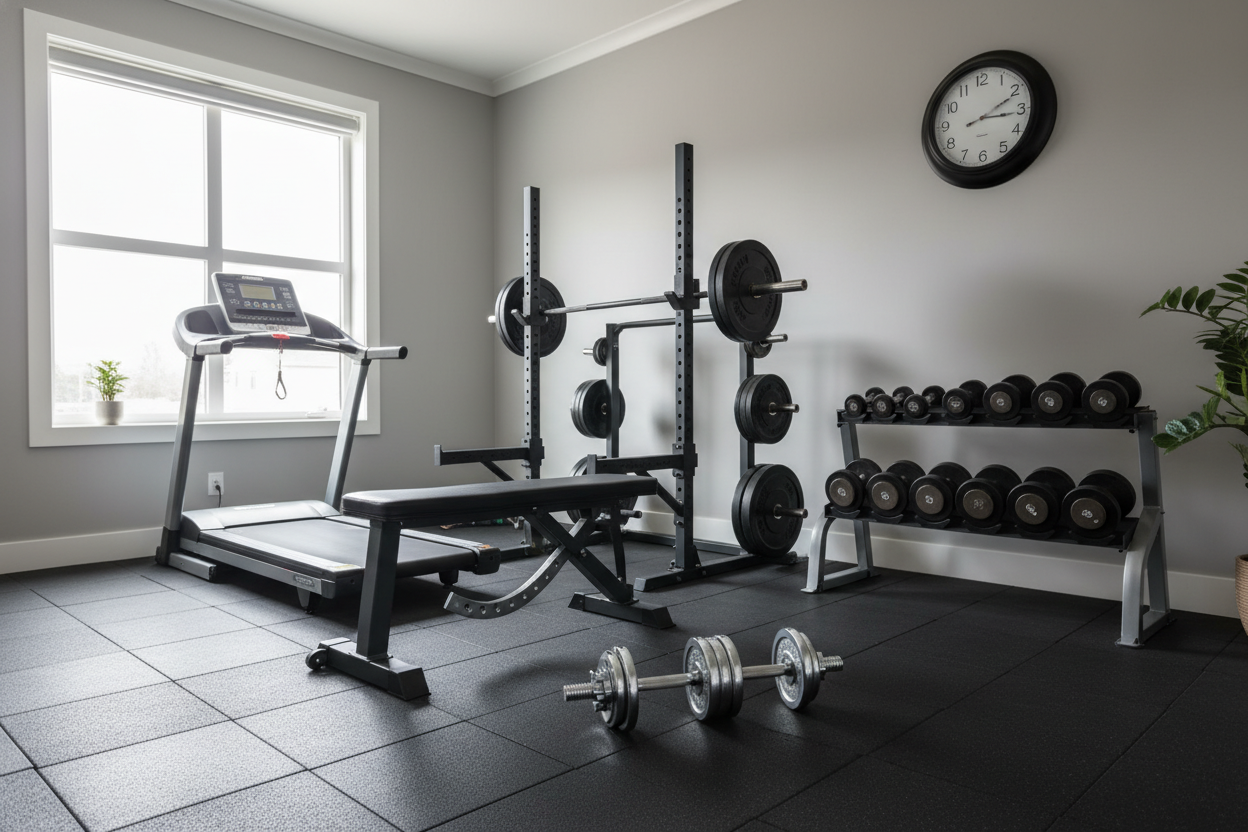
I remember staring at my first home gym budget and realizing a quality bar and plates had already wiped me out. I had fifty bucks left for a weights bench, so I did what every beginner does: I hit the local classifieds looking for a 'bench and weight for sale' near me. It felt like a win until the first time I tried to bench press 225 lbs and felt the frame groan under my shoulder blades.
The secondary market is a minefield. While finding a weight bench on sale sounds like a savvy move, you are often just buying someone else's safety hazard. If a piece of equipment is designed to support your body weight plus a loaded barbell, 'cheap' should be the last word on your wishlist.
Quick Takeaways
- Used benches often hide internal rust that compromises structural integrity.
- 'Commercial grade' at a gym liquidation usually means the equipment has been beaten to death for a decade.
- Cheap 14-gauge steel frames are prone to the 'death wobble' during heavy sets.
- A budget-friendly new bench with a warranty is almost always safer than a used 'pro' model.
Why Everyone Looks for a Cheap Weights Bench First
Sticker shock is real. When you see a high-end competition bench for $600, your brain immediately starts looking for a shortcut. Typing 'bench and weight for sale' into Craigslist or Facebook Marketplace is an absolute rite of passage for beginners. You see those old-school gold or grey frames and think, 'Steel is steel, right?'
The temptation to find weight lifting benches for sale for the price of a pizza is high. We’ve all been there, trying to justify a $40 purchase because it leaves more money for plates. But a bench isn't just a seat; it's a piece of safety equipment. If it fails while you're mid-rep, there is no safety net.
The Hidden Dangers of Used Exercise Benches
The physical reality of buying a second-hand weights bench for sale is often uglier than the photos suggest. Most home gym gear lives in garages or damp basements. Tubular steel is notorious for rusting from the inside out. You might see a clean exterior, but the structural welds could be brittle and ready to snap under a heavy load.
Then there's the padding. Over time, cheap foam compresses and loses its density. If the padding is shot, your scapula isn't getting the support it needs, which is a fast track to a shoulder impingement. Instead of gambling on a rusted frame, saving up for a piece from a reliable weight bench collection is a much smarter investment in your long-term health. You want 11-gauge or 12-gauge steel, not the flimsy 1-inch square tubing found on most exercise benches for sale in the used market.
Gym Liquidations: Are Commercial Frames Worth the Hassle?
When a local health club goes bust, you’ll see dozens of weight training benches for sale at pennies on the dollar. It’s tempting to think you’re getting a 'commercial grade' steal. In reality, 'commercial' in this context usually translates to 'abused by thousands of careless lifters over a decade.'
These benches have been sweat on, dropped, and dragged across concrete floors daily. The adjustment mechanisms are often stripped or bent, and the vinyl is usually a petri dish of old bacteria. By the time you replace the pads and fix the pop-pins, you’ve spent more than you would on a brand-new gym bench sale item from a reputable manufacturer.
How to Find a Real Weights Bench Sale (Without Getting Scammed)
You can still find a deal without risking a trip to the ER. The key is knowing how to spot a legitimate weights bench sale from a brand that actually cares about its reputation. Avoid the 'no-name' brands on massive retail sites that use thin 14-gauge steel and plastic components. They look fine in photos but feel like a folding chair once you actually lie down on them.
Look for specs like a 600-lb to 1,000-lb weight capacity and a wide tripod or four-point base for stability. For example, the Adjustable Weight Bench OWB01 is a prime example of an affordable, structurally sound new bench you can buy instead of risking it on the used market. It gives you the versatility of multiple angles without the terrifying wobble of a 'weight bench for free' find from the side of the road.
When It Makes Sense to Upgrade Your Pressing Setup
As you move past the novice phase, your equipment needs to keep pace with your strength. If you're starting to push heavy triples or exploring incline work for upper chest development, that basic flat pad you bought on a workout benches on sale clearance rack isn't going to cut it anymore. Stability becomes the name of the game when the weights get heavy.
Moving from a fixed position to a multi-angle setup opens up a massive range of movements. I've found that swapping to an adjustable utility weight bench was the single best move I made for my accessory work. It allowed me to hit seated curls, incline presses, and supported rows all on one footprint. Don't be afraid to retire the budget gear once your total starts climbing; your joints will thank you.
My Biggest Mistake
Early in my lifting career, I bought a used bench that had a built-in leg developer. It looked like a great 'weights and benches for sale' bundle. The first time I tried to do heavy leg extensions, the entire bench tipped forward because the base was too narrow. I ended up with a bruised shin and a broken ego. I learned the hard way that a specialized, stable bench is always better than a 'do-it-all' piece of junk. Now, I prioritize a wide rear stabilizer and grippy vinyl over any flashy attachments.
FAQ
Is a 300-lb capacity bench enough?
Only if you weigh 150 lbs and never plan on lifting more than 150 lbs. Always look for a total capacity (body weight + bar weight) of at least 600 lbs to ensure the frame isn't at its absolute limit every time you train.
How can I tell if a used bench is safe?
Check the welds for cracks, look for any bowing in the main frame, and sit on it to check for lateral movement. If it creaks or sways when you shift your weight, walk away.
What steel gauge should I look for?
For a serious home gym, 11-gauge or 12-gauge steel is the standard. Avoid 14-gauge steel if you plan on lifting heavy, as it is much thinner and prone to flexing under load.
Share:
The 1-Inch Trap Hidden in Your New Bench With Weights
I Maxed Out That Viral 210 lbs Dumbbell Set in Exactly Three Weeks