
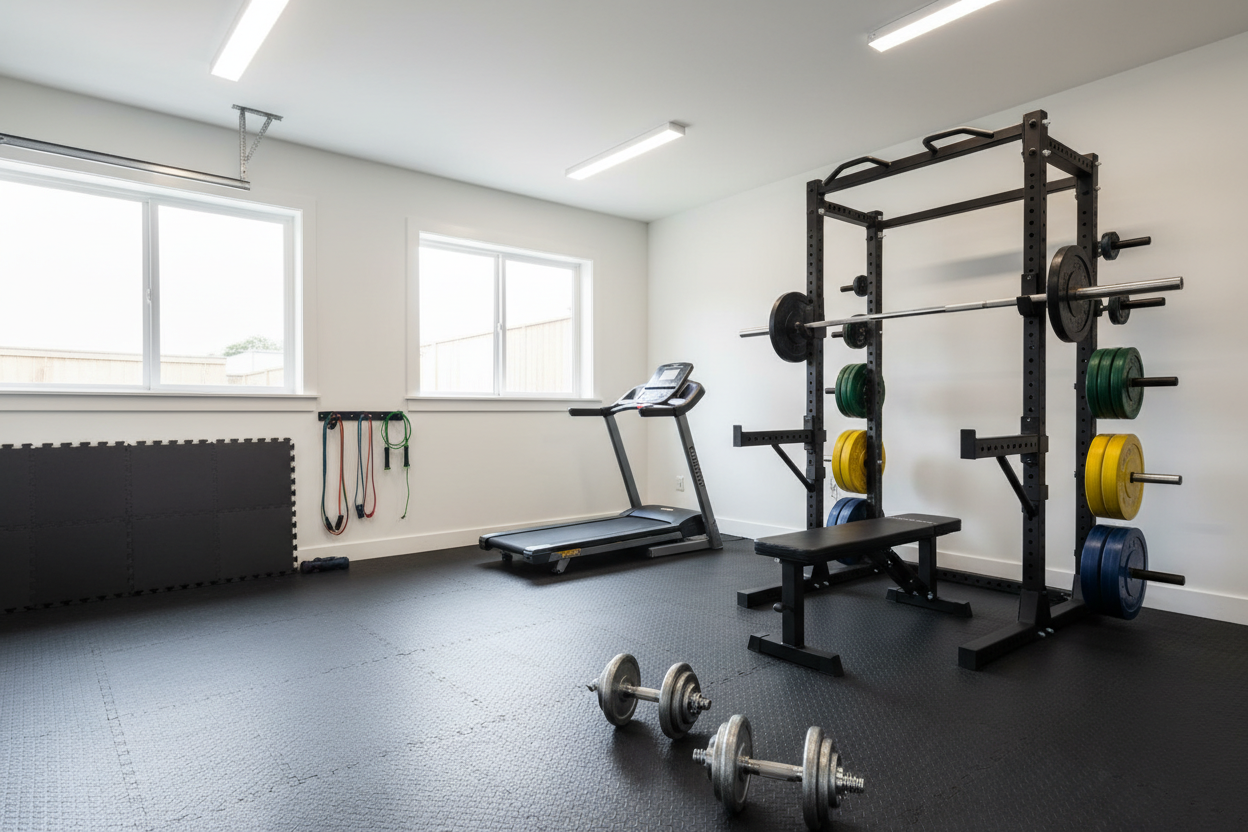
I remember the first time I tried to save a buck on a weight bench. I was scrolling through a marketplace at 1 AM, tired of my commercial gym raising monthly dues again. I found a 'pro' bench for sixty bucks. When it arrived, the steel felt like a soda can, and the thing wobbled if I even thought about benching more than 135 pounds. Hunting for the best cheap exercise equipment shouldn't feel like a gamble with your physical safety, but if you don't know what to look for, that's exactly what it is.
Quick Takeaways
- The 11-Gauge Standard: If you are buying a rack, look for 11-gauge steel; 14-gauge is the bare minimum for light lifting.
- Simplicity Wins: Basic iron and gravity don't break; cheap plastic pulleys and cables do.
- Prioritize the Bench: Never scrimp on the thing that holds your spine while you have heavy metal over your face.
- Check the Specs: Always verify the static weight capacity versus the 'user weight' capacity.
Why 'Affordable' Doesn't Have to Mean 'Dangerous'
Let's get one thing straight: you do not need to spend five thousand dollars to get a decent workout. I've seen guys build world-class physiques in dusty garages with nothing but a rusty barbell and some mismatched plates. The surge in home training has flooded the market with options, but it has also brought in a lot of 'fitness-looking' junk that is better suited for a laundry rack than a heavy squat session.
When you start building a home gym on a budget, your goal isn't to find the flashiest gear. Your goal is to find 'overbuilt' simplicity. A piece of equipment is safe when its structural integrity far exceeds the amount of weight you intend to put on it. You want to look for brands that prioritize the quality of the raw materials over digital screens or fancy paint jobs. A basic, sturdy rack is always safer than a cheap, multi-function machine with ten different attachments made of thin-walled tubing.
I've tested best inexpensive workout equipment that felt more solid than the stuff at the local YMCA. The secret is knowing which corners the manufacturer cut. Did they save money by skipping the marketing budget, or did they save money by using Grade 2 bolts where they should have used Grade 5? We're looking for the former.
The Steel Gauge Rule for the Best Cheap Gym Equipment
If you want to spot the best cheap gym equipment from a mile away, you have to talk about steel gauge. In the world of gym gear, the lower the gauge number, the thicker the steel. Most commercial-grade racks use 11-gauge steel (about 3mm thick). It is heavy, it is stable, and it can take a beating. When you're looking at budget gear, you'll often see 12 or 14-gauge steel.
14-gauge steel is roughly 0.075 inches thick. For a pull-up bar or a light-duty power tower, that's fine. But if you're planning on racking a 300-pound barbell, 14-gauge starts to feel a bit 'springy.' If you see anything higher than 14-gauge—like 16 or 18—run away. That is essentially furniture-grade tubing, not lifting-grade steel. It will bow, it will vibrate, and eventually, the bolt holes will start to ovalize under pressure.
Also, look at the upright dimensions. A 2x2 inch frame is the budget standard, but if you can find a 2x3 or 3x3 frame in your price range, grab it. The larger surface area at the joints makes the whole unit significantly more rigid. I've stood inside 2x2 racks that felt like they were shivering during a re-rack. You don't want that kind of anxiety when you're gassed at the end of a set.
Skip the Moving Parts Whenever Possible
The best home gym equipment cheap enthusiasts can buy is almost always static. Why? Because bearings, bushings, cables, and pulleys are expensive to make well. When a company sells a 'complete home gym' with a cable crossover and a lat pulldown for $300, they are using plastic pulleys that will friction-melt and aircraft cables that are about as thick as a guitar string.
I always tell people that the most effective equipment for home gym gains is the stuff that relies on gravity. A flat utility bench, a set of iron plates, and a solid barbell have zero moving parts to fail. If you drop an iron plate, it's still an iron plate. If the cable snaps on a cheap leg extension machine, the whole unit becomes a very heavy paperweight.
If you absolutely must have cables, look for units that use nylon-coated steel cables and at least 3-inch pulleys. But honestly, if you're on a budget, stick to the basics. You can do 90% of those cable exercises with a $20 set of resistance bands looped over your power rack. Save the money you would have spent on a flimsy pulley system and put it toward a better barbell.
Where to Spend vs. Where to Scrimp
Building best affordable home workout equipment setups is an exercise in prioritization. You can absolutely scrimp on weight plates. New iron plates are roughly the same regardless of the brand. A 45-pound plate from a premium brand weighs 45 pounds, and a 45-pound plate from a 'cheap' brand usually weighs within 2-3% of that. Buy your plates used or buy the cheapest cast iron you can find.
However, you must spend on the 'Life-Support' items. These are the pieces of gear that sit between you and the floor, or between the weight and your face. This includes your power rack, your bench, and your barbell. I've seen cheap barbells snap at the sleeves because they used brittle, low-quality steel. I've seen benches collapse because the locking pin was made of soft aluminum. You only need a few pieces of the best home gym fitness equipment to get a pro-level workout, so make those few pieces count.
My general rule: if you can't find a reputable review of the item being dropped or loaded to its limit, don't buy it. Spend the extra $50 for the bench with the 1,000-lb capacity rating even if you only plan to lift 200. That overhead is your safety margin.
What About Cardio on a Tight Budget?
Cheap cardio is a minefield. Most 'budget' treadmills have motors that sound like a blender full of rocks after three months of use. They have small decks that make you feel like you're running on a tightrope. If you want best cheap home workout equipment for cardio, stay away from anything with a motor if you're looking under the $500 mark.
Instead, look at manual options. A jump rope is $10 and will kick your heart rate higher than any treadmill. If you need a machine, a foldable upright exercise bike is a fantastic choice. Because magnetic resistance is mechanically simple, these bikes tend to last a long time even at lower price points. They are quiet, they take up almost no space, and there is no motor to burn out.
Rowers are another option, but be wary of the ultra-cheap hydraulic ones. They leak fluid and the resistance changes as the oil heats up. A basic magnetic rower or a used air rower is a much better investment for long-term use.
The Final Checklist Before You Hit Checkout
Before you pull the trigger on that 'too good to be true' deal, run through this quick checklist to ensure you're getting the best affordable home workout equipment:
- Check the Shipping Weight: If a power rack weighs less than 100 lbs in the box, it's likely made of thin, unsafe steel.
- Look for 'Static' Ratings: A bench rated for 600 lbs static weight is usually safe for a 200-lb person lifting 200 lbs.
- Read the One-Star Reviews: Don't look at the five-star fluff. Look for the people complaining about bent parts or wobbly joints.
- Hardware Quality: Does it use standard bolts or weird proprietary pins? Standard hardware is easier to tighten and replace.
- Warranty: Even a 1-year warranty shows the company expects the product to survive more than a month of use.
My Honest Mistake
I once bought a set of adjustable dumbbells from a brand I’d never heard of because they were half the price of the big names. On my third workout, during a set of overhead presses, the locking mechanism slipped. A 10-pound plate slid off and missed my skull by about two inches. I learned that day that 'value' is irrelevant if the equipment fails. Now, I only buy gear where the locking mechanisms are metal-on-metal and the reviews are verified by people who actually lift heavy.
FAQ
Is a 500lb capacity bench enough?
For most people, yes. But remember that 'capacity' includes your body weight. If you weigh 200 lbs and are benching 250 lbs, you are approaching that limit. Always aim for a bench with at least a 200lb buffer above your max projected load.
Why is shipping so expensive for cheap gear?
Steel is heavy. Often, 'cheap' gear has a low sticker price but high shipping. Always calculate the 'landed cost' (price + shipping + tax) before comparing two items.
Can I use a standard barbell in a power rack?
Usually, but check the distance between the rack uprights. Some 'cheap' racks are narrower, meaning a standard 84-inch Olympic bar will have too much room, while a 'standard' 1-inch bar might be too short to reach the J-cups.
Share:
I Sold My Dumbbells: The Best Equipment for Full Body Workout
I Refuse to Recommend a Cheap Olympic Bar and Weights Set