
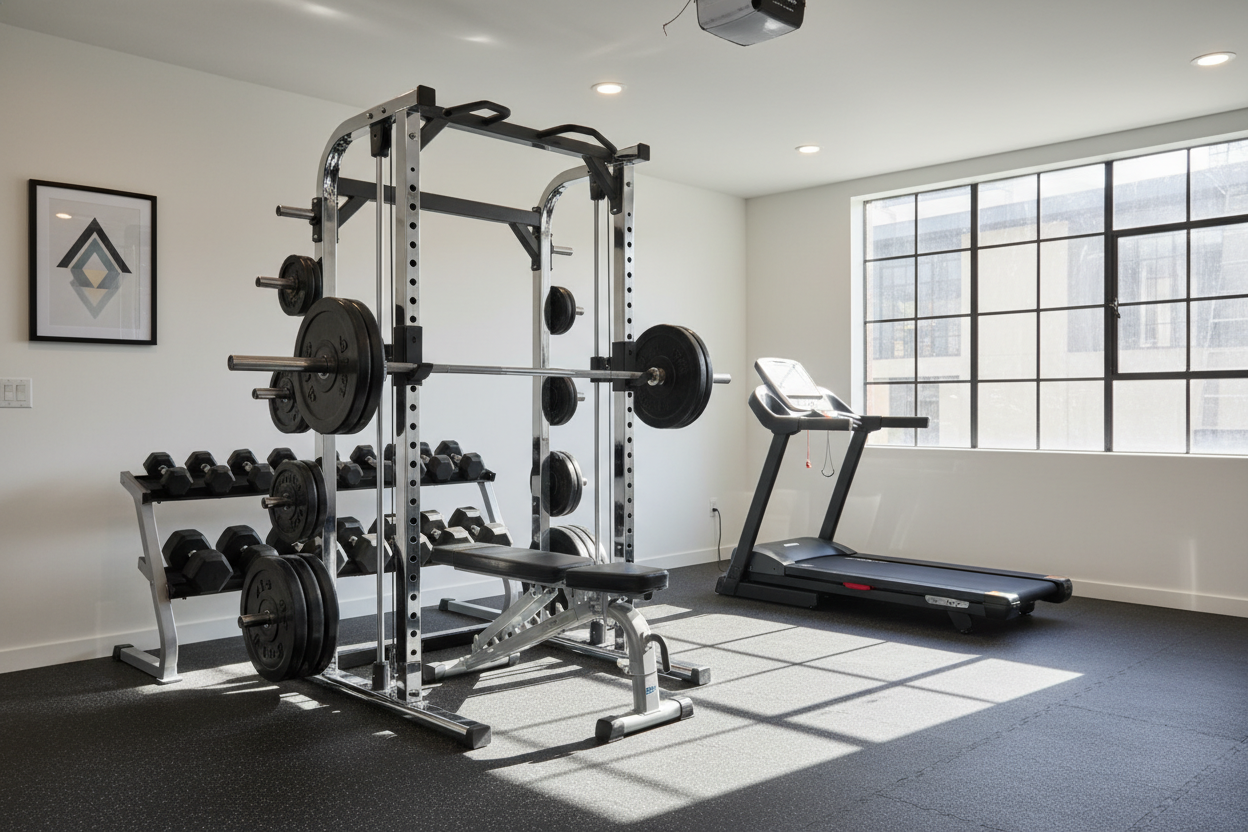
I spent years chasing a heavy barbell RDL. Every session ended the same way: my lower back felt like an over-inflated tire while my legs felt like they had barely done a thing. If you have ever felt that sharp twinge in your erectors before your hamstrings even started to burn, it is time to stop ego-lifting with the barbell. Switching to a smith machine hamstring focus was the best move I made for my posterior chain.
- Eliminates the 'balance bottleneck' of free weights.
- Allows for a deeper, more stable hamstring stretch.
- Reduces lower back fatigue significantly.
- Safety catches allow you to train to actual failure safely.
Why Barbell RDLs Keep Trashing Your Lower Back
The problem with the traditional barbell RDL isn't the movement itself; it is the stabilization requirement. When you are holding a free-weight bar, your body is fighting a three-dimensional battle. You are trying to keep the bar from drifting forward, trying to keep your balance from shifting to your toes, and trying to keep your spine from folding. Your lower back—specifically the spinal erectors—usually gives out long before your hamstrings actually reach a point of growth-inducing fatigue.
I call this the 'balance bottleneck.' If 40% of your energy is spent just staying upright, only 60% is going into the muscle you are actually trying to train. This is why your 225 on Smith machine doesn't equal a barbell in terms of raw stability requirements, but it often exceeds it in terms of targeted muscle tension. On a guided track, you remove the need to stabilize the weight horizontally. This allows you to dump all that mechanical tension directly into the hamstrings without your lower back screaming for mercy halfway through the set.
The Biomechanical Advantage of a Guided Track
The magic of training hamstrings on smith machine setups lies in the ability to manipulate your center of gravity. With a barbell, the weight must stay over your midfoot, or you tip over. With a Smith machine, the bar is anchored. This means you can actually lean your weight back into the bar as you hinge. By pushing your hips further back than you ever could with a free barbell, you create a massive amount of leverage against the hamstring fibers.
Think of it as the difference between walking on a tightrope and walking with a handrail. Because you aren't worried about falling forward, you can focus on the 'stretch-mediated hypertrophy' that happens at the bottom of the movement. You can sit back into the hinge, feel the insertion points of the hamstrings near the glutes pull tight, and pause there. That pause is where the growth happens, and it is much easier to execute when you aren't wobbling like a newborn deer.
The Fixed-Path RDL: A Top-Tier Smith Machine Hamstring Exercise
Executing a smith machine hamstring exercise correctly requires a slight adjustment to your usual stance. Start by standing with your feet about three to five inches in front of the bar. This forward foot placement is crucial—it allows your hips to travel backward in space while the bar stays on its vertical track. If you stand directly under the bar, your knees will likely get in the way of the bar path, forcing you to move the bar around your legs, which is exactly what we are trying to avoid.
Grab the bar with an overhand grip, slightly wider than shoulder-width. As you descend, think about pushing a car door shut with your butt. Keep a very slight bend in the knees, but keep the shins vertical. You do not need to touch the floor. In fact, most people should stop just below the kneecap. Going lower usually results in the lower back rounding to compensate for a lack of hamstring flexibility. If you are using a high-quality multi training station, the movement should feel buttery smooth. If it feels jerky, you are probably trying to pull the bar toward you instead of letting it guide your path.
Good Mornings (Without the Fear of Decapitation)
The Good Morning is one of the best posterior chain builders in existence, but it is also the most terrifying to do with a barbell. One slip in form and you are pinned. Using the Smith machine removes that fear. Place the bar across your upper traps—not your neck—and set the safety catches at the bottom of your range of motion. This setup allows you to focus entirely on the hinge.
Because the bar is fixed, you can really sit back into the movement. I find that I can get a much deeper stretch in my hamstrings and glutes on a Smith machine than I ever could with a barbell. The stability allows for a slower eccentric (lowering) phase, which is the primary driver for hypertrophy. If you have been skipping Good Mornings because they feel 'sketchy,' the Smith machine is your solution.
Setting Up Your Rig for Posterior Chain Dominance
The biggest mistake I see in garage gyms is ignoring the safety features. When you are training for hamstrings smith machine style, you should always set your safety stops. I set mine about two inches below where my hamstrings naturally max out their stretch. This gives me a 'fail-safe' if my grip gives out or if I reach absolute muscular failure. It also allows you to do 'pin RDLs,' where you reset the weight on the stops between every rep to ensure perfect form.
Stance width also matters. I prefer a shoulder-width stance with toes pointed slightly out. This opens up the hips and allows for a deeper hinge. If you are using a home Smith machine, make sure your floor is level. Even a slight tilt in a garage floor can make a fixed-path machine feel lopsided, so use shims or stall mats to level things out if needed. A stable base is the foundation of a heavy hinge.
Putting It Together: A Brutal Fixed-Path Leg Day Finisher
Don't just do one set and call it a day. I like to use the Smith machine for a high-volume finisher after my primary compound lift. Try 4 sets of 12-15 reps on the RDL, focusing on a 3-second lowering phase and a 1-second pause at the bottom. Your hamstrings will feel like they are about to pop out of your skin. This isn't about moving the most weight possible; it is about maximum tension.
To round out the session, I recommend pairing these RDLs with an underrated leg exercise on Smith machine for quads like the sissy squat or a close-stance hack squat. By hitting the hamstrings with a heavy stretch and then immediately hitting the quads with a high-intensity pump, you get a complete lower body stimulus without the systemic fatigue that comes from a heavy barbell session. Your joints—and your lower back—will thank you the next morning.
FAQ
Is the Smith machine better than a barbell for hamstrings?
For pure isolation and hypertrophy, yes. It removes the balance requirement, allowing you to focus entirely on the hamstring stretch and contraction without your lower back giving out first.
How far forward should my feet be?
Usually 3-6 inches in front of the bar. This allows your hips to hinge backward without your knees blocking the bar's vertical path.
Can I go heavy on Smith machine RDLs?
Absolutely, but focus on the 'feel' first. Because there is less stabilization, you can often handle more weight, but the goal should be a deep stretch, not just moving the plates.
Share:
You Only Need 3 Pairs of Dumbbells When You Buy Home Weights
Are High End Dumbbells Actually Worth the Urethane Tax?