
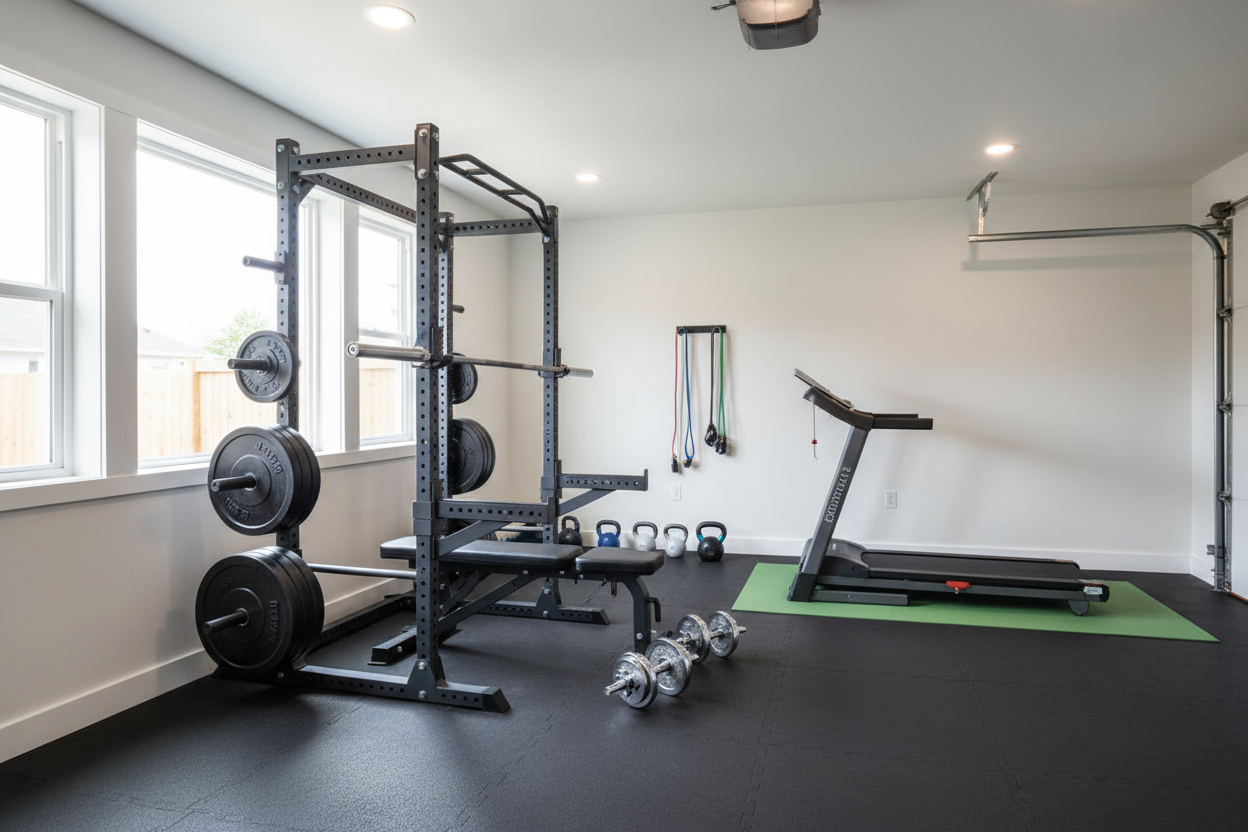
I remember the day I finally quit my $85-a-month commercial gym. I went home and immediately bought a 'bargain' bench online that arrived looking like dollhouse furniture. It wobbled if I breathed too hard, and the vinyl smelled like a chemical plant. I realized quickly that finding affordable workout equipment for home isn't about hunting for the lowest price tag; it's about finding the gear that won't break when you actually start training heavy.
Quick Takeaways
- Prioritize 11-gauge or 12-gauge steel for racks and benches to ensure safety.
- Adjustable dumbbells are the ultimate space and money saver for small setups.
- Avoid 'smart' cardio equipment with built-in screens to skip the subscription fees.
- Used iron plates are just as heavy as new ones—never buy them at full retail if you can help it.
You Can Go Cheap, But Please Don't Buy Junk
There is a massive difference between a frugal gym equipment budget and buying dangerous, flimsy trash. When you are looking for the best budget gym equipment, the first thing you need to check is the steel gauge. Most 'cheap' racks use 14-gauge steel or thinner. If you plan on squatting more than 200 pounds, that thin steel can flex and sway in ways that will make your heart skip a beat for all the wrong reasons.
I always tell people to look for a minimum weight capacity of 600 lbs on benches and racks. Even if you aren't lifting that much yet, that rating tells you the manufacturer used decent welds and enough material to keep the frame stable. A bench that weighs 30 lbs is a red flag; a solid budget bench should have some heft to it, usually around 45 to 60 lbs, to keep it from sliding across your floor during a heavy press.
Don't get distracted by flashy plastic covers or 'innovative' folding mechanisms that add points of failure. You want simple, overbuilt steel. If a piece of equipment looks like it belongs in a late-night infomercial rather than a weight room, keep scrolling. The goal is to buy gear once, not every six months when a plastic bolt snaps.
The Core Setup: Where to Spend Your First $200
If I had to start over with a crisp $200 bill, I wouldn't buy a machine. I'd buy a pair of heavy adjustable dumbbells and a flat bench. You can hit every muscle group in your body with that combo. When you're hunting for affordable gym equipment for home, your focus should be on versatility. A set of dumbbells that adjusts from 5 to 52.5 lbs replaces an entire rack of fixed weights that would cost you a thousand dollars and take up half your garage.
Next, get a flat bench. Skip the incline/decline 'FID' benches if you're on a super tight budget. A high-quality flat bench is always more stable than a cheap adjustable one. You want a pad that is at least 2 inches thick and a tripod or wide-base foot design so it doesn't tip. This is the foundation of your best budget home workout equipment setup.
Finally, grab a set of heavy-duty latex resistance bands. They cost about $30 and are essentially a portable cable machine. You can loop them over a doorway or a pull-up bar for tricep extensions, face pulls, and lat pulldowns. They add a different resistance profile than free weights and take up zero floor space.
Adding Heavy Iron Without Emptying Your Wallet
Once you've mastered the basics, you'll want to move more weight. This is where people usually panic and think they need a $3,000 power rack. You don't. You can find the best deals on home gym equipment by looking for 'all-in-one' units. For example, a smith machine home gym station can be a massive value play because it often includes a built-in cable crossover and a pull-up station.
Buying these pieces individually—a rack, a functional trainer, and a pull-up tower—would easily double your footprint and your cost. When shopping for these systems, look for aircraft-grade cables and sealed bearing pulleys. If the cables feel 'crunchy' when you pull them, the pulleys are cheap plastic and will wear out in a year. You want smooth, silent travel.
For plates, stop buying new. Check local marketplaces. Iron is iron. As long as it isn't cracked, a rusty 45-lb plate still weighs 45 lbs. A little wire brush action and a $5 can of spray paint will make a used set of plates look brand new. This is the secret to building a home gym low price setup that looks professional but costs pennies on the dollar.
Getting Your Heart Rate Up (Without Dropping $1,500)
Cardio is where most people waste their money. You do not need a $2,000 treadmill with a 22-inch touchscreen and a monthly subscription to 'scenic runs' in Tuscany. If you want to burn calories, you just need a reliable way to move. I'm a huge fan of unplugged cardio machines because they are cheaper to buy, cheaper to maintain, and they don't care if your Wi-Fi is down.
If you're short on space, a foldable upright exercise bike is the way to go. It gives you a brutal quad pump and a solid sweat, then folds up to the size of a vacuum cleaner. Look for magnetic resistance—it's virtually silent, which is a lifesaver if you're training in a spare bedroom while the family is asleep.
Don't overlook the humble jump rope or a weighted vest for rucking. These are cheap workout machines for home that provide more utility than a massive elliptical that eventually becomes a place to hang your laundry. Keep your cardio gear simple and spend the money you saved on better recovery tools or more weight plates.
The Three Things You Should Never Buy on a Budget
Frugality is great until it becomes a safety hazard. There are three things I will never buy the 'cheapest' version of. First: J-cups. These are the hooks that hold your loaded barbell. If the welding is poor, they can shear off, dropping 300 lbs onto your chest or the floor. Spend the extra $20 for heavy-duty, lined J-cups.
Second: The primary barbell. A cheap home workout equipment bar will bend. I've seen 'budget' bars develop a permanent curve after a month of deadlifts. A bent bar is dangerous because it wants to rotate in your hands during a lift. Look for a bar with at least a 150,000 PSI tensile strength rating.
Third: Suspension trainers. If you're hanging your entire body weight from a strap, you need to trust the stitching. The knock-off versions use thin nylon that frays easily. Stick to reputable brands here. Your dental bill from a face-plant will cost way more than the $50 you saved on the straps.
Personal Experience: My $50 Lesson
Early in my garage gym days, I bought a set of 'budget' weight collars for $10. They were plastic and felt fine at first. One day, while doing heavy overhead presses, one of the collars snapped and three 10-lb plates slid off one side of the bar. The imbalance nearly tore my shoulder out of the socket. Now, I use aluminum screw-down collars. They cost $40, but I never have to worry about a plate sliding off mid-set. Sometimes, 'cheap' is the most expensive mistake you can make.
FAQ
Is a 300lb weight capacity enough for a home bench?
Generally, no. That 300lb rating usually includes your body weight. If you weigh 200lbs, you can only lift 100lbs before you're at the limit. Look for a 600lb+ rating to ensure the bench is stable and safe.
Are resistance bands as good as cable machines?
They are a great budget alternative, but they don't provide constant tension like a cable. They are perfect for accessory work, but if you have the budget, a dedicated cable system is superior for muscle growth.
Should I buy a treadmill or a bike for a small home gym?
Bikes are almost always better for small spaces. They have a smaller footprint, they're quieter, and foldable models are much easier to move than even the most 'portable' treadmills.
Share:
Wait, Does a Smith Machine Take Off Weight From Your Lifts?
Are Smith Machine Squats Good? Why Barbell Purists Are Dead Wrong