
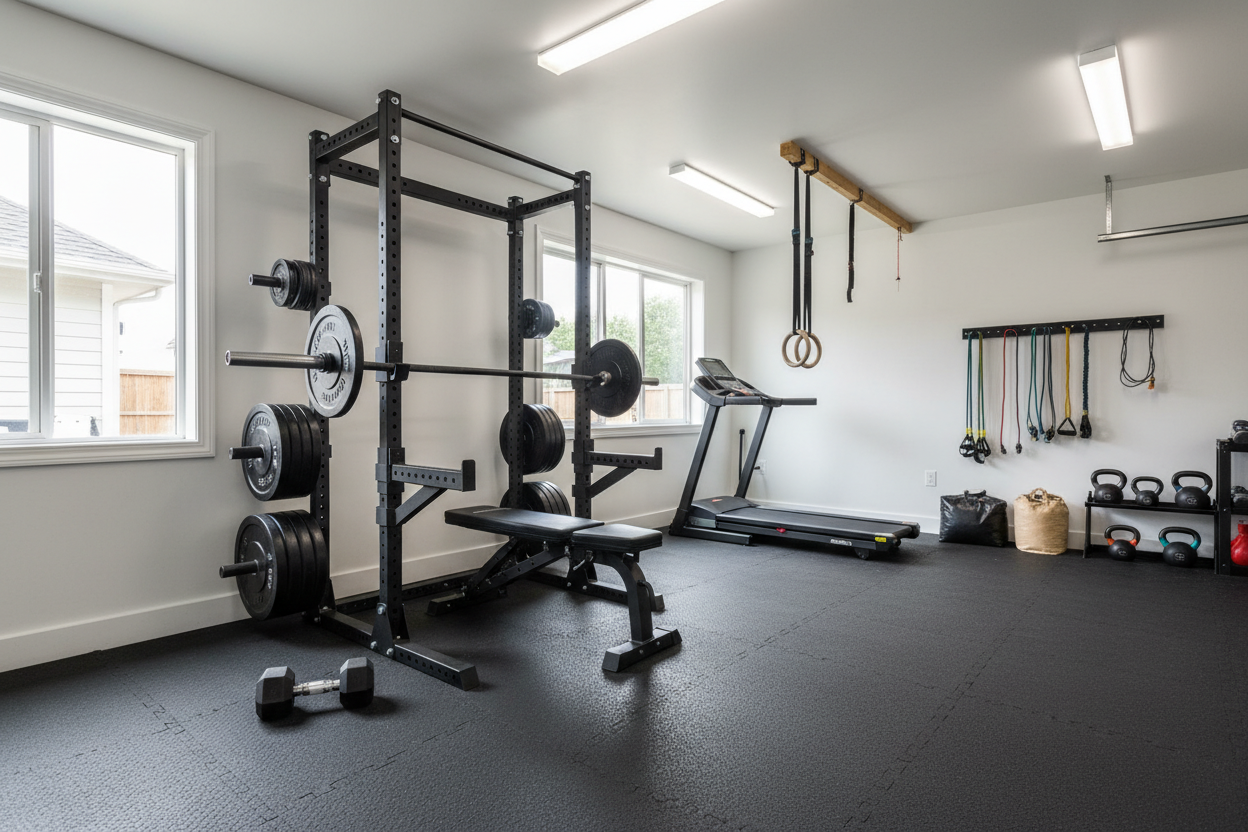
I remember the day my local commercial gym hiked their prices again while the cable machines stayed broken for months. I went home and started looking for home gym ideas on a budget, thinking I could build a temple of iron for the cost of a few months' membership. I quickly learned that buying the cheapest thing on the screen is usually a recipe for a hospital visit.
Quick Takeaways
- Invest in a high-quality barbell first; it's the one piece you can't fake.
- Used iron is your best friend—rust is just a discount you can scrub off.
- Avoid 'all-in-one' machines that promise 50 exercises but do none of them well.
- Stall mats from a farm supply store are the best low cost home gym flooring.
Why 'Cheap' Gear Actually Costs You More
There is a massive difference between an affordable home gym and a pile of junk that happens to look like fitness equipment. If you spend $40 on a wobbly bench from a random Amazon brand, you aren't saving money. You’re just pre-ordering your next bench. Those thin-walled steel frames have a 300-lb weight capacity that includes your body weight. If you're 200 lbs and benching 135, you're already over the limit. When that frame eventually bends or a weld snaps, you'll have to buy a real one anyway, effectively doubling your cost.
A budget friendly gym should be built on pieces that can survive a decade of abuse. I look for 11-gauge or 14-gauge steel and hardware that doesn't feel like it came from a toy set. Inexpensive home gyms fail when the owner prioritizes quantity over quality. I'd rather see you own one heavy kettlebell and a pull-up bar than a 10-piece set of plastic-coated weights that rattle every time you move them. Buy once, cry once is the golden rule of the garage gym.
The Bare Essentials You Actually Need First
You don't need a 5-station cable crossover to get strong. To build a functional home gym, you need to focus on high-ROI items. Start with a pair of heavy kettlebells or a set of adjustable dumbbells. A single 24kg kettlebell can handle your hinges, squats, and presses for months while you save up for a rack. Add a set of heavy-duty resistance bands for accessory work and a doorway or wall-mounted pull-up bar.
This 'minimalist' phase is where you find out if you actually have the discipline to train at home. It’s easy to get excited about best budget home gym equipment, but the best gear is the stuff you actually use. Before you drop a grand on a rack and plates, prove you can stick to a program with the basics. These items take up zero floor space and provide a foundation for any best affordable home gym setup.
How to Snipe Used Heavy Iron Online
If you want a cheap home gym setup that actually holds up, you have to stop buying new. Cast iron doesn't expire. I spend at least twenty minutes a day scrolling Facebook Marketplace and Craigslist. The trick is to look for 'weights' or 'lifting' rather than specific brand names. You want the person who is moving and needs 300 lbs of 'heavy circles' gone by Sunday. That is where you find the best home gym cheap deals.
Don't be afraid of a little surface rust. A gallon of white vinegar and a wire brush can turn a crusty, orange plate into something that looks brand new for about five bucks. Once you've scrubbed them, hit them with a coat of black spray paint. You can often find used plates for $0.50 to $0.80 per pound, compared to $2.00 or more at retail. This is the ultimate way to build an inexpensive home gym without sacrificing the weight you need to actually grow.
Space-Saving Hacks That Don't Suck
Most home gym ideas budget plans are ruined by a lack of space. If you're training in a bedroom or a shared garage, you need gear that disappears. Wall-mounted folding racks are a godsend, but they can be pricey. A cheaper alternative is a pair of independent squat stands that you can tuck into a corner when you're done. For cardio, don't buy a massive commercial treadmill that will inevitably become a clothes rack.
Instead, look for compact options like a foldable upright exercise bike. It gives you the metabolic hit you need without eating 15 square feet of your living room. Vertical storage is another win. Bolt some hooks to your studs to hang your bands, belts, and jump ropes. Keeping the floor clear makes a small space feel like a professional training facility rather than a cluttered closet.
When to DIY (And When It's a Death Trap)
DIY can be a great way to flesh out a budget friendly home gym equipment list, but you have to be smart. I’ve built my own plyo boxes from 3/4-inch plywood and sewn my own sandbags using heavy-duty duffels and play sand. These are low-risk projects that save you hundreds. You can even make 'pulling blocks' out of stacked 2x4s for deadlift variations. These are legitimate home gym ideas cheap enough for anyone.
However, never, ever DIY anything that has to hold your body weight or a loaded barbell over your face. Do not build a wooden squat rack you found on Pinterest. Do not weld your own J-cups unless you are a professional fabricator. The money you 'save' on a homemade bench will be spent tenfold at the ER when the wood splits during a heavy set. Stick to DIYing the accessories and buy the structural stuff from people who have insurance.
The One Thing You Should Never Cheap Out On
If you have $500 to start your gym, $300 of it should probably go toward your barbell. It is the most important piece of equipment you will ever own. A cheap bar has terrible knurling, no whip, and bushings that will seize up within six months. A quality bar will have a tensile strength of 190,000 PSI or higher and will stay straight even if you drop it. The best equipment for home gym gains doesn't plug into a wall, and a high-end barbell is the ultimate proof of that.
When you have a great bar in your hands, even the cheapest used plates feel better. It changes the entire experience of the lift. If you're hunting for home gym essentials on a budget, make the barbell your anchor. You can use milk crates for a bench and stall mats for a floor, but a cheap bar is a safety hazard and a motivation killer. Invest in a reputable brand's entry-level power bar and you'll never have to buy another one.
My Personal Experience
Early in my journey, I bought a 'complete' weight set from a big-box store for $200. It came with a bar, 300 lbs of plates, and a bench. The first time I tried to squat 225, the bar literally stayed bent in a slight 'U' shape. The bench felt like it was made of soda cans. I was so worried about the equipment failing that I couldn't focus on my training. I ended up selling the whole mess for $50 and starting over. I learned the hard way that a best value home gym is built one quality piece at a time, not in one cheap box.
FAQ
What is the cheapest way to floor a home gym?
Go to a farm supply store and buy 3/4-inch thick rubber horse stall mats. They are usually 4x6 feet and cost around $50. They are indestructible, dampen noise, and are much cheaper than 'fitness' flooring sold by gym brands.
Are adjustable dumbbells worth it for a budget gym?
Yes, if you get the right ones. They save a massive amount of space and are cheaper than buying a full rack of individual bells. Look for iron sets with threaded collars or reputable dial-based systems that have at least a 50-lb capacity.
Can I build a gym in an apartment?
Absolutely. Focus on 'silent' gear like resistance bands, a high-quality yoga mat, and adjustable dumbbells. Avoid dropping weights and consider a foldable upright exercise bike for cardio to keep the footprint small and the noise down.
Share:
Stop Hauling Plates: Why I Bought a Leg Press Machine Weight Stack
The Brutal Truth About Blending Home and Fitness Spaces