
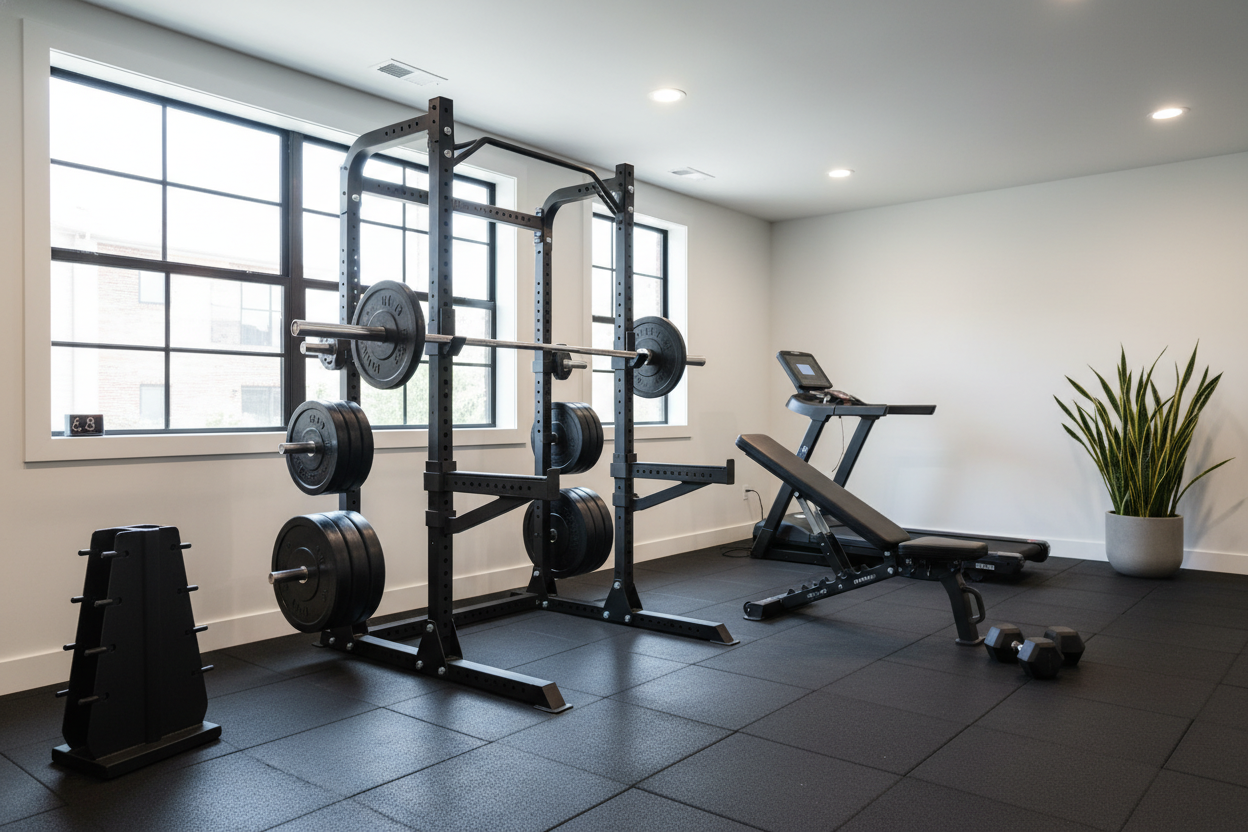
I remember standing in my garage three years ago, staring at a rack that cost more than my first car, feeling like a total idiot. I had three different bars leaning in the corner: a stiff power bar for squats, a whippy weightlifting bar for cleans, and a cheap beater bar for rack pulls. Every time I wanted to superset, I was wrestling with collars and plates, swapping steel like I was a pit crew for a NASCAR team. It was exhausting, and honestly, it was a waste of money.
I realized that for 99% of us training in a garage or basement, the obsession with specialized gear is a trap. You don't need a quiver of bars. You need one multi purpose bar that can handle a 400-lb back squat and a snappy power clean without skipping a beat. I eventually sold two of those bars and replaced them with one high-quality hybrid. My workouts got faster, my floor got clearer, and my lifting didn't suffer one bit.
Quick Takeaways
- A 28.5mm diameter is the 'Goldilocks' thickness for both pulling and pushing.
- Dual knurl marks allow you to transition between powerlifting and Olympic lifts instantly.
- Bronze bushings provide a smooth, consistent spin without the maintenance of needle bearings.
- Tensile strength of 190,000 PSI or higher is plenty for anyone not competing at a national level.
The Specialty Barbell Trap (And Why I Fell For It)
When I first started outfitting my space, I spent hours reading forums where guys argued about 'whip' and 'knurl aggression' like they were fine wine connoisseurs. I convinced myself that if I didn't have a dedicated Olympic barbell for my snatches and a 29mm stiff bar for my bench press, I was leaving gains on the table. I fell for the marketing that says you need a different tool for every single movement.
The reality? Swapping bars between sets is a momentum killer. I’d finish a heavy set of squats and then spend three minutes clearing the rack just to set up for some overhead presses. It was annoying. A multi purpose barbell solves this by being the ultimate generalist. It’s designed to be 'good enough' at everything so that you can actually focus on the work instead of the equipment. Unless you're specialized in one specific discipline, the hybrid bar is the smarter play for your wallet and your sanity.
What Exactly Is a Multi Purpose Bar Anyway?
Let’s talk specs without the fluff. A multipurpose barbell is a hybrid. It takes the best features of a power bar and an Olympic bar and mashes them together. The most critical spec is the shaft diameter. A standard power bar is usually 29mm (thick and stiff), while a weightlifting bar is 28mm (thin and whippy). A multi purpose bar sits right at 28.5mm. It feels substantial in your hands for a heavy bench, but it’s thin enough to get a solid hook grip for cleans.
Then there are the knurl marks. You’ll see two sets of rings on the shaft. One set is for the International Powerlifting Federation (IPF) spacing, and the other is for the International Weightlifting Federation (IWF). This means you always know exactly where to put your hands, whether you’re setting up for a wide-grip snatch or a narrow-grip bench. No more guessing or measuring with your thumbs.
Inside the sleeves, you’ll usually find bronze bushings. Unlike needle bearings—which spin like a fidget spinner and are found on expensive weightlifting bars—bushings offer a controlled, reliable rotation. They don't require you to oil them every month, and they can handle the vertical force of heavy deadlifts better than cheap bearings can. It’s the low-maintenance choice for a garage gym owner who just wants to lift and go.
The Truth About Heavy Lifting on a Multipurpose Barbell
I hear this all the time: 'But will a hybrid bar bend if I squat 500 pounds?' Look, unless you are an elite-level powerlifter, you aren't going to permanently deform a quality bar. Most modern hybrids have a tensile strength between 190,000 and 210,000 PSI. That is a massive amount of pressure. I’ve dropped heavy sets from overhead and pulled heavy triples from the floor, and my bar is as straight as the day it arrived.
Take the 20Kg Olympic Barbell Pb01 as a prime example. This thing is built for the abuse of a high-volume garage gym. It has the durability to handle heavy eccentric loading on squats but enough 'give' to not vibrate your teeth out when you catch a clean. It’s that middle-ground resilience that makes it so valuable. You aren't paying for a name brand; you're paying for steel that won't fail when you're under it.
Fixed vs. Free Weights: The Stabilizer Reality Check
Some people try to bypass the barbell altogether by using Smith machines or plate-loaded tracks. That’s a mistake. When you use a free-weight multipurpose barbell, your body has to work ten times harder to stabilize the load. There is no track to guide you. Every tiny muscle in your core and shoulders has to fire to keep that bar level.
This is why you have to stop treating a Smith barbell like a regular Olympic bar. Machines take the 'balance' out of the equation, which might make you feel stronger in the short term, but it won't build the functional, raw strength that a free-standing bar provides. A multi purpose bar forces you to own the weight through the entire range of motion, which translates much better to real-world strength.
When Do You Actually Need to Upgrade?
I’m not saying specialty bars are useless. They have a place. If you are consistently pulling over 600 pounds, you might want a dedicated deadlift bar that has more flex to help you get the weight off the floor. Or, if you’re a competitive Olympic lifter training for a meet, you’ll eventually want a 28mm bar with needle bearings for that lightning-fast sleeve turnover.
But for the rest of us? The guys and girls training in the morning before work or hitting the garage on the weekends? The hybrid bar is the workhorse. It does everything well. I’ve had mine for years, and I still haven't found a reason to go back to the 'three-bar' system. Save your money for more plates or a better rack. One good bar is all you need.
FAQ
Is a 28.5mm bar too thick for small hands?
Not usually. It’s only 0.5mm thicker than a dedicated weightlifting bar. Most people won't even notice the difference, even when using a hook grip for Olympic lifts.
Can I use a multi purpose bar for CrossFit?
Absolutely. In fact, most CrossFit boxes use these bars exclusively because they can handle the transition from high-rep snatches to heavy back squats in the same workout.
Do I need to maintain the bushings?
Rarely. A drop of 3-in-1 oil on the inside of the sleeve once or twice a year is usually enough to keep them spinning smoothly. They are much more 'set it and forget it' than bearing bars.
Share:
Is a Full Dumbbell Set for Gym Use Actually Worth the Space?
Is Buying an Olympic Weight Set Used Actually Worth the Hassle?