
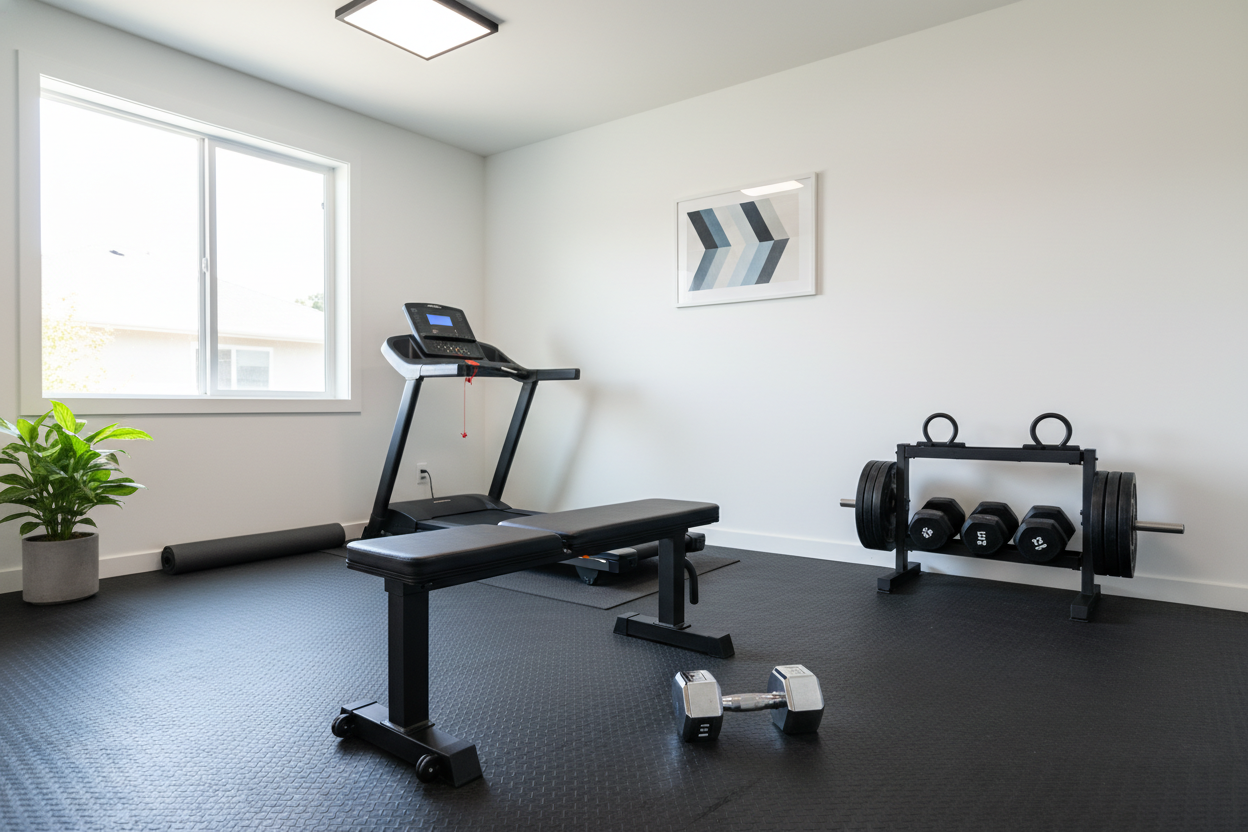
I have spent too many Saturday mornings in my garage swearing at a bolt that would not tighten on a bench that cost ninety-nine bucks and arrived in a box the size of a pizza. We have all been there—scrolling through Amazon at midnight, trying to justify a piece of equipment because it claims to do five different things at once. If you are hunting for a basic exercise bench, the biggest mistake you can make is buying something that tries to be a Swiss Army knife.
- Prioritize a tripod or wide four-post base for zero side-to-side wobble.
- Look for 11 or 12-gauge steel frames over thin, hollow tubing.
- A 12-inch pad width is the sweet spot for shoulder support.
- Avoid 'all-in-one' attachments that compromise the structural integrity.
The Trap of the 'Do-It-All' Beginner Bench
When you are first shopping for a weight bench, it is easy to get seduced by the 'Transformers.' You know the ones: they have a leg developer on the front, a preacher curl pad on the side, and maybe a butterfly attachment that looks like it belongs in a 1980s infomercial. Manufacturers add these cheap plastic bits to distract you from a frame that is thinner than a soda can.
These benches are often the 'best beginner weight bench' only in the eyes of a marketing department. In reality, those attachments are usually sized for a child and wobble dangerously the second you put 135 pounds on the bar. You do not need a machine that does everything poorly; you need a foundation that does one thing—staying still—perfectly.
What Makes a Good Weight Bench for Beginner Lifters?
A good weight bench for beginner athletes is defined by its specs, not its features. Look for 11-gauge or 12-gauge steel. If the product description does not list the steel gauge, it is probably because it is thin 14-gauge junk. You want a weight capacity of at least 600 to 1,000 pounds. That might sound like overkill if you are only pressing 100 pounds now, but that rating is a proxy for how much the bench will flex under your body weight.
I have spent years putting budget adjustable benches through the wringer, and the biggest failure point is always the hinge or the gap between the seat and the back pad. A quality bench should have a pad height of about 17 inches from the floor. This allows you to get your feet flat and drive through your legs. If the bench is 20 inches high, you will be tip-toeing like a ballerina just to stay balanced.
Why a Basic Exercise Bench Actually Speeds Up Your Progress
Stability is the secret to strength. If your brain senses that the surface beneath you is shifting, it will literally 'throttle' your power output to keep you from falling over. It is a survival mechanism. When you lie down on a rock-solid flat bench, your nervous system feels safe enough to actually recruit the muscle fibers you are trying to grow.
A simple flat pad allows you to focus on the bar path and muscle contraction rather than wondering if the leg roller attachment is going to snap off. You will find that your numbers climb faster on a 'boring' piece of gear than they ever would on a shaky multi-station rig.
When Should You Graduate to an Adjustable Frame?
I usually tell people to start with a flat bench because they are cheaper and indestructible. However, once you have built a base of strength and want to target the upper chest or shoulders specifically, that is when you should look at an incline. I eventually traded my flat pad for an adjustable utility bench once my programming called for more variety, like seated overhead presses and 45-degree chest flies.
The transition should happen when your goals outgrow the equipment, not because you think more buttons and pins make a better workout. Build the habit on a flat pad first.
My Pick for the Best Beginner Weight Bench Setup
If you have the space, buy a dedicated flat bench. It will last forever. But if you are tight on space and absolutely insist on having incline options from day one, skip the big-box store specials. Look for a solid adjustable weight bench that uses a ladder-style adjustment system rather than a cheap pull-pin. Ladder designs are faster to change and significantly more stable under heavy loads.
How wide should a weight bench pad be?
Aim for 11 to 12 inches. Anything narrower than 10 inches feels like you are balancing on a balance beam, and your shoulders will 'roll' off the sides during heavy presses.
Does the weight capacity include the lifter?
Yes. If a bench is rated for 500 pounds and you weigh 200 pounds, you only have 300 pounds of 'weight capacity' left for the bar. This is why I recommend benches rated for at least 800 pounds.
Should I get a bench with wheels?
Unless your bench is staying in a dedicated power rack forever, yes. A solid 11-gauge bench is heavy. You do not want to be deadlifting your bench every time you need to mop the garage floor.
Share:
What 1,000 Amazon Reviews Won't Tell You About the Goplus Weight Bench
Why an Inspire Fitness Weight Bench Ruined Cheap Benches for Me