
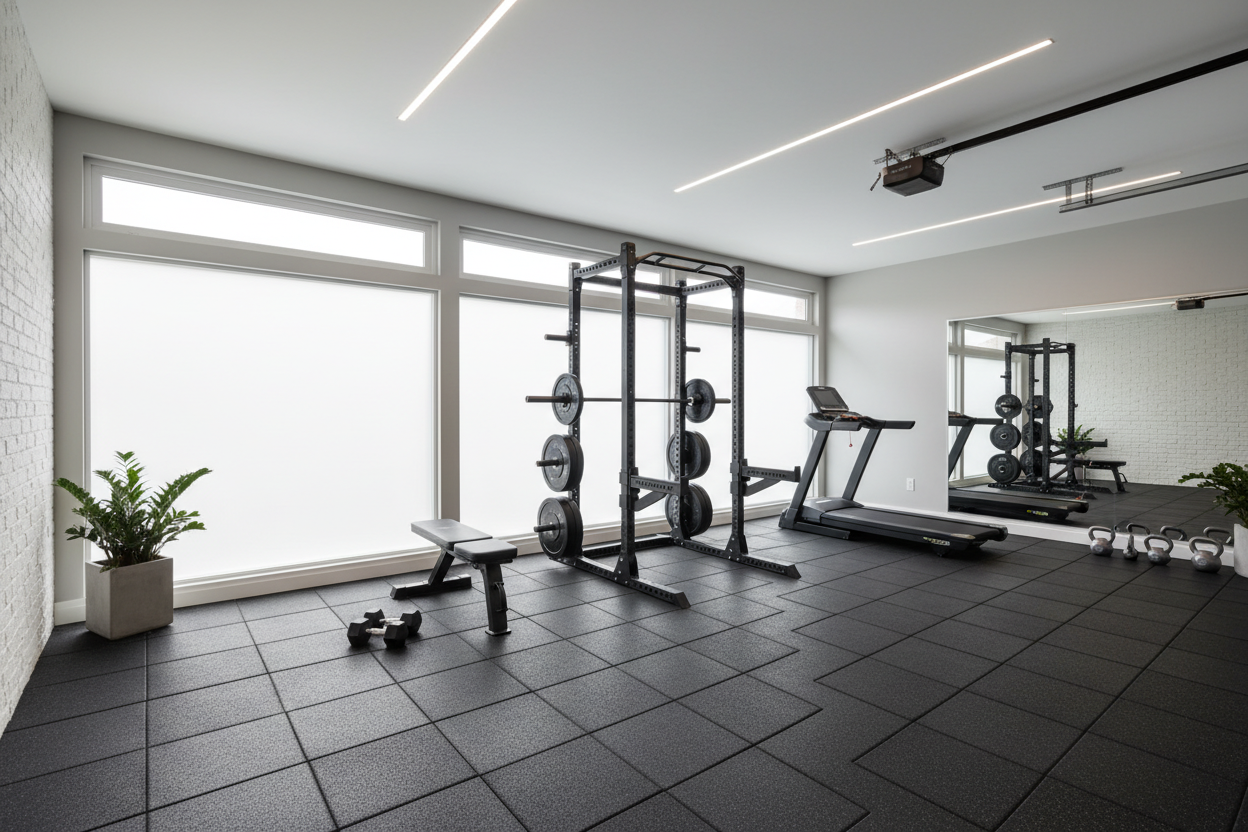
I remember the night I decided to quit my local big-box gym. They had just hiked the monthly dues to $120, and I was stuck in a fifteen-minute line for the only squat rack that wasn't being used for bicep curls. I went home, sat on the floor of my spare bedroom with a roll of blue painter's tape, and started mapping out my first gym at home design. It wasn't pretty, but it was mine.
- Prioritize floor protection with 3/4-inch rubber mats before buying any iron.
- Measure your ceiling height to ensure your overhead press won't destroy the drywall.
- Choose multi-functional equipment to maximize a small footprint.
- Keep the center of the room clear for movement and floor work.
The Problem with 'Cute' Workout Rooms
If you spend five minutes on social media looking for home gym inspiration, you'll see a lot of white rugs, fiddle-leaf figs, and pastel-colored dumbbells. That is not a gym; that is a photo set. If your workout room design looks like a West Elm catalog, you probably aren't training hard enough to break a sweat. Real training is messy, loud, and requires actual clearance for moving heavy objects.
The biggest mistake people make is choosing aesthetics over biomechanics. You don't need a 'vibe'; you need a 300-lb weight capacity and a floor that won't crack the first time you set a kettlebell down too hard. Stop worrying about the wall color and start worrying about whether you have the 7-foot width required to safely load a barbell without hitting your dresser.
Space First, Gear Second: Getting Your Layout Right
Before you spend a dime on a home gym, you need to know your numbers. I've seen guys buy high-end power racks only to realize they can't fit a standard barbell in the room because they forgot to account for the 2 feet of space needed on each side to slide plates onto the sleeves. You need a minimum footprint of 8x10 feet for a basic barbell setup.
Layout is about flow. You don't want to be tripping over a bench to get to your adjustable dumbbells. Keep your 'heavy' zone—the rack and platform—against the strongest wall, and leave the center of the room open. This 'dead space' is actually your most valuable asset for lunges, stretching, and high-intensity intervals.
The Vertical Test: Why Ceilings Dictate Everything
Most standard bedrooms have 8-foot ceilings. This is the 'death zone' for home gym design. If you're 6 feet tall and try to do a standing overhead press with a standard Olympic bar, you're going to put a hole in the ceiling. Period. You also need to account for the height of your pull-up bar. If the bar is at 90 inches, your head is going into the rafters on every rep. Measure twice, or prepare to do all your pressing from a seated position.
Flooring Isn't Just for Looks (It Saves Your Foundation)
Your spare room isn't a garage. When you're looking for indoor gym equipment for home, the floor is your most critical piece of gear. Those 'cute' interlocking foam tiles you find at big-box stores are garbage for lifting. They compress under heavy loads, they slide on hardwood, and they offer zero protection for your subfloor.
Go to a farm supply store and buy 3/4-inch horse stall mats. They are heavy, they smell like a tire shop for a week, and they are virtually indestructible. If you're worried about the 'industrial' look, you can layer a thin, high-grip performance rug over them, but the rubber is what keeps your floor from shattering when a 45-pound plate slips out of your hand.
How to Squeeze Big Lifts into Small Spare Bedrooms
If you're working with a tight 10x10 space, you have to be smart. You can't have a dedicated leg press, a cable crossover, and a power rack. You need one piece of equipment that does it all. A Smith machine home gym station is the ultimate space-saver for indoor rooms because it combines a squat rack, a guided barbell, and often a cable pulley system into a single footprint. It allows you to push heavy weight safely without needing a spotter, which is essential when you're training alone in a spare room.
Think vertically. Use wall-mounted racks for your weights and hangers for your resistance bands. The more stuff you can get off the floor and onto the walls, the bigger your workout area will feel. Even a small 'workout corner' can feel like a pro facility if the organization is tight.
Building a Cardio Corner That Doesn't Dominate the Room
Cardio equipment is the biggest space-hog in any gym. A treadmill is a permanent, non-negotiable piece of furniture that usually ends up as a laundry rack. If you aren't a competitive runner, look for something with a smaller footprint. A foldable upright exercise bike is my go-to for indoor setups because you can tuck it into a closet or behind a door when you're focusing on strength days.
Keep your conditioning gear on the periphery. Your central floor space is for the work that requires the most movement. If your bike is blocking your path to the dumbbell rack, you're going to get frustrated and stop using the room altogether. Efficiency is the key to consistency.
My Personal Experience: The Foam Tile Disaster
When I built my first indoor gym, I tried to save $100 by using those colorful foam puzzle mats. I thought they looked 'cleaner' than black rubber. Three weeks in, I was doing heavy Bulgarian split squats and the tiles slid apart mid-rep. I nearly blew out my knee and took a chunk out of the drywall with the dumbbell. I spent the next Saturday ripping them out and dragging 100-pound rubber mats up the stairs. Don't be like me. Buy the heavy-duty stuff first.
Frequently Asked Questions
Can I put a home gym on the second floor?
Yes, but be smart. Stick to stationary movements and avoid dropping weights. If you're planning on heavy deadlifts, you need to be on a concrete slab in the garage or basement to avoid structural vibration.
How do I stop my gym from smelling like a locker room?
Airflow is everything. A high-velocity floor fan and an air purifier with a HEPA filter will do more for your gym's 'vibe' than any scented candle ever could.
Is a mirror actually necessary?
Absolutely. It's not about vanity; it's about form. In a tight space, you don't have a coach watching your back angle. A 4x6 foot wall mirror is the best investment you can make for injury prevention.
Share:
How to Read Specs on a Weight Lifting Machine for Sale Like a Pro
Why Your Press Feels Weird on a Hammer Strength Smith Machine