
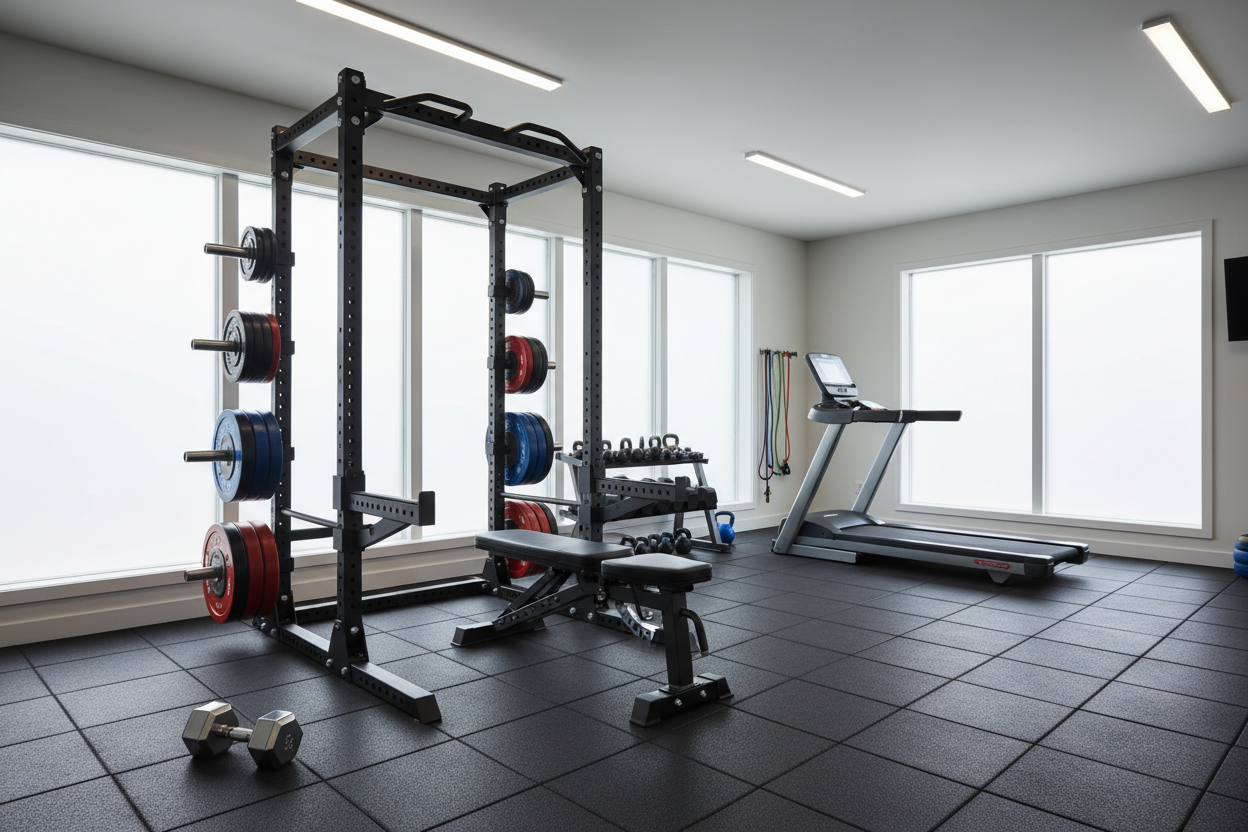
I remember scrolling through a budget fitness site at 1 AM, looking at a power rack that cost $350 and had 'PRO' plastered across the header in bold, red letters. It looked sleek in the photos, but when it arrived, the uprights felt like they were made of recycled soda cans. That is the trap of buying pro fitness equipment based on a marketing label rather than actual engineering specs.
Quick Takeaways
- 'Pro' is a marketing term, not a manufacturing standard.
- Always look for 11-gauge steel; anything higher (like 14-gauge) is thin and prone to bending.
- Check the bolt size—commercial-grade gear uses 5/8-inch or 1-inch hardware, not flimsy 1/2-inch bolts.
- Focus on functional stability over flashy paint jobs and plastic end-caps.
The Dirty Secret Behind the 'Pro' Sticker
In the manufacturing world, the term 'pro' is completely unregulated. There is no board of directors sitting in a room deciding which rack deserves a professional designation. Brands know that if they take a standard consumer-grade rack, powder coat it in a matte black finish, and slap a pro fitness exercise equipment decal on the side, they can instantly tack on an extra $200 to the price tag.
I have seen 'pro' machines that use plastic bushings instead of sealed ball bearings and 14-gauge steel that flexes when you rack a measly 225 pounds. It is a shell game. They are selling you the aesthetic of a high-end facility while delivering the structural integrity of a coat hanger. This 'pro fit exercise equipment' is often just the same entry-level gear with a different SKU and a better photographer.
Real professional gear is built to be abused 24/7 by 300-pound linemen. If the product description focuses more on the 'sleek design' than the thickness of the steel or the tensile strength of the barbell, you are looking at a marketing gimmick. Don't pay for the sticker; pay for the raw materials.
How to Spot a Flimsy Rack in a 'Pro' Disguise
If you want to know if a pro fitness machine is actually worth your money, you have to look at the 'unsexy' specs. First, check the steel gauge. In the gym world, a lower number means thicker steel. 11-gauge is the gold standard for anything holding weight. If you see 14-gauge or higher, keep walking. That rack will wobble the second you try to do a pull-up.
Next, look at the hardware. If the bolts look like something you’d use to put together an IKEA bookshelf, it isn't 'pro.' Genuine commercial-grade gear uses massive 5/8-inch or 1-inch bolts that require a real wrench to tighten. These large connection points are what keep the rack from swaying when you're repping out heavy sets.
I often tell people that investing in core home gym fitness equipment that is overbuilt is always better than buying a dozen flimsy, fake-pro machines. A solid rack and a good bar will outlast five 'pro' cable crossovers that use thin aircraft cable and plastic pulleys. Look at the welds—are they clean and consistent, or do they look like a pile of burnt popcorn? Real engineering shows in the joints.
When You Actually Need Commercial-Grade Iron
There are times when spending the extra cash on genuine pro fitness gym equipment is actually a smart move. If you are a competitive powerlifter regularly squatting over 500 pounds, you cannot afford to have 'good enough' equipment. You need the structural mass of a commercial rack to ensure that if you have to dump the bar, the rack doesn't collapse on top of you.
Another scenario is the multi-user environment. If you have three or four people training in your garage every day, consumer-grade gear will fatigue. The bolts will loosen, the powder coat will flake, and the cables will fray. In these cases, you want something like a heavy-duty chest press machine that uses industrial-grade bearings and thick-wall tubing. These pieces are designed for high-cycle counts and zero downtime.
Finally, consider biomechanics. High-end 'pro' machines often have better leverage curves. They are designed by engineers who understand how a muscle actually loads throughout a movement, whereas cheap knockoffs just copy the look of the machine without understanding the pivot points.
Getting the Commercial Feel Without the Commercial Price
You don't have to spend $5,000 on a single leg press to get a great workout. The trick is to replicate a commercial gym setup by focusing on space-efficient, multi-functional pieces. Instead of buying five different 'pro' isolation machines that take up your entire garage, look for a versatile home gym station that combines a rack, a functional trainer, and a smith machine into one footprint.
This approach saves you money on the 'per-exercise' cost. You are getting the same 11-gauge steel and heavy-duty pulleys, but you aren't paying for five different frames. Also, look for brands that sell directly to consumers. You can often find profitness gym equipment quality at a fraction of the price because you aren't paying for a middleman or a fancy showroom in a high-rent district.
Focus on the contact points. Buy a high-quality barbell with aggressive knurling and a bench with high-density foam. These are the things you actually feel during your set. A 'pro' sticker on a frame doesn't help you grow; the stability of the platform does.
Read the Specs, Ignore the Marketing
At the end of the day, true pro fit exercise equipment is defined by its structural integrity, not its name. I have seen 'commercial' benches that I wouldn't trust with a 50-pound dumbbell, and I've seen 'home' racks that are absolute tanks. Stop being a brand-chaser and start being a spec-reader.
Check the weight capacity, the steel thickness, and the warranty. A company that stands behind its 'pro' gear will offer a lifetime warranty on the frame. If they only give you 90 days, they know exactly how long that 'pro' quality is going to last. Build your gym on a foundation of solid iron, not empty adjectives.
My Personal Lesson in 'Pro' Gear
I once bought a 'Pro Series' adjustable bench because it was on sale for $199. It looked identical to the ones I used at the local powerhouse gym. The first time I tried to do heavy incline presses, the back pad started to tilt to the left. I realized the 'pro' hinge was just a thin bolt through two pieces of cheap metal. I ended up selling it for $50 on Craigslist and buying a real 11-gauge bench that weighed twice as much. I learned the hard way: if the price seems too good to be 'pro,' it definitely isn't.
FAQ
What is the best steel gauge for gym equipment?
11-gauge steel is the standard for high-quality home and commercial gyms. Avoid 14-gauge for any load-bearing equipment like racks or benches.
How can I tell if a machine uses good bearings?
Look for 'sealed' or 'linear' bearings in the specs. If it just says 'smooth gliding' or 'nylon bushings,' it will likely feel gritty and wear out quickly under heavy loads.
Is a commercial rack necessary for a home gym?
Usually, no. A high-quality 'residential' rack made of 11-gauge steel is more than enough for 99% of lifters. Only go full commercial if you are training multiple people daily or lifting elite-level weights.
Share:
Are Full-Body Machines the Secret to a Safe Home Fitness Gym?
How Adjustable Dumbbells 70 lbs Fixed My Awkward Range of Motion