
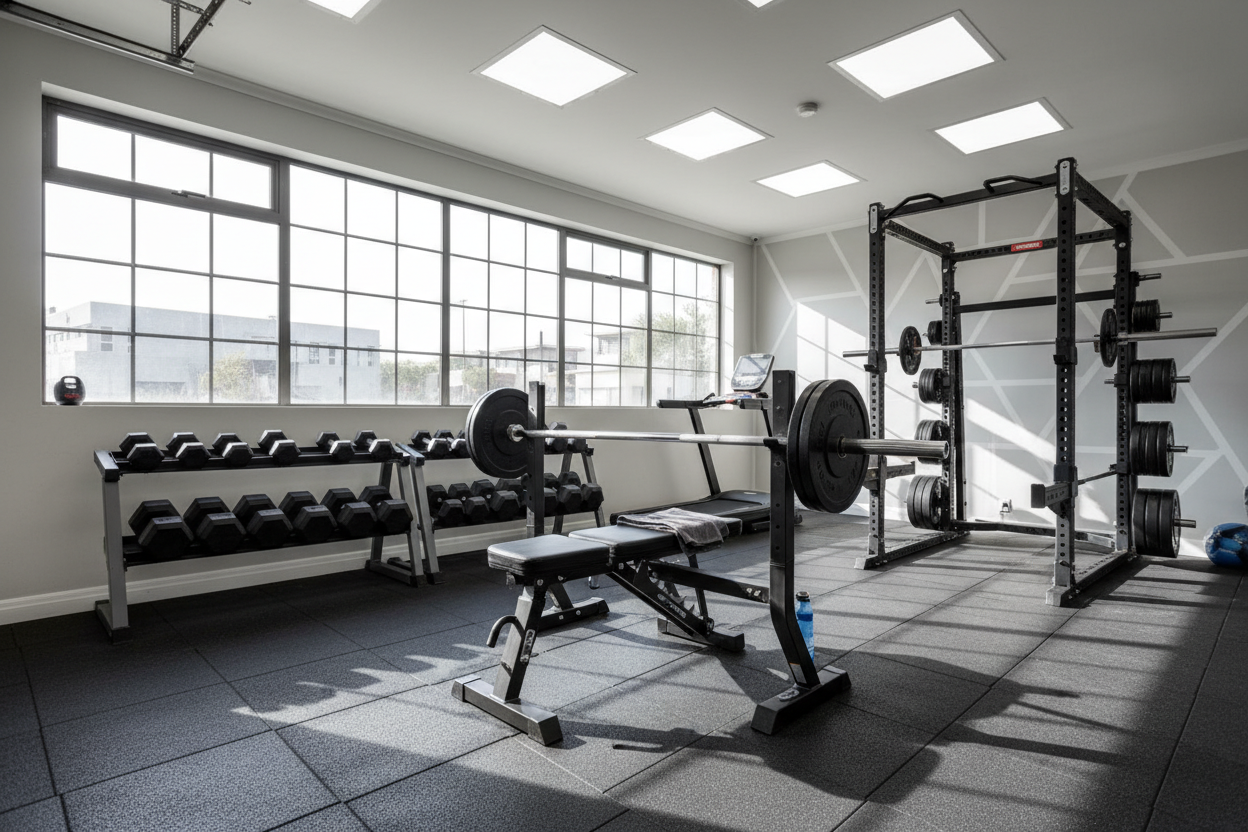
I remember my first 'standard' bench. It was a $70 Craigslist find that promised a lot but delivered mostly pinched knuckles and a near-death experience when I tried to re-rack 185 pounds. If you are tired of feeling like you are balancing on a toothpick every time you go for a heavy set, it is time to talk about olympic weight benches.
Standard-width benches are a lie told to beginners. They are built for narrow bars and even narrower people. If you have any kind of shoulder width, those uprights are exactly where your hands want to be. Upgrading to a full-sized frame isn't just about ego; it is about keeping your skin on your hands and your barbell level.
- Width Matters: True Olympic width (approx 48 inches) allows for a proper wide-grip bench press without hitting the rack.
- Stability: A wider footprint means significantly less side-to-side wobble during heavy triples.
- Safety: Prevents the bar from tipping when loading or unloading 45-lb plates.
- Growth: You won't outgrow the weight capacity of a 2-inch steel frame in six months.
The Day I Realized My 'Standard' Bench Was a Trap
I was halfway through a set of five, feeling good, when I went to rack the bar. On a standard bench, the uprights are so close together that your hands are forced to grip outside the rack. As I lowered the bar into the hooks, my pinky finger got caught between the cold steel of the upright and the aggressive knurling of the bar. I didn't just lose a fingernail; I lost my trust in cheap, narrow equipment.
That is the 'trap' of beginner gear. It looks fine in the product photo, but the second you try to use a natural grip, you realize the geometry is all wrong. You end up benching with a weirdly narrow hand placement that kills your triceps and puts unnecessary stress on your wrists just to avoid the uprights. A real bench should work with your body, not against it. If you have to think about your fingers while you are grinding out a max effort rep, your equipment has already failed you.
What Actually Makes a Bench 'Olympic' Anyway?
It comes down to the distance between the uprights. A standard bench usually has uprights about 24 to 30 inches apart. An olympic weight bench spaces them out to roughly 48 inches. This matches the inner collar dimensions of a standard 7-foot Olympic bar. This spacing is mandatory for stability and proper hand placement. When you are handling an olympic bench with weights, the center of gravity needs to be supported widely. If the uprights are too narrow, the bar becomes a see-saw.
Take off one 45-lb plate while the other side is still loaded, and on a narrow bench, that bar is going airborne. On an Olympic frame, the wider support keeps it pinned. It’s also about the bar itself. Olympic sleeves are 2 inches in diameter, allowing for higher weight capacities and smoother rotation. Using olympic weights and benches together ensures that you aren't exceeding the structural limits of the steel the moment you hit a two-plate milestone. It’s the difference between training in a gym and training in a toy room.
Why Buying a Combo Station Isn't Always a Mistake
Purists will tell you to buy a power rack and a standalone flat bench. They aren't wrong, but they probably have a three-car garage. For the rest of us, a bench press set olympic style that includes the rack and bench as one unit is a massive space-saver. It keeps everything contained in a single footprint, which is vital when you're fighting for every square inch of floor space in a basement or a cramped garage bay.
I’ve found that a high-quality bench with a barbell rack and leg extension can actually be the centerpiece of a legitimate home gym. You get the benching platform you need, plus the ability to hit accessories like leg curls or preacher curls without buying five different machines. The key is looking for a 'fixed' upright design. This prevents the bench from sliding away from the bar while you're trying to set your arch. I've used some 'floating' benches that felt like they were on ice skates; a combo unit solves that problem by bolting the seat directly to the rack structure.
The Attachments That Actually Work
If your bench comes with a leg developer, check the pivot point. If it’s just a thin bolt through a hollow tube, it’s going to wobble and squeak. Look for bushing-based pivots. Also, preacher curl pads should have at least two inches of high-density foam. If you can feel the plywood through the vinyl with your elbows, you’re going to hate using it after the first week. Quality attachments shouldn't feel like an afterthought; they should feel as sturdy as the main frame.
How to Spot a Fake 'Heavy Duty' Frame
The internet is flooded with olympic weight benches for sale that claim 1,000-lb weight capacities but use 2-inch, 16-gauge steel. That’s thin stuff. If you’re serious about lifting, you want to see 11-gauge or 14-gauge steel. The easiest way to tell is the product weight. A real heavy-duty bench should weigh at least 70 to 100 pounds on its own. If the box arrives and you can pick it up with one hand, you’ve bought a lawn ornament, not a piece of gym equipment.
Don't get distracted by flashy colors or 'pro' labels. Look at the welds. If they look like a bird spit on the metal, stay away. You want clean, consistent beads where the uprights meet the base. Browse through heavy-duty weight bench collections and compare the steel thickness specs. If the manufacturer doesn't list the gauge of the steel or the total weight of the unit, they are probably hiding the fact that the frame is made of glorified soda cans. A weights bench olympic rated for real progress needs mass to stay stable.
The Best Upgrade Path for Your First Real Setup
You have two choices: buy a bundle or piece it together. Buying an olympic weight bench with weights as a complete set is usually the fastest way to get 300 lbs of total weight and a rack in your house. It’s convenient, and the shipping is often cheaper than buying plates separately. For a lot of guys starting out, this is the most logical financial move to get under the bar immediately.
However, you need to be realistic about your strength goals. I often get asked how far a starter bench and weights last before things start to feel sketchy. If you plan on squatting 400 lbs or benching 315, a combo bench might eventually be replaced by a full power rack. But for a reliable spot to press, curl, and do leg extensions, quality olympic weight sets and benches will serve you well for years. It’s an investment in your safety as much as your muscles. Stop settling for narrow 'standard' gear that treats your hands like a pair of nutcrackers.
FAQ
Can I use a 5-foot or 6-foot bar on an Olympic bench?
No. Most 5-foot and 6-foot bars have a shorter distance between the collars. They won't reach the uprights of an Olympic-width bench, and you'll end up dropping the bar on your chest. You need a full 7-foot Olympic bar.
Is a 2-inch bar the same as an Olympic bar?
Yes. 'Olympic' refers to the 2-inch diameter of the sleeves where the weights go. A weights bench olympic setup is designed specifically for these bars and plates, not the 1-inch 'standard' sets found in big-box stores.
Do I need to bolt the bench to the floor?
Generally, no. Most Olympic benches have a wide enough footprint to stay stable. If you find it sliding on your gym flooring, just put a heavy plate on the rear stabilizer bar to anchor it down during your session.
Share:
Why Your Garage Exercise Routine Isn't Building Any Muscle
Why I Never Walk Into a Commercial Gym Machines Store Anymore