
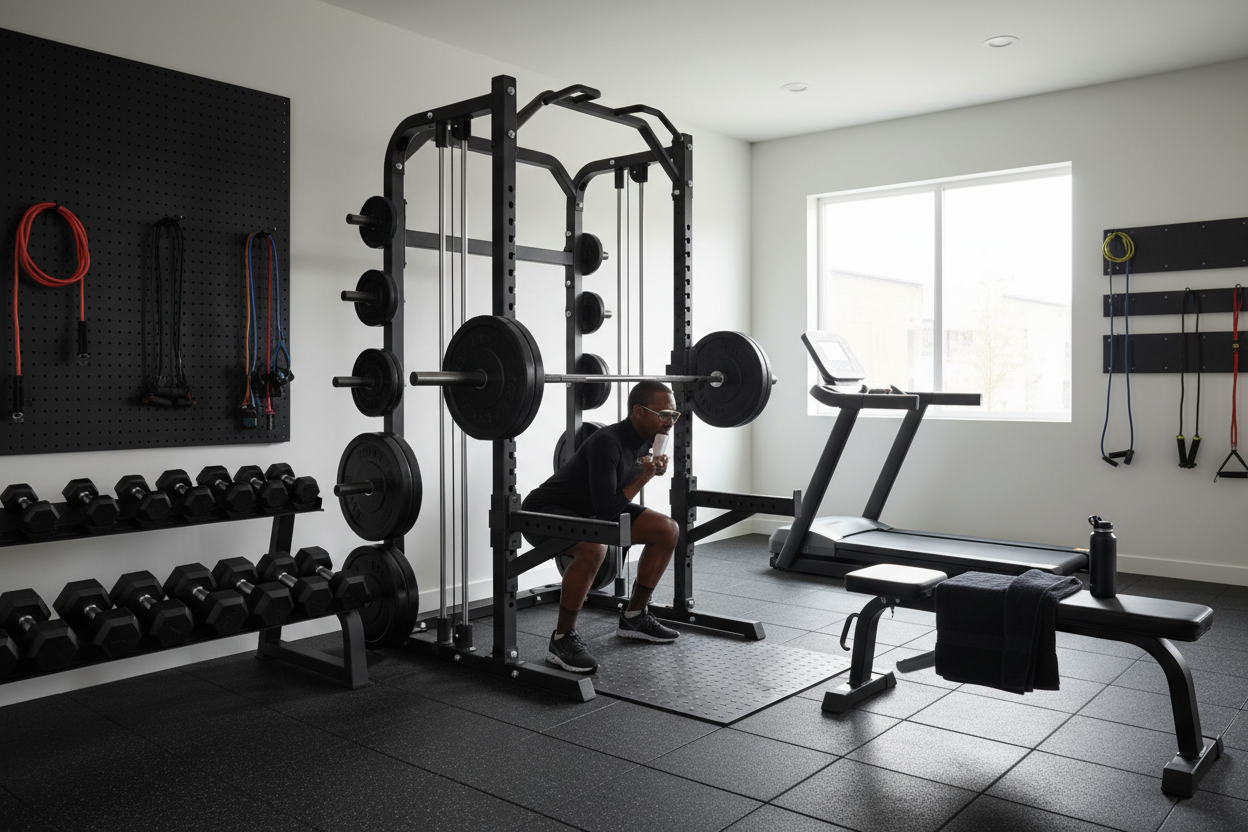
I remember the first time I ditched the free-standing power rack for a leg day on the Smith machine. I felt like a traitor to the iron game. But after years of grinding my lower back into dust with heavy low-bar squats, my quads still looked like toothpicks compared to my glutes. That is when I started experimenting with the narrow stance smith machine squat. It was not about being 'functional'—it was about purely smashing the front of my legs until I could barely walk to my truck.
Quick Takeaways
- Isolates the vastus medialis (the teardrop) better than traditional wide stances.
- The fixed bar path allows for extreme knee flexion without the balance risks of a free barbell.
- Significantly reduces lower back shear and spinal compression for most lifters.
- Perfect for high-rep hypertrophy work (8-15 reps) where technical breakdown is a concern.
Why the Narrow Stance Works (And Why Free Weights Can not Compete Here)
The biomechanics of a smith machine narrow squat are fundamentally different from a standard back squat. When you bring your feet together on a free barbell, your base of support shrinks to almost nothing. You spend more energy trying not to tip over sideways than you do actually driving the weight up. By using a home gym Smith machine, you remove the stabilization requirement from the equation entirely. The rails handle the balance, which allows you to do something that would be suicidal with a free bar: push your knees significantly past your toes.
This forward knee travel is the secret sauce for quad growth. When the knee moves forward, the quad fibers—specifically the vastus medialis—are stretched under load at the bottom of the movement. Because the Smith machine keeps you on a fixed track, you can maintain a perfectly vertical torso. This shifts the center of mass directly over your quads rather than letting your hips and lower back take over the lift. It is the closest you can get to a leg extension while still performing a compound movement.
How to Set Up the Perfect Feet Together Smith Machine Squat
Getting the setup right for smith machine close stance squats is the difference between a massive pump and a trip to the physical therapist. First, do not stand directly under the bar like you are taking a military photo. I usually place my feet about 3 to 6 inches in front of the bar path. This slight forward placement allows you to drop straight down while keeping your weight on your heels and mid-foot.
If your machine is angled (most commercial and high-end home units have a 7-degree slant), you want to face the direction that allows the bar to move down and slightly back as you descend. This follows the natural arc of your body. Your feet should be about 4 to 5 inches apart—not literally touching, but close enough that there is no room for your ego. Keep your toes pointed slightly outward (about 5-10 degrees) to help your knees track comfortably. Grip the bar tightly, squeeze your shoulder blades to create a shelf, and focus on 'sitting down' rather than 'sitting back.'
Knee Pain? You are Probably Making These 3 Mistakes
The close stance squat smith machine gets a bad rap for being a knee-killer, but the machine isn't the problem; the execution is. The most common mistake I see is poor ankle mobility. If your ankles are as stiff as bricks, your heels will pop off the floor as you descend. This shifts the entire load onto the patellar tendon. If you can not keep your heels down, wear Olympic lifting shoes or prop your heels up on a pair of 5-lb plates.
The second mistake is trying to use powerlifting mechanics. If you push your hips back like you are trying to touch a wall behind you, you are turning this into a weird, inefficient good morning. You need to drop your butt straight down toward your heels. Finally, stop dive-bombing the eccentric. If you drop fast and bounce off your joints at the bottom of a smith machine close stance squat, you are asking for inflammation. Control the weight for a 3-second negative, feel the stretch in the quads, and drive up smoothly.
Narrow Squats vs. Hack Squats for Home Gym Owners
I would love a massive commercial-grade hack squat in my garage, but I also like being able to park my car inside. For most of us, a narrow squat smith machine is the ultimate space-saving alternative. By walking your feet out further, you can mimic the exact mechanics of a 45-degree hack squat sled without the 8-foot footprint. It is a masterclass in efficiency for anyone who has perfected their hack squat on Smith machine setup.
However, if you have the floor space and the budget, there is no denying the feel of a dedicated sled. If you find that the fixed vertical path of the Smith machine feels too restrictive for your hip anatomy, moving to a compact 30 degree leg press hack squat combo machine is the logical next step. It provides the same quad isolation but with a fixed angle that many lifters find more natural for their lower back. But for $0 extra if you already own a Smith machine, the narrow stance squat is hard to beat.
Programming the Narrow Stance Squat for Maximum Hypertrophy
Do not treat the narrow smith machine squat as your primary heavy mover of the day. This isn't the exercise where you try to hit a 1RM. I prefer to use it as a secondary movement after a 'big' lift or even as a finisher. Aim for 3 to 4 sets of 12 to 15 reps. The goal here is metabolic stress and time under tension.
Try using a 'constant tension' tempo—don't lock out your knees at the top. Stop just short of lockout and go right back into the next rep. This keeps the blood trapped in the quad muscles, leading to that skin-splitting pump we are all after. Pair these with a high-rep hamstring curl or a stiff-leg deadlift to ensure you are not completely neglecting the posterior chain, but make no mistake: this is a quad-dominant day.
Personal Experience: My 'Ego Check' Moment
A few years back, I tried to do these with my feet literally touching because I saw a pro bodybuilder doing it on Instagram. I loaded up three plates on each side and immediately realized I could not balance the lateral 'wobble' even with the rails. I felt a sharp pinch in my hip and had to rack the bar. I learned the hard way that 'narrow' does not mean 'touching.' Now, I keep a 4-inch gap between my feet. It provides just enough stability to let me focus 100% on the quad contraction without my hips screaming at me. Start light, find your 'groove,' and do not be afraid to adjust your foot placement by an inch or two until it feels right.
Frequently Asked Questions
Does this exercise actually build the teardrop muscle?
Yes. By using a close leg squat smith machine technique, you maximize knee flexion, which is the primary driver for activating the vastus medialis (VMO).
Should I use a weight belt for Smith machine squats?
You can, but it is often unnecessary. Because the Smith machine allows for a more vertical torso, there is less shear force on the lumbar spine compared to a barbell squat.
Can I do these with my feet directly under the bar?
Only if you have elite-level ankle mobility. For most people, placing the feet 3-5 inches forward is safer for the knees and allows for a deeper range of motion.
Share:
How to Squeeze a Compact Smith Machine Into a Spare Bedroom
Stop Calling It 'That Cable Thing': Real Exercise Equipment and Names